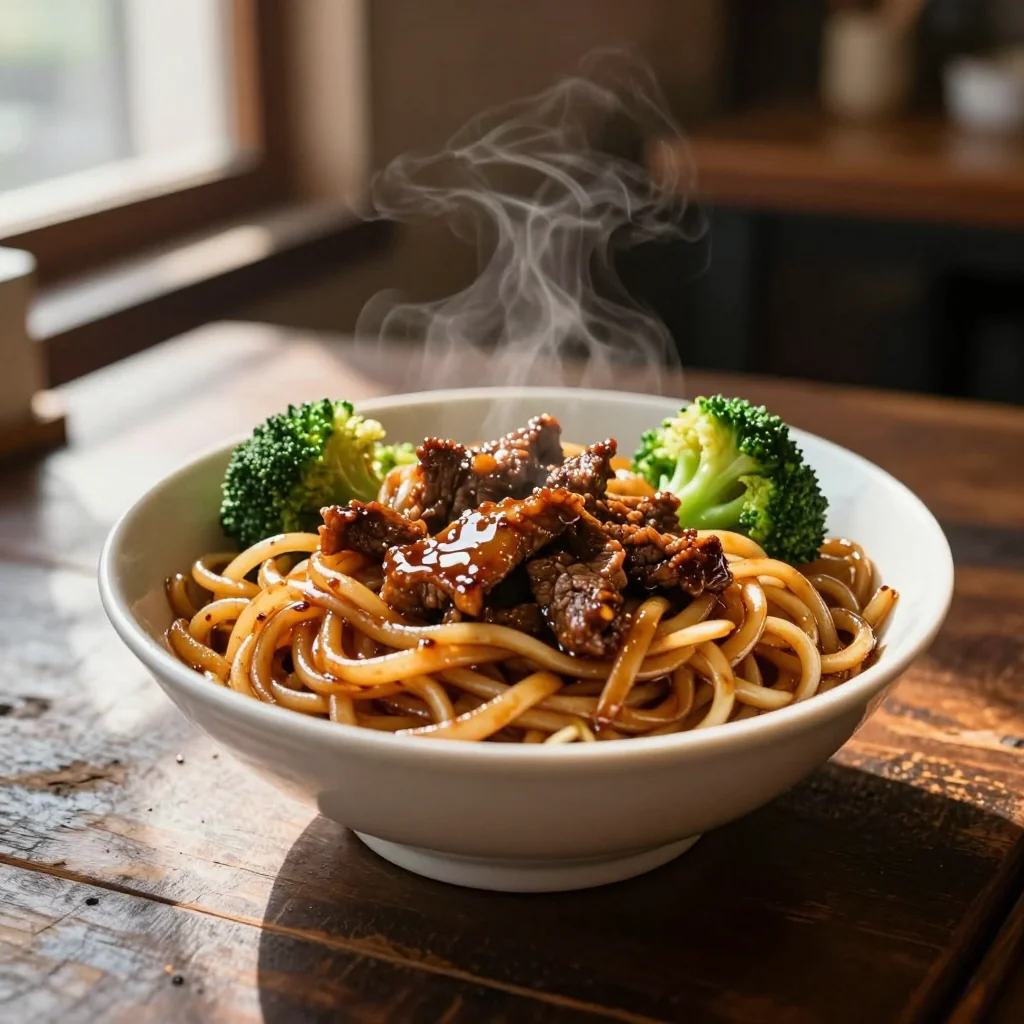
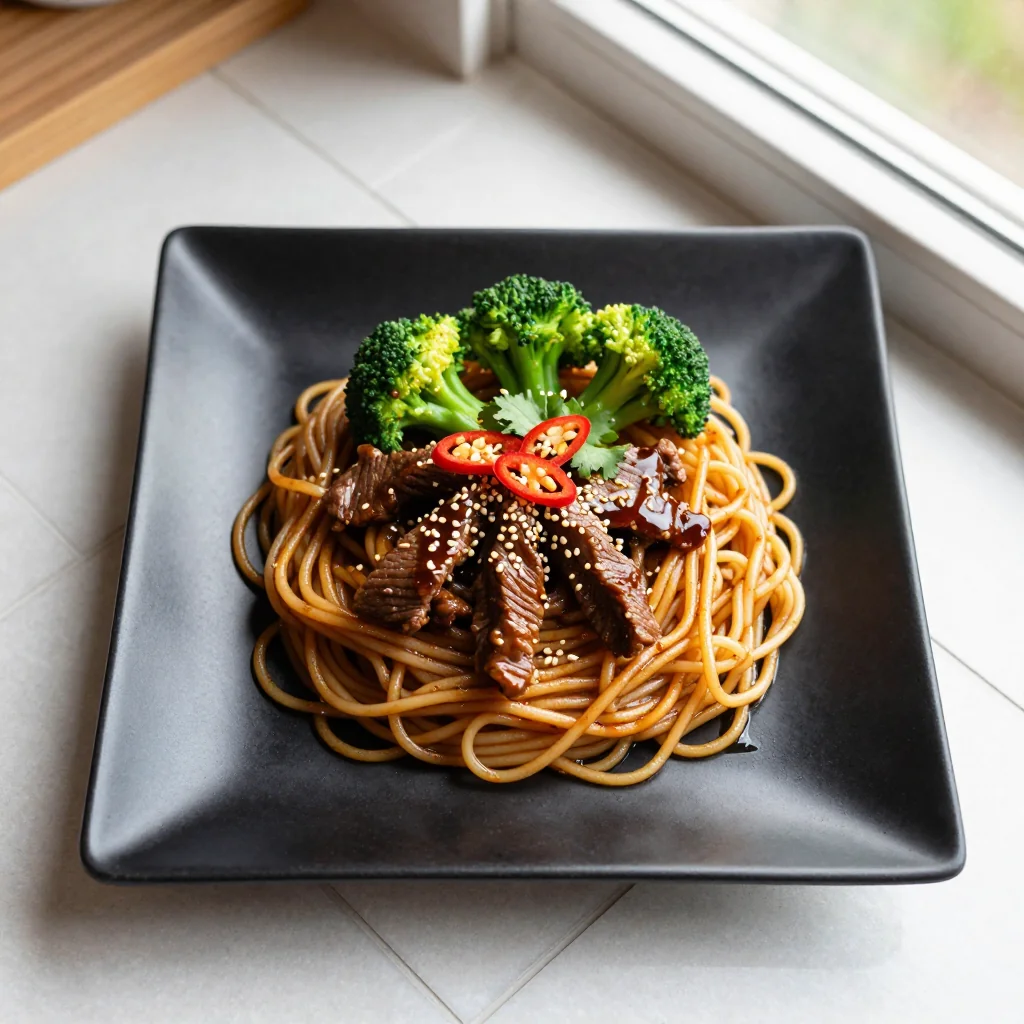
A savory stir‑fry that brings together tender beef, crisp broccoli, and silky lo‑mein noodles in a glossy Asian‑inspired sauce.
Personal Introduction
I still remember the first time I tasted a perfectly balanced beef and broccoli stir‑fry at a tiny street market in Shanghai. The sizzle of the wok, the aroma of ginger and garlic, and the bright green of the broccoli created a moment that felt both comforting and exotic. That memory sparked my lifelong fascination with Asian cuisine, and over the years I have experimented with countless variations, searching for that elusive harmony of flavor and texture.
This dish, Beef and Broccoli Lo Mein with Noodles, is a tribute to those early experiences. It blends the classic elements of a Chinese-American staple—tender strips of beef, crunchy broccoli florets, and a silky soy‑based sauce—with the satisfying chew of lo‑mein noodles. The result is a bowl that feels both familiar and exciting, perfect for a weeknight dinner or a weekend gathering.
In this article, I will walk you through every step, from selecting the right cut of beef to mastering the timing of the stir‑fry. You’ll discover why a splash of sesame oil and a pinch of sugar make all the difference, and how a quick cornstarch slurry gives the sauce that glossy finish we all love.
I’m thrilled to share this recipe with you, and I hope it becomes a staple in your kitchen as it has in mine. Let’s dive in and create a dish that sings with flavor, texture, and a hint of nostalgia.
🌟 Why This Recipe Will Capture Your Heart
Whether you’re a seasoned home chef or just starting out, this lo‑mein brings together simplicity, flavor, and visual appeal in one unforgettable bowl.
- ✨ Balanced Flavors: The sweet‑savory sauce, bright garlic‑ginger notes, and a hint of sesame oil create a perfectly balanced palate that satisfies both cravings and nutritional goals.
- ✨ Textural Harmony: Tender beef, crisp broccoli, and al‑dente noodles provide a delightful contrast that keeps each bite interesting.
- ✨ Quick Weeknight Solution: With a total time of just 35 minutes, you can have a restaurant‑quality meal on the table without a marathon cooking session.
- ✨ Customizable Protein: Swap beef for chicken, tofu, or shrimp to suit dietary preferences without losing the core flavor profile.
- ✨ Nutrient‑Rich: Packed with protein, fiber, and essential vitamins from broccoli, this dish fuels body and mind.
- ✨ Crowd‑Pleaser: The familiar yet exotic flavor profile makes it a hit for family dinners, potlucks, and even office lunches.
🥗 Ingredients
📝 Complete Ingredient List
For the Beef & Broccoli:
For the Noodles & Sauce:
For Garnish:
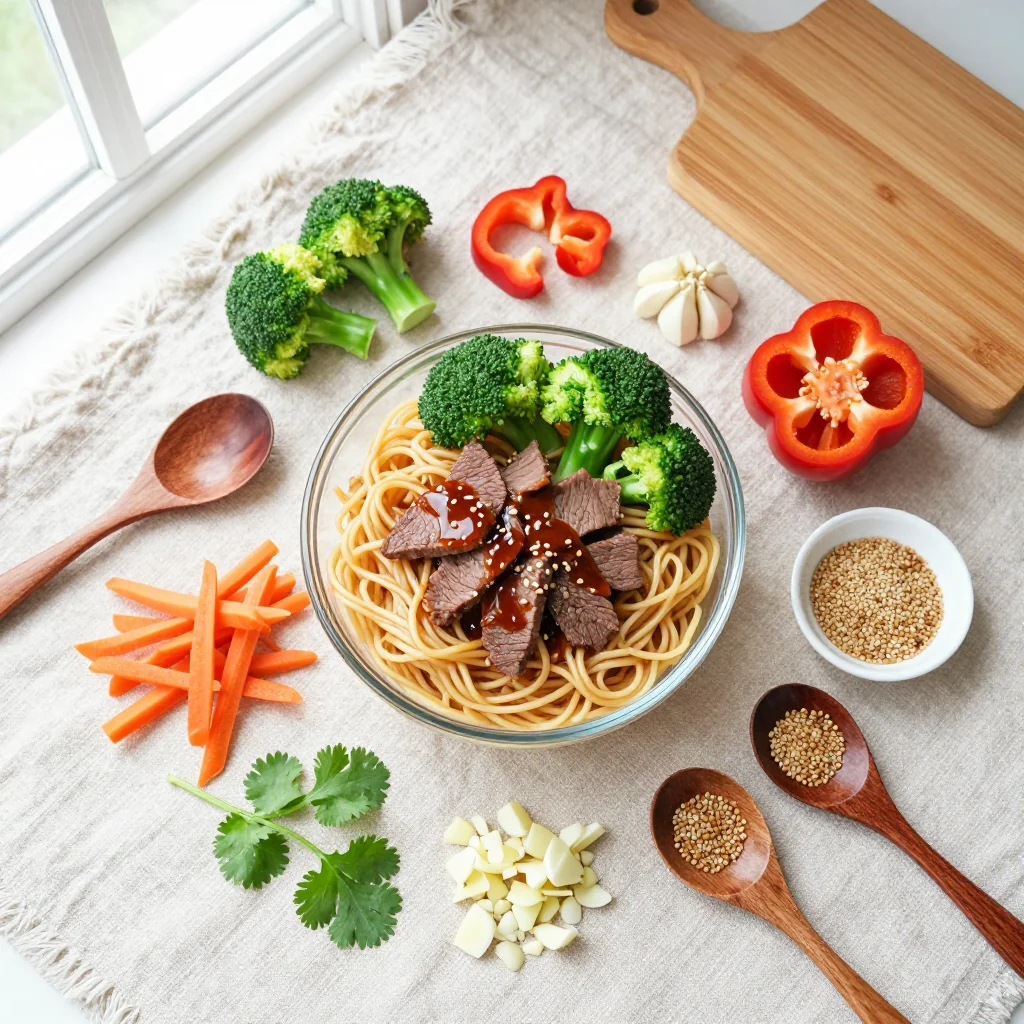
🔍 Focus on Key Ingredients
Flank Steak
Flank steak is prized for its lean texture and rich flavor. When sliced thinly against the grain, it cooks in just a few minutes, staying juicy and tender. Look for a piece with a deep red hue and a slight marbling; this ensures the meat remains moist during the high‑heat stir‑fry.
Broccoli
Fresh broccoli provides a crisp bite and a dose of vitamin C, fiber, and antioxidants. To keep the florets bright green, blanch them briefly in boiling water before adding them to the wok. This technique also reduces the cooking time, preserving the vegetable’s natural crunch.
Lo‑Mein Noodles
Traditional lo‑mein noodles are wheat‑based and have a slightly chewy texture that soaks up the sauce beautifully. If you prefer a gluten‑free option, substitute with rice noodles; just remember to adjust the cooking time to avoid over‑softening.
🔄 Quick Substitutions
| If you don’t have… | Use instead… |
|---|---|
| Flank steak | Sirloin or thinly sliced chicken breast |
| Oyster sauce | Hoisin sauce mixed with a dash of soy sauce |
| Sesame oil | Peanut oil (for cooking) plus a drizzle of toasted sesame seeds |
👨🍳 Step‑by‑Step Instructions
Follow these detailed phases to achieve restaurant‑quality lo‑mein at home. Each phase builds on the previous one, ensuring flavors meld perfectly.
📋 Phase 1: Preparation & Mise en Place
Gather, measure, and prep all components before the heat hits the wok.
Slice the Beef
Place the flank steak on a cutting board, trim any excess fat, and slice against the grain into thin strips about ¼ inch wide. This orientation shortens the muscle fibers, resulting in a tender bite even after a quick stir‑fry. Pat the slices dry with paper towels; moisture interferes with searing.
Prep the Vegetables
Cut broccoli into bite‑size florets. Peel the garlic cloves and mince them finely; this releases more aromatic oils. Grate fresh ginger using the fine side of a microplane. Slice green onions on a diagonal, keeping white and green parts separate for layered garnish.
Cook the Noodles
Bring a large pot of salted water to a rolling boil. Add the lo‑mein noodles and cook according to package instructions, usually 3‑4 minutes, until just al dente. Drain, rinse briefly under cold water to stop cooking, and toss with 1 tsp sesame oil to prevent sticking.
🔥 Phase 2: Cooking & Assembly
High heat is the secret to a glossy, flavorful sauce and perfectly seared beef.
Stir‑Fry the Beef
Heat 1 tbsp vegetable oil in a wok over medium‑high heat until shimmering. Add the beef in a single layer; let it sear without stirring for 30 seconds, then toss quickly. Cook for 1‑2 minutes until just browned but still pink inside. Transfer to a plate and set aside.
Sauté Aromatics & Broccoli
In the same wok, add the remaining 1 tbsp oil. Toss in minced garlic and grated ginger; stir for 15 seconds until fragrant. Add broccoli florets and a splash of chicken broth (≈2 tbsp) to create steam, covering the wok for 2 minutes. The broccoli should turn bright green and stay crisp.
Combine Sauce & Noodles
In a small bowl, whisk together soy sauce, oyster sauce, sugar, black pepper, and the remaining chicken broth. Return the beef to the wok, pour the sauce over, and add the cooked noodles. Toss everything together, allowing the sauce to coat each strand. Drizzle the cornstarch slurry (1 tbsp cornstarch mixed with 2 tbsp water) to thicken; stir for another minute until the sauce gleams.
✨ Phase 3: Finishing & Plating
Final touches bring aroma, texture, and visual appeal.
Check Doneness
Taste a noodle strand; it should be tender but still have a slight bite. The broccoli should be crisp‑tender, and the beef should be pink‑red inside. Adjust seasoning with a pinch of salt or extra soy sauce if needed.
Garnish
Remove the wok from heat. Drizzle 2 tbsp sesame oil for a nutty finish. Sprinkle sliced green onion whites, then the green parts, followed by toasted sesame seeds. This layered garnish adds color, crunch, and aroma.
Serve Immediately
Transfer the lo‑mein to a large serving bowl or individual plates. Serve hot, accompanied by a light side salad or steamed dumplings if desired. The dish is best enjoyed fresh, while the noodles retain their silky texture.
💡 Expert Tips & Tricks
🛒 Choosing the Right Ingredients
Opt for a well‑marbled flank steak; the thin fat layer adds flavor without making the dish greasy. When selecting broccoli, pick crowns that are dense and dark green—these retain crunch after cooking. For noodles, avoid pre‑cooked instant varieties; they often become mushy when stir‑fried. Fresh, high‑quality soy sauce (preferably low‑sodium) gives depth without overwhelming saltiness.
🔪 Preparation Techniques
Slice the beef thinly and uniformly; an uneven cut leads to inconsistent cooking. Use a sharp chef’s knife for clean cuts and to avoid bruising the meat. When mincing garlic, crush it first with the flat side of the knife to release more oils. Keep a bowl of water nearby for rinsing the noodles—this prevents them from sticking together.
🌡️ Mastering the Heat
A wok’s high heat creates the coveted “wok‑hei” (breath of the wok) – a slightly charred, smoky flavor. Pre‑heat the wok before adding oil; this reduces sticking. If you notice smoke, lower the heat briefly, then raise it again when adding the next ingredient. The brief addition of broth to the broccoli creates a gentle steam that cooks the vegetable without loss of color.
🍽️ Presentation & Service
Serve the lo‑mein in a shallow bowl to showcase the glossy sauce. Garnish with a contrasting green (green onions) and a sprinkle of white sesame seeds for visual balance. Pair with a small side of pickled cucumber to cut through the richness. For a festive touch, drizzle a few drops of chili oil just before serving.
🏆 Pro Tips
Professional chefs focus on precision, timing, and layering of flavors to elevate a simple stir‑fry into a culinary masterpiece.
- 🎯 Ultra‑Thin Beef Slicing: Freeze the flank steak for 20‑30 minutes before slicing; the partial solidification makes it easier to achieve paper‑thin strips, ensuring rapid cooking and maximum tenderness.
- 🎯 Sauce Emulsion Technique: Whisk the soy‑oyster sauce mixture with a cold spoon before adding to the hot wok. This creates an emulsion that clings to noodles better than a simple pour.
- 🎯 Cornstarch Slurry Timing: Add the slurry at the very end of cooking, just before removing from heat. This prevents over‑thickening and keeps the sauce glossy without becoming gummy.
- 🎯 Heat Management: Maintain a constant high temperature; if the wok cools, the ingredients will steam rather than sear, resulting in a soggy texture.
- 🎯 Flavor Layering: Add a splash of rice vinegar (½ tsp) after the sauce thickens to brighten the dish and balance the umami.
- 🎯 Final Aromatics: Finish with a quick toss of fresh cilantro leaves (optional) and a few drops of toasted sesame oil for an aromatic lift.
“The secret to great stir‑fry is not just speed, but the harmony of textures and the balance of sweet, salty, and umami.” — Chef Ming Tsai
🔄 Variations & Adaptations
This recipe is a versatile canvas. Below are several ways to tailor it to dietary needs, flavor preferences, and cultural twists while preserving its core appeal.
🥬 Vegetarian / Vegan Version
Replace beef with firm tofu (pressed and cubed) or tempeh. Marinate tofu in soy sauce, a dash of maple syrup, and a pinch of smoked paprika for depth. Use vegetable broth instead of chicken broth, and ensure the oyster sauce is vegan (many brands offer mushroom‑based alternatives). The cooking process remains identical.
- Substitution 1: 400 g extra‑firm tofu, pressed and sliced.
- Substitution 2: 2 tbsp mushroom‑based “oyster” sauce.
🌶️ Flavor Variations
Adjust the sauce profile to explore different culinary directions. A few simple swaps can take the dish from classic to bold.
Spicy Version:
Add 1‑2 tsp of Sichuan peppercorn oil and a tablespoon of chili garlic sauce. Finish with a sprinkle of crushed red pepper flakes for heat that lingers.
Mediterranean Twist:
Swap soy sauce for a blend of olive oil, lemon zest, and a splash of white wine. Add sun‑dried tomatoes and kalamata olives for briny contrast.
Thai‑Inspired Version:
Use fish sauce and a tablespoon of coconut milk in the sauce, add Thai basil leaves, and finish with a squeeze of fresh lime juice for bright acidity.
⚠️ Dietary Adaptations
Gluten‑Free:
Use gluten‑free tamari instead of soy sauce and rice noodles in place of wheat lo‑mein. Ensure the “oyster” sauce is also gluten‑free.
Lactose‑Free:
This recipe is naturally lactose‑free; just double‑check packaged sauces for hidden dairy.
Low‑Calorie:
Reduce oil to 1 tbsp, substitute half the beef with sliced mushrooms, and increase broccoli proportion. Use a sugar substitute like erythritol if desired.
👶 Family / Kids Version
Kids often prefer milder flavors. Omit the black pepper and reduce the garlic to one clove. Add a handful of shredded carrots for color and natural sweetness. Serve with a side of steamed edamame for extra protein.
📦 Storage & Reheating
🧊 Conservation
Refrigerator:
- Duration: 3 days
- Container: Airtight glass or BPA‑free plastic container
- Tip: Store sauce separately if possible to maintain noodle texture.
Freezer:
- Duration: 2 months
- Method: Cool completely, then freeze in a freezer‑safe bag, removing excess air.
- Defrost: Overnight in the refrigerator or quick‑defrost in microwave on low.
💡 For best texture, reheat gently and add a splash of broth to revive the sauce’s gloss.
♨️ Reheating
🔥 Oven (Recommended):
- Preheat to 180°C (350°F).
- Cover the dish with foil to retain moisture.
- Heat for 12‑15 minutes, stirring halfway.
- Remove foil, toss, and heat an additional 3‑5 minutes for a slight crisp.
⚡ Microwave (Quick):
- Place portion in a microwave‑safe bowl, cover loosely.
- Heat on medium power for 1 minute, stir.
- Continue in 30‑second intervals until hot.
🍳 Stovetop:
Add a splash of water or broth to a hot skillet, then toss the leftovers over medium heat for 3‑4 minutes, allowing the sauce to re‑emulsify.
🍷 Perfect Pairings
🥗 Side Dishes
- Asian Cucumber Salad: Lightly dressed with rice vinegar, sesame oil, and a pinch of sugar, it adds crunch and acidity.
- Steamed Dumplings: Pork or vegetable dumplings complement the savory sauce.
- Edamame with Sea Salt: Simple, protein‑rich, and perfect for snacking while the main cooks.
🍷 Wine & Beverage Pairings
- Riesling (off‑dry): Its slight sweetness balances the soy‑based umami.
- Pinot Noir: Light red with soft tannins that won’t overpower the dish.
- Non‑Alcoholic: Sparkling ginger ale with a splash of lime for a refreshing contrast.
🍰 Completing the Meal
Begin with a miso soup or light vegetable broth to set the tone. Follow the lo‑mein with a delicate green tea ice cream or mango sticky rice for a sweet finish that respects the Asian theme.
❓ Frequently Asked Questions
Q: Can I use frozen broccoli instead of fresh?
Yes, frozen broccoli works well, but be sure to thaw and pat dry first. Frozen pieces release more water, so you may need to increase the wok’s heat slightly to achieve a crisp texture. Adding a quick blast of high heat after the broccoli is incorporated helps evaporate excess moisture.
Q: What’s the best way to avoid soggy noodles?
Rinse cooked noodles under cold water to stop the cooking process, then toss them with a thin layer of sesame oil. This prevents them from sticking together and keeps them firm when added to the hot wok. Also, add the noodles at the very end, just long enough to coat them with sauce.
Q: How do I make this recipe gluten‑free?
Substitute soy sauce with tamari (gluten‑free) and use rice noodles instead of wheat lo‑mein. Ensure any “oyster sauce” you use is gluten‑free; many brands offer mushroom‑based alternatives. The rest of the ingredients are naturally gluten‑free.
Q: My sauce turned out too thin—what can I do?
If the sauce lacks body, increase the cornstarch slurry: mix an extra ½ tsp cornstarch with 1 tbsp water, then stir it into the wok. Allow the mixture to simmer for a minute; the sauce will thicken and become glossy. Avoid over‑thickening, which can make the dish gummy.
Q: Can I prepare the sauce ahead of time?
Absolutely. Combine soy sauce, oyster sauce, sugar, pepper, and broth in a sealed container and refrigerate for up to 2 days. Bring it to room temperature before adding to the wok to prevent temperature shock.
Q: Is it possible to make this dish ahead for a party?
Yes. Cook the beef and vegetables, keep the sauce separate, and store the noodles al dente. When guests arrive, quickly reheat everything together in the wok for 2‑3 minutes, toss with the sauce, garnish, and serve. This ensures the noodles stay fresh and the vegetables retain their crunch.
🎉 Let’s Get Cooking!
This Beef and Broccoli Lo Mein brings together the comforting familiarity of stir‑fry with the satisfying chew of noodles, creating a dish that’s both wholesome and indulgent. By following the detailed steps, you’ll master the art of high‑heat cooking, achieve a glossy sauce, and balance flavors that dance on the palate. Remember, the secret lies in preparation, heat, and timing—once you internalize those, the recipe becomes second nature.
I encourage you to experiment with the variations, adjust the spice level, or swap proteins to make this recipe truly your own. Share your creations, ask questions, and let the community inspire you. Your feedback fuels future recipes and helps us all become better cooks.
Have you tried this recipe?
Leave a comment and rating below! Share your photos on Instagram with #LoMeinLove to be featured.
Beef and Broccoli Lo Mein with Noodles
A savory stir‑fry of tender beef, crisp broccoli, and silky noodles in a glossy Asian sauce.
📝 Ingredients
Beef & Broccoli
Noodles & Sauce
Garnish
👨🍳 Instructions
- 1
Slice beef thinly against the grain; set aside.
- 2
Prepare broccoli, garlic, ginger, and noodles as described in the preparation phase.
- 3
Heat oil in wok, sear beef quickly, then remove.
- 4
Sauté garlic and ginger, add broccoli with a splash of broth, steam for 2 minutes.
- 5
Combine sauce ingredients, return beef, add noodles, and toss.
- 6
Stir in cornstarch slurry to thicken; cook 1 minute.
- 7
Drizzle sesame oil, garnish with green onions and sesame seeds.
- 8
Serve hot, optionally with a side of cucumber salad.
- 9
Enjoy and share your creation on social media.
- 10
Store leftovers as per the storage guidelines.
🥗 Nutrition (per serving)
*Nutrition facts are estimates based on standard ingredient values.
📚 You Might Also Like

Chicken Teriyaki Lo Mein

Spicy Shrimp Pad Thai

Vegetable Yakisoba

Beef Chow Fun
💬 Comments & Reviews
No comments yet. Be the first to share your thoughts!


Leave a Comment