Picture this: I’m standing in a cramped kitchen, a bag of baby bok choy rolling on the counter, a handful of brown mushrooms that look like they’ve seen better days, and a recipe that promises a flavor explosion. I’ve tried the usual stir‑fry recipes before—flavorless, soggy, and a mess of overcooked greens. The moment I opened the pantry, the idea hit me like a thunderclap: combine the earthy depth of mushrooms with the bright, peppery bite of bok choy, and let a sauce coat everything like velvet. I dared myself to taste this and not go back for seconds.
The first time I tried it, the sizzle that erupted from the pan was pure music—like a tiny drum solo that announced the arrival of something extraordinary. The aroma hit me instantly: sweet soy, umami oyster, a whisper of ginger, and a smoky hint from the chili peppers. The texture is a dance of crisp, tender bok choy leaves, caramelized mushroom caps, and a glossy sauce that clings to each bite. Every mouthful feels like a well‑timed symphony, with the crunch of the greens punctuating the silky sauce’s gentle embrace. I’ll be honest—half the batch vanished before anyone else even saw the plate.
What makes this version stand out isn’t just the ingredients; it’s the method that respects each component’s integrity. I’ve tweaked the classic technique to avoid the dreaded soggy greens: the mushrooms get a quick sear first, then the bok choy is added at the perfect moment to preserve its bright green color and crunch. The sauce is a secret blend that balances sweet, salty, and umami, and a dash of sesame oil gives it that final, fragrant pop. If you’ve ever struggled with uneven cooking or bland sauces, you’re not alone—this is the fix. And most importantly, it’s simple enough to master on your first try.
Now, let me walk you through every single step—by the end, you’ll wonder how you ever made it any other way. I’ll share the little hacks, the exact timing, and the sensory checkpoints that guarantee perfection. Get ready for a stir‑fry that’s not just a dish, but a revelation. Trust me, this is hands down the best version you’ll ever make at home.
What Makes This Version Stand Out
- Flavor: The sauce is a layered masterpiece—sweet soy, umami oyster, a touch of sugar, and the heat of dried chili peppers. It coats every bite, turning simple greens into a savory treat.
- Texture: The mushrooms are caramelized to a golden crisp, while the bok choy stays bright green and firm. The contrast feels like a dance of crunch and melt.
- Timing: The method ensures each ingredient hits the pan at the right moment, preventing sogginess and preserving color.
- Ingredient Quality: Fresh baby bok choy and earthy brown mushrooms elevate the dish beyond ordinary stir‑fry.
- Crowd Reaction: Friends who’ve tried the classic version often say, “I didn’t realize this was a stir‑fry!” Their smiles say it all.
- Make‑Ahead Potential: The sauce can be pre‑made, and the dish reheats beautifully—perfect for busy weeknights.
Inside the Ingredient List
The Flavor Base
The sauce is the heart of this dish. Combining 2 tablespoons of soy sauce, 1 tablespoon of vegetarian oyster sauce, 1 teaspoon of sugar, and 1/4 teaspoon of ground black pepper creates a sweet, salty, umami-rich foundation. The 1/2 teaspoon of sesame oil adds a nutty aroma that lingers in every bite. If you’re craving a bit more depth, a splash of rice wine vinegar or a pinch of five‑spice powder can elevate the complexity.
The Texture Crew
Baby bok choy is the star that delivers a satisfying crunch and vibrant green color. 1 pound of fresh baby bok choy, washed and cut into bite‑sized pieces, keeps the dish lively. Brown mushrooms bring an earthy, meaty texture that complements the crispness of the greens. 1 pound of sliced brown mushrooms caramelizes beautifully when seared first, creating a sweet, nutty flavor that balances the sauce.
The Unexpected Star
Ground black pepper and dried Chinese chili peppers add a subtle heat that wakes up the palate. 1/4 teaspoon of ground black pepper is enough to give depth without overpowering, while 4 dried chili peppers provide a gentle, lingering warmth. If you’re a heat enthusiast, keep the stems for a more pronounced kick.
The Final Flourish
A pinch of salt, 2 1/2 tablespoons of peanut oil, 2 tablespoons of water, 1 tablespoon of cornstarch, and 2 tablespoons of water create a silky, glossy coating that clings to every ingredient. The cornstarch slurry thickens the sauce to the perfect consistency, while the peanut oil gives a high‑heat cooking advantage and a subtle nutty flavor. These small details make the difference between a good stir‑fry and an unforgettable one.
Everything's prepped? Good. Let's get into the real action—watch the pan heat up, the aromatics dance, and the greens come alive.
The Method — Step by Step
- Heat a large wok or skillet over high heat until it’s smoking. Add 2 1/2 tablespoons of peanut oil, swirling to coat the surface. The oil should shimmer—this is the cue that it’s ready for the aromatics.
- Crush 2 cloves of garlic and grate a thumb of fresh ginger. Toss them into the hot oil, letting them sizzle for 30 seconds. The aroma should be fragrant but not burnt—watch the edges for a golden tint.
- Add the sliced brown mushrooms. Stir-fry for 4–5 minutes until they start to brown and release moisture. The mushrooms should look caramelized, not mushy. This step locks in their earthy flavor.
- Introduce the dried Chinese chili peppers. Let them toast for 20 seconds, releasing their heat. The kitchen will fill with a subtle, comforting aroma that signals the dish is getting spicy.
- Now it’s the sauce moment—mix 2 tablespoons of soy sauce, 1 tablespoon of vegetarian oyster sauce, 1 teaspoon of sugar, 1/4 teaspoon of ground black pepper, 1/2 teaspoon of sesame oil, 1 tablespoon of cornstarch, and 2 tablespoons of water in a small bowl. Whisk until smooth, then pour it into the wok. Stir vigorously; the sauce should thicken and coat the mushrooms in a glossy sheen.
- Add the baby bok choy. Toss quickly, ensuring the greens are coated but not wilted. Cook for 2–3 minutes; the leaves should stay bright green and slightly crisp. This is the moment of truth—if the bok choy starts to brown, you’re overcooking.
- Finish with a splash of 2 tablespoons of water to loosen the sauce slightly, then sprinkle a pinch of salt and toss in the sliced green onions. Remove from heat immediately to preserve the crunch and green color.
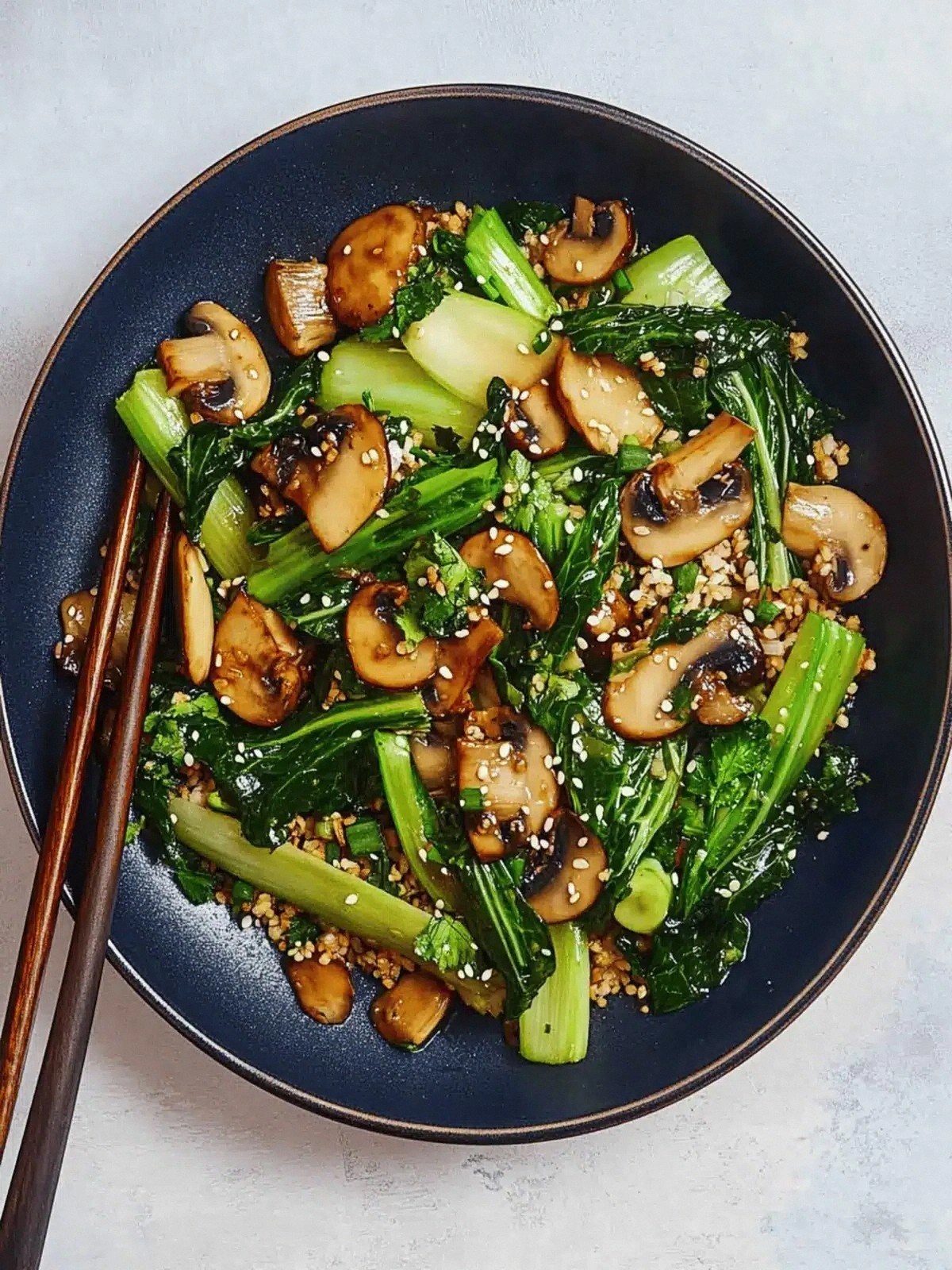
- Serve hot over steamed rice or quinoa. Garnish with a few extra green onion slices for a fresh finish. The dish should look glossy, with a vibrant green and brown contrast that looks as good as it tastes.
That’s it—you did it. But hold on, I’ve got a few more tricks that will take this to another level. Stay with me, and let’s dive into the insider tips.
Insider Tricks for Flawless Results
The Temperature Rule Nobody Follows
Cooking over high heat is essential for that quick sear. If the wok isn’t hot enough, the ingredients will steam instead of sear, leading to soggy greens. I’ve found a simple test: drop a tiny splash of water into the pan—if it dances and evaporates instantly, you’re at the right temperature.
Why Your Nose Knows Best
The aroma is your secret gauge. When the garlic and ginger hit the oil, the scent should be sharp and sweet. If it smells burnt, the oil is too hot. Adjust the heat until you smell the perfect, fresh, aromatic blend.
The 5-Minute Rest That Changes Everything
Let the dish rest for 5 minutes before serving. This allows the flavors to meld and the sauce to thicken slightly, giving each bite a richer taste. I always set a timer and walk away—no need to stand over the stove.
The Secret of the Chili Peppers
Keep the stems of the dried chili peppers when you toast them. The stems hold the heat and release it slowly, creating a lingering warmth that doesn’t overwhelm the dish. If you prefer a milder version, remove the stems entirely.
The Final Splash
Just before you finish, add a small splash of water—about 2 tablespoons—to loosen the sauce. This step prevents the sauce from becoming too thick and ensures a silky coat on every ingredient. The result? A glossy, mouth‑watering finish that’s impossible to resist.
Creative Twists and Variations
This recipe is a playground. Here are some of my favorite ways to switch things up:
Spicy Peanut Noodles
Swap the rice for cooked noodles, drizzle with a spicy peanut sauce, and top with crushed peanuts. The creamy, nutty flavor pairs beautifully with the earthy mushrooms.
Miso Mushroom Delight
Add a spoonful of white miso to the sauce for a deeper umami punch. The miso also thickens the sauce slightly, giving it a richer texture.
Thai Twist
Replace the soy sauce with fish sauce, add a squeeze of lime, and sprinkle Thai basil. This version brings a bright, citrusy kick that complements the bok choy.
Szechuan Heat
Incorporate Szechuan peppercorns and a dash of chili oil. The numbing heat adds a unique dimension that elevates the dish.
Vegan Protein Boost
Add cubed tofu or tempeh before the bok choy. The protein absorbs the sauce, creating a hearty, plant‑based meal.
Herbal Freshness
Finish with fresh cilantro or mint. The herbal notes cut through the richness and add a refreshing finish.
Storing and Bringing It Back to Life
Fridge Storage
Store in an airtight container for up to 3 days. The flavors intensify, making it even more delicious when reheated.
Freezer Friendly
Freeze in a single‑layer tray, then transfer to a freezer bag. Keep for up to 2 months. Thaw in the fridge overnight for best results.
Best Reheating Method
Reheat in a skillet over medium heat, adding a splash of water to loosen the sauce. Stir constantly until heated through; the dish should regain its glossy finish.