The kitchen had been a battlefield that night, a chaotic mess of overcooked onions, burnt garlic, and a pot of soup that tasted like it had been simmering in a time machine. I stared at the charred pot, a guilty grin creeping across my face, and thought, “If this is what dinner looks like, I need a miracle.” That’s when the idea sparked like a lightning bolt: a cheesy brussels sprout casserole that would turn my culinary mishap into a triumphant triumph. The moment the oven door opened, a fragrant cloud of caramelized onions and melted cheese swirled through the air, and I knew I’d stumbled upon something extraordinary.
Picture the crunch of perfectly halved brussels sprouts, each speck of green glistening with a thin glaze of butter and a whisper of nutmeg. The aroma is a warm, comforting hug—like a campfire on a cool night, but inside your kitchen. The sound of the casserole bubbling is music, a gentle hiss that promises that every bite will be a revelation. When you take your first forkful, the cheese melts like velvet across your tongue, leaving a savory, slightly nutty aftertaste that lingers long after the last bite. The texture? A delightful contrast between the crispy edges and the tender interior, all bound together by a silky, golden sauce.
What sets this version apart isn’t just the flavor—though it’s undeniably rich—but the meticulous balance of ingredients and the method that elevates every component. I dare you to taste this and not go back for seconds. The result is hands down the best casserole you’ll ever make at home, and it’s not just about the taste; it’s about the experience. From the first glance to the final bite, every step is designed to be as rewarding as the outcome. And if you’ve ever struggled with making a casserole that actually works, you’re not alone—this is the fix.
Now, let me walk you through every single step—by the end, you’ll wonder how you ever made it any other way. The secret lies in the layers, the timing, and a few game‑changing tricks that I’ve perfected over countless evenings in the kitchen. Ready? Let’s dive in.
What Makes This Version Stand Out
- Flavor: The combination of cheddar, mozzarella, and parmesan creates a layered cheese profile that’s both bold and comforting, with a subtle nutty finish from the brussels sprouts. The caramelized onions add depth, while a hint of garlic and a pinch of nutmeg elevate the dish to gourmet territory.
- Texture: The brussels sprouts are roasted to a caramelized crisp, then folded into a silky sauce that coats each piece without overwhelming it. The result is a casserole that feels indulgent yet satisfies a craving for something light.
- Ease: Every step is streamlined—no complicated sauces, no double‑cooking. The method relies on a few basic techniques that even a novice can master.
- Uniqueness: The inclusion of a crunchy bacon layer and a subtle herb garnish gives this dish a signature twist that sets it apart from classic casseroles.
- Crowd‑Pleaser: Whether it’s a family dinner or a potluck, this casserole brings smiles. The cheesy, buttery richness is universally loved, and the brussels sprouts add a healthy, colorful touch.
- Ingredient Quality: Fresh, organic brussels sprouts and high‑quality cheeses make a noticeable difference in flavor and texture. The recipe emphasizes quality over quantity.
- Cooking Method: Roasting first, then baking with a cheese sauce, ensures each component retains its individual character while contributing to a cohesive whole.
- Make‑Ahead Potential: The casserole can be assembled ahead of time, refrigerated, and baked right before serving, making it ideal for busy weeknights.
Alright, let's break down exactly what goes into this masterpiece…
Inside the Ingredient List
The Flavor Base
Onion and garlic form the aromatic foundation of this casserole. The onions are diced finely so they caramelize quickly, releasing a sweet, almost caramel flavor that balances the earthiness of the brussels sprouts. Garlic, minced to a fine paste, adds a punch of warmth that permeates the dish. If you skip the garlic, the casserole loses a layer of depth, becoming a bit one‑dimensional. For those who love a bit of spice, a pinch of red pepper flakes can be added at this stage to give it a subtle kick.
The Texture Crew
Brussels sprouts are the star of the show. They should be trimmed, halved, and tossed in olive oil, salt, and pepper before roasting. The roasting process brings out their natural sweetness and creates a desirable crisp on the edges, a texture that’s a delight to bite into. If you prefer a softer texture, you can blanch them in boiling water for 3 minutes before roasting, but this will reduce the caramelized flavor.
Bacon adds a smoky crunch that contrasts beautifully with the tender sprouts. Cook it until crispy, then crumble into small bits. If you’re on a lower‑fat diet, substitute with pancetta or turkey bacon, but remember it will alter the flavor profile slightly.
The Unexpected Star
Heavy cream isn’t just a filler—it’s the binder that turns the cheese into a luscious, velvety sauce. It also adds a subtle richness that balances the slight bitterness of the sprouts. If you’re avoiding dairy, a splash of coconut milk or a plant‑based cream works, but the sauce will be lighter. A splash of white wine during the sauté phase adds a touch of acidity that brightens the dish.
The cheese trio—cheddar, mozzarella, and parmesan—provides a harmonious blend of sharpness, meltiness, and nutty undertones. Cheddar offers a robust flavor, mozzarella contributes meltability, and parmesan adds a salty, granular texture. If you’re vegan, try a mix of vegan cheddar and mozzarella substitutes, but the sauce texture will change.
Flour and butter create a roux that thickens the sauce, preventing it from becoming too runny. The roux is cooked until it turns a light golden color, ensuring there’s no raw flour taste. A pinch of nutmeg, though optional, adds a subtle warmth that complements the brussels sprouts.
The Final Flourish
Fresh parsley, chopped finely, is sprinkled on top before serving to add a burst of color and a hint of herbal brightness. A squeeze of lemon juice right before serving can brighten the flavors further, cutting through the richness. If you prefer a more decadent finish, a drizzle of truffle oil can elevate the dish, but use sparingly as it’s potent.
Everything's prepped? Good. Let's get into the real action...
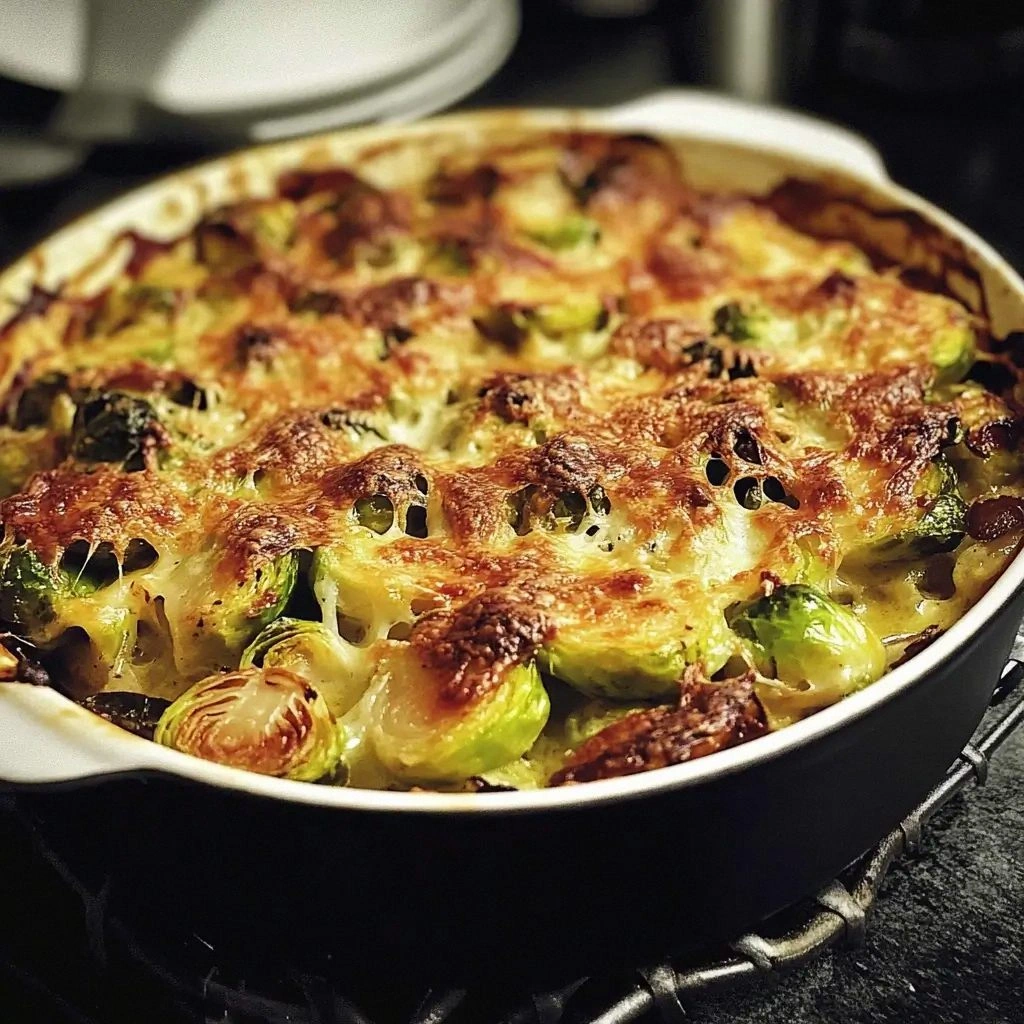
The Method — Step by Step
- Preheat your oven to 375°F (190°C). While the oven warms, trim the brussels sprouts: cut off the stem ends, remove any yellow or damaged outer leaves, then halve them from top to bottom. Toss the sprouts in a bowl with olive oil, sea salt, and freshly ground black pepper. Spread them out on a baking sheet, cut side down, and roast for 25 minutes or until the edges are caramelized and the interior is tender. This step is critical for developing the sweet, nutty flavor that forms the backbone of the dish. Keep an eye on them—if they burn, you’ll lose that delicate balance.
- While the sprouts roast, heat a large skillet over medium heat and add the diced onion. Sauté until translucent and beginning to caramelize, about 5 minutes. Stir in the minced garlic and cook for an additional minute until fragrant. The aroma should be warm and inviting—like a comforting hug. Once the onions are golden, set them aside in a bowl and let them cool slightly; this will help prevent the sauce from becoming too thick.
- In the same skillet, add the diced bacon. Cook until crispy, then use a slotted spoon to transfer the bacon to a paper towel‑lined plate. Drain excess fat, leaving about 2 tablespoons in the skillet. The bacon’s smoky flavor will infuse the sauce, so don’t skip this step. If you’re using turkey bacon, reduce the cooking time slightly to avoid over‑cooking.
- To the skillet’s remaining bacon fat, pour in the flour and stir vigorously to create a roux. Cook for 2–3 minutes until the mixture turns a light golden color, ensuring the raw flour taste is eliminated. This thickening agent is essential for a silky sauce that clings to each sprout.
- Slowly whisk in the heavy cream, ensuring there are no lumps. Bring the mixture to a gentle simmer, stirring constantly. As the sauce thickens, sprinkle in the grated parmesan and stir until fully melted. The sauce should coat the back of a spoon without dripping. Add the nutmeg, if using, and a pinch of salt to taste. This is the moment of truth—your sauce should be glossy, thick, and aromatic.
- Return the caramelized onions to the skillet, followed by the roasted brussels sprouts and crumbled bacon. Toss everything together until evenly coated. This ensures each sprout is bathed in the cheesy, buttery sauce. If the mixture looks too thick, add a splash of milk or broth to reach your desired consistency.
- Transfer the entire mixture to a greased 9x13‑inch baking dish. Sprinkle the shredded cheddar and mozzarella evenly over the top. The cheeses will melt into a golden crust, creating that irresistible, gooey top layer that everyone loves.
- Bake in the preheated oven for 20 minutes, or until the cheese is bubbling, golden, and the edges of the sprouts begin to pull away from the sides of the dish. The final aroma—rich, cheesy, and slightly caramelized—will make your kitchen feel like a gourmet restaurant.
- Remove from the oven and let it rest for 5 minutes. This short rest allows the sauce to set and the flavors to meld. Sprinkle fresh parsley over the top for a burst of color and a hint of herbal brightness. If you like a touch of acidity, a squeeze of lemon juice right before serving brightens the dish beautifully.
- Serve hot, ladling out portions with a spoon to ensure each plate gets that coveted cheesy, crispy edge. Pair with a crisp green salad or a slice of crusty bread to soak up any remaining sauce. Enjoy the symphony of textures and flavors that dance across your palate.
That's it — you did it. But hold on, I've got a few more tricks that'll take this to another level...
Insider Tricks for Flawless Results
The Temperature Rule Nobody Follows
Many cooks bake casseroles at 400°F, thinking higher heat guarantees crispiness. In reality, 375°F is the sweet spot that allows the cheese to melt evenly without scorching the top. This lower temperature also ensures the brussels sprouts roast properly, developing that caramelized edge without turning black. If you’re using a convection oven, reduce the temperature by 25°F to avoid over‑browning.
Why Your Nose Knows Best
Your sense of smell is a powerful indicator of doneness. As the casserole bakes, the scent of melted cheese and caramelized onions will become unmistakably inviting. When the top turns a deep golden brown and the edges of the sprouts pull away from the dish, you’ll know it’s ready. Trust your nose—if it smells heavenly, it’s ready to serve.
The 5‑Minute Rest That Changes Everything
Letting the casserole rest for 5 minutes after baking isn’t just a courtesy; it allows the cheese sauce to set, making it easier to cut clean slices. It also lets the flavors meld, so the brussels sprouts absorb the rich, cheesy coating fully. Skipping this step can result in a runny dish that feels undercooked.
Use a Layered Cheese Approach
Instead of mixing all cheeses into the sauce, layer them strategically. Place a thin layer of mozzarella at the bottom of the dish before adding the sauce; this creates a gooey base that supports the top layer of cheddar and parmesan. The result is a more complex texture and a visually appealing golden crust.
Add a Splash of Wine
A splash of dry white wine during the sauté phase adds a subtle acidity that brightens the dish. The alcohol evaporates, leaving behind a nuanced flavor that balances the richness of the cheese and cream. If you’re not comfortable with alcohol, a tablespoon of apple cider vinegar can provide a similar brightening effect.
The Perfect Crumb
Sprinkle a handful of panko breadcrumbs over the top before baking for an extra crisp layer. The breadcrumbs soak up some of the cheese sauce, creating a crunchy, golden topping that adds texture and visual appeal. This is especially effective if you’re serving the casserole at a dinner party where presentation matters.
Creative Twists and Variations
This recipe is a playground. Here are some of my favorite ways to switch things up:
Mediterranean Twist
Replace the bacon with sun‑dried tomatoes and olives for a Mediterranean flavor profile. Add a handful of chopped kalamata olives and a drizzle of olive oil. Finish with fresh oregano and a squeeze of lemon for brightness. This variation is perfect for a light summer meal.
Spicy Kick
Add a tablespoon of red pepper flakes during the sauté phase and finish with a handful of sliced jalapeños before baking. The heat will contrast the creamy cheese and sweet sprouts, creating a dish that’s both comforting and fiery. Serve with a cool yogurt dip to balance the spice.
Vegan Version
Swap the heavy cream for coconut milk and use vegan cheddar and mozzarella substitutes. Replace bacon with tempeh bacon or sautéed mushrooms for umami. This version retains the rich, cheesy texture while being plant‑based.
Holiday Holiday
Add a handful of candied pecans and a splash of maple syrup before baking. The sweet and nutty flavors pair wonderfully with the savory cheese. This version is ideal for holiday gatherings or a cozy winter night.
Breakfast Boost
Serve the casserole with a side of scrambled eggs or a poached egg on top. The runny yolk will mingle with the cheese sauce, creating a decadent brunch dish. This twist is great for weekend mornings.
Gluten‑Free Option
Use a gluten‑free flour blend for the roux and a gluten‑free baking dish. Ensure the breadcrumbs you use are labeled gluten‑free if you’re adding them for a crunchy topping. The dish will maintain its texture while being safe for gluten‑sensitive diners.
Storing and Bringing It Back to Life
Fridge Storage
Cool the casserole completely before covering it tightly with plastic wrap or aluminum foil. Store in the refrigerator for up to 3 days. When ready to serve, reheat in the oven at 350°F (175°C) for 15 minutes or until heated through. This method preserves the crispy edges and creamy interior.
Freezer Friendly
For longer storage, place the casserole in a freezer‑safe container and freeze for up to 2 months. Thaw overnight in the refrigerator, then reheat as described above. The texture remains excellent, though the crispness of the top layer may soften slightly.
Best Reheating Method
Add a splash of water or broth to the dish before reheating; this steams the casserole back to a moist, creamy state. Reheat in a preheated oven at 350°F (175°C) for 12–15 minutes. Avoid microwaving, as it can make the cheese rubbery.