Love this? Pin it for later! 📌
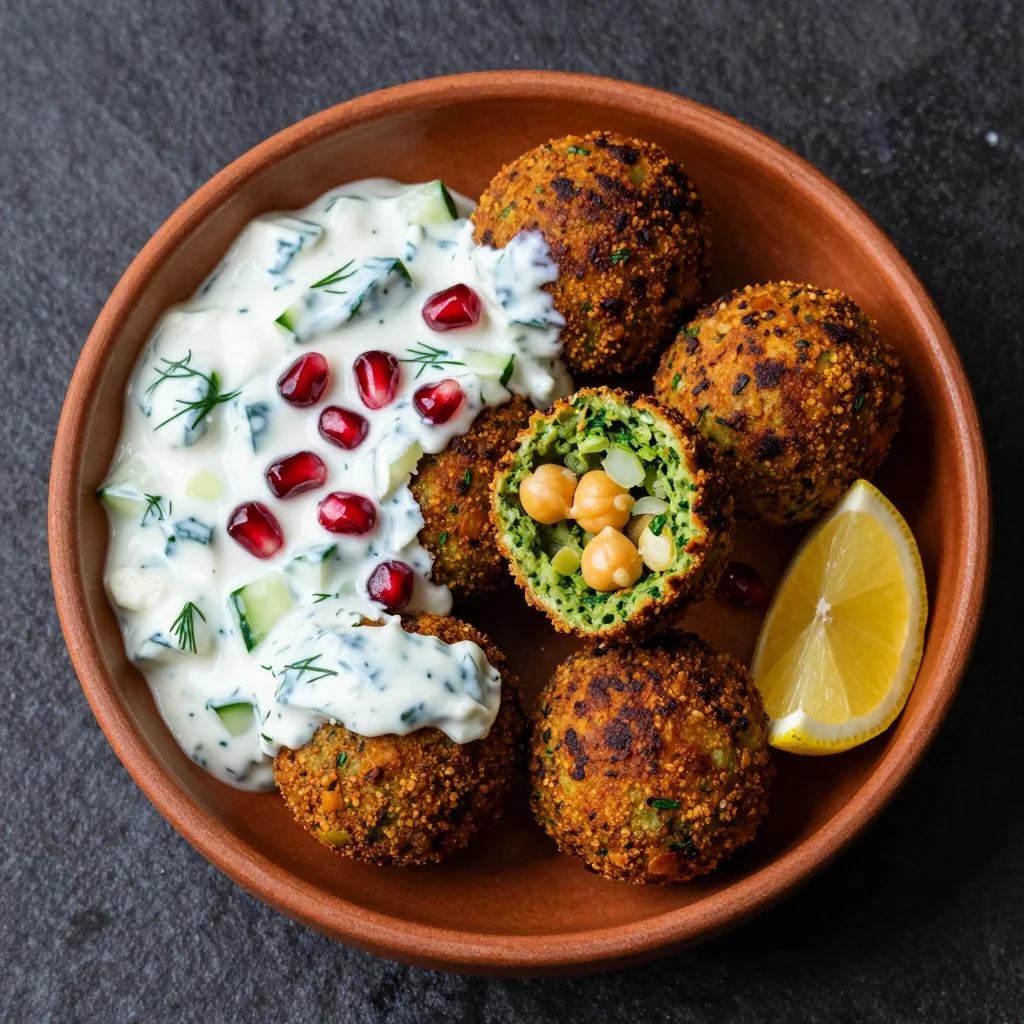
I still remember the first time I served these to my traditionally meat-loving father-in-law. He took one skeptical bite, then quietly reached for a second, then a third. By the time he'd polished off six falafel balls wrapped in warm pita with generous dollops of tzatziki, he declared, "I could eat these every week." That's when I knew this recipe was special.
What makes this version extraordinary isn't just the baking technique—it's the combination of properly soaked chickpeas, the perfect herb-to-spice ratio, and that cooling, creamy tzatziki that transforms simple ingredients into something magical. Whether you're hosting a Mediterranean-themed dinner party, meal-prepping for the week ahead, or simply craving a healthier comfort food option, these crispy baked falafel deliver restaurant-quality results with minimal effort.
Why This Recipe Works
- Oven-Baked Perfection: Achieve that coveted crispy texture using a two-temperature baking method that mimics deep-frying without the mess or calories.
- Authentic Flavor Profile: Traditional spice blend with cumin, coriander, and a hint of cardamom creates that authentic Middle-Eastern taste.
- No Canned Chickpeas: Using dried chickpeas (never canned!) ensures the perfect texture and prevents mushy falafel.
- Make-Ahead Friendly: Prep the mixture up to 3 days ahead or freeze shaped falafel for up to 3 months.
- Protein-Packed: Each serving provides 15g of plant-based protein, making it a satisfying main dish.
- Versatile Serving Options: Perfect in wraps, salads, grain bowls, or as protein-packed appetizers.
- Beginner-Friendly: Clear step-by-step instructions with tips to ensure success even for novice cooks.
Ingredients You'll Need
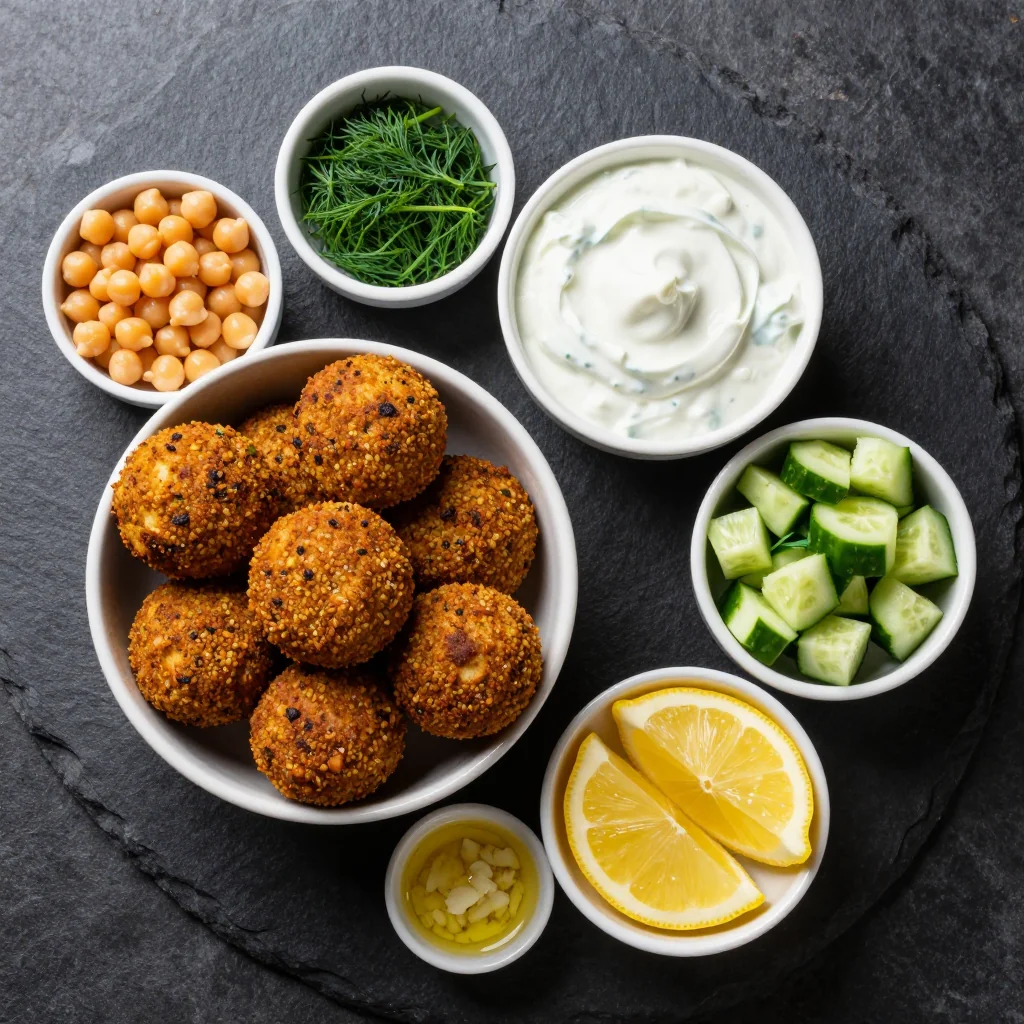
The secret to exceptional falafel lies in the quality and preparation of your ingredients. Each component plays a crucial role in creating the perfect balance of texture and flavor that makes this dish so beloved across the Middle East and beyond.
Dried Chickpeas: This is non-negotiable for authentic texture. Canned chickpeas contain too much moisture and will result in dense, heavy falafel. Look for uniform, cream-colored chickpeas without dark spots. Soak them for a full 24 hours—this isn't the place to rush. The chickpeas should double in size and be tender enough to bite through but still hold their shape.
Fresh Herbs: A generous handful each of parsley and cilantro creates that signature green interior and fresh flavor. Choose bright, perky bunches without yellowing leaves. Wash and thoroughly dry them before processing, as excess moisture can make your falafel fall apart.
Onion & Garlic: A small yellow onion and a couple of garlic cloves add depth without overwhelming the delicate herb flavor. Grate the onion rather than chopping—it distributes more evenly and helps bind the mixture.
Spice Blend: Ground cumin and coriander are essential, while a pinch of cardamom adds that authentic touch that will transport you straight to a Jerusalem market. Toast whole spices and grind them fresh if possible—the difference is remarkable.
Baking Soda: Just ½ teaspoon helps create that light, fluffy texture we're after. It's a small addition that makes a big difference.
For the Tzatziki: Full-fat Greek yogurt provides the creamiest base. English cucumbers work best as they contain fewer seeds and less water. Fresh dill is preferable to dried, and always use fresh lemon juice rather than bottled.
How to Make Crispy Baked Falafel with Homemade Tzatziki Sauce
Soak the Chickpeas
Place 1½ cups dried chickpeas in a large bowl and cover with 4 inches of cold water. Add 1 teaspoon salt and stir to dissolve. Cover with a kitchen towel and let stand at room temperature for 24 hours. The chickpeas will double or triple in size. Drain thoroughly and pat dry with clean kitchen towels. This step is crucial—rushing it leads to gritty falafel.
Prepare the Herb Mixture
While the chickpeas are soaking, make your tzatziki sauce so the flavors can meld. Grate half an English cucumber and squeeze out excess moisture using a clean kitchen towel. In a medium bowl, combine 1 cup Greek yogurt, the grated cucumber, 2 tablespoons fresh lemon juice, 2 tablespoons extra-virgin olive oil, 2 minced garlic cloves, 2 tablespoons chopped fresh dill, and ½ teaspoon salt. Cover and refrigerate for at least 2 hours or up to 5 days.
Process the Base
In a food processor, combine the soaked chickpeas, 1 small grated onion, 3 minced garlic cloves, 1 cup packed fresh parsley leaves, ¾ cup packed fresh cilantro leaves, 1 teaspoon salt, 1 teaspoon ground cumin, 1 teaspoon ground coriander, ½ teaspoon black pepper, ¼ teaspoon cayenne, and ½ teaspoon baking soda. Process in 1-second pulses until the mixture resembles coarse sand. Scrape down the sides as needed. The mixture should hold together when squeezed but still have texture.
Rest the Mixture
Transfer the mixture to a bowl, cover, and refrigerate for at least 1 hour or up to 24 hours. This resting period allows the starches to bind the mixture, making it easier to shape and preventing the falafel from falling apart during baking. Many recipes skip this step, but it's the difference between crumbly and cohesive falafel.
Preheat and Prepare
Position a rack in the center of your oven and preheat to 425°F (220°C). Line a rimmed baking sheet with parchment paper and generously brush with 3 tablespoons olive oil. The oil is crucial for achieving that crispy exterior—don't skimp! Place the baking sheet in the oven while it preheats so the oil gets hot.
Shape the Falafel
Using wet hands, form the mixture into 24 balls, each about 1½ inches in diameter. Place them on a plate and gently flatten each into a ½-inch-thick disk. This shape ensures even cooking and maximum crispy surface area. If the mixture sticks to your hands, wet them again.
Bake to Crispy Perfection
Carefully remove the hot baking sheet from the oven. Working quickly, place the falafel on the sheet, spacing them 1 inch apart. Drizzle the tops with the remaining 1 tablespoon olive oil. Bake for 12 minutes, then flip each falafel and bake until deep golden brown and crispy, about 8-10 minutes more. The two-temperature method mimics deep-frying, creating a crispy crust while keeping the interior tender.
Serve and Enjoy
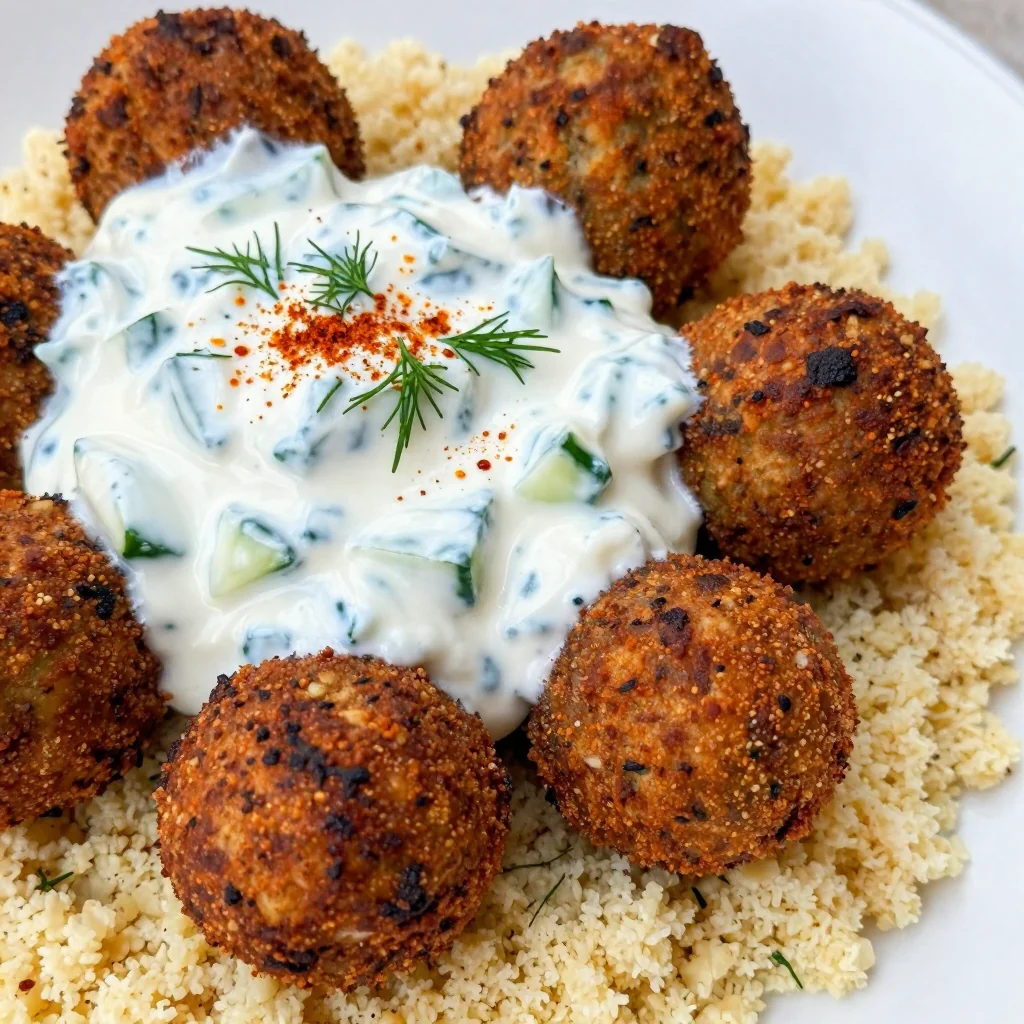
Transfer the falafel to a serving platter and let cool for 5 minutes—they'll continue to crisp as they cool. Serve warm with the chilled tzatziki sauce, warm pita bread, sliced cucumbers, tomatoes, and red onion. The contrast between hot, crispy falafel and cool, creamy sauce is absolutely divine.
Expert Tips
Temperature Matters
Starting with a hot baking sheet and oil is crucial for that crispy exterior. Don't skip preheating the pan!
Moisture Control
Thoroughly dry your herbs and squeeze excess moisture from the onion to prevent soggy falafel.
Don't Rush the Soak
24 hours is ideal for the chickpeas. In a pinch, you can use hot water and soak for 12 hours, changing the water halfway through.
Chill Before Shaping
The colder your mixture, the easier it is to shape and the better it holds together during baking.
Oil Refresh
If making multiple batches, refresh the oil on the baking sheet between batches for consistent crispiness.
Golden Brown Test
Your falafel are perfectly baked when they're deep golden brown and feel firm to the touch.
Oil Application
Use a pastry brush to evenly coat the falafel with oil before baking for the crispiest results.
Flip Carefully
Use a thin spatula and gentle pressure when flipping to maintain that perfect round shape.
Variations to Try
Herb Swaps
Try mint and dill instead of cilantro for a Greek-inspired version, or add 1 tablespoon za'atar for a Lebanese twist.
Spice Level
Add ½ teaspoon harissa paste or increase cayenne to ½ teaspoon for a spicier version that packs a punch.
Green Boost
Add ½ cup spinach or kale to the food processor for extra nutrients and a vibrant green color.
Gluten-Free Version
Replace the flour with chickpea flour or almond flour for a naturally gluten-free option that tastes just as good.
Storage Tips
Refrigerator Storage
Store leftover falafel in an airtight container in the refrigerator for up to 5 days. To reheat, place on a baking sheet in a 350°F oven for 10-12 minutes until heated through and crispy. Microwaving is not recommended as it makes them soggy.
Freezer Instructions
Freeze shaped, uncooked falafel on a parchment-lined baking sheet until solid, then transfer to a freezer bag for up to 3 months. Bake from frozen, adding 5-8 minutes to the cooking time. Cooked falafel can also be frozen for up to 2 months.
Make-Ahead Options
The falafel mixture can be prepared up to 3 days ahead and stored covered in the refrigerator. The tzatziki sauce actually improves after a day in the fridge as the flavors meld together beautifully.
Frequently Asked Questions
Crispy Baked Falafel with Homemade Tzatziki Sauce
Ingredients
Instructions
- Soak chickpeas: Cover dried chickpeas with 4 inches of water and 1 tsp salt. Soak 24 hours at room temperature. Drain and pat dry.
- Make tzatziki: Combine yogurt, grated cucumber (squeeze out moisture), lemon juice, 2 tbsp olive oil, 2 minced garlic cloves, dill, and ½ tsp salt. Refrigerate at least 2 hours.
- Process mixture: In food processor, combine chickpeas, onion, 3 garlic cloves, parsley, cilantro, 1 tsp salt, cumin, coriander, pepper, cayenne, and baking soda. Pulse until mixture resembles coarse sand.
- Chill: Refrigerate mixture covered for 1 hour to allow flavors to meld and mixture to firm up.
- Preheat: Place baking sheet in oven and preheat to 425°F (220°C) with 3 tbsp olive oil.
- Shape: Form mixture into 24 balls, flatten into ½-inch thick disks.
- Bake: Carefully place falafel on hot baking sheet, drizzle with remaining oil. Bake 12 minutes, flip, then bake 8-10 minutes more until golden and crispy.
- Serve: Let cool 5 minutes before serving with tzatziki sauce and warm pita bread.
Recipe Notes
For best results, don't substitute canned chickpeas. The 24-hour soaking process is essential for the right texture. Make-ahead tip: Freeze shaped, uncooked falafel on a baking sheet, then transfer to a freezer bag for up to 3 months. Bake from frozen, adding 5-8 minutes to cooking time.