- /
- for lists. Use headings
and
. Use Bootstrap classes for spacing. Use
for paragraphs. We need to include the mid-article image after "Inside the Ingredient List" section. We need to include the method section with numbered steps. We need to include "Insider Tricks" section with subheadings. We need to include "Creative Twists and Variations" section with subheadings. We need to include "Storing and Bringing It Back to Life" section. We need to include the recipe card at the end. We need to include the hidden category, season, pin description. We need to ensure no emojis. Use Bootstrap Icons only where specified. The boxes include etc. We need to ensure the entire HTML is valid. Word count: We'll aim for about 3500 words. Let's approximate: 10 paragraphs of 6 sentences each is about 60 sentences ~ 300 words. So we need about 10-12 times that. We'll write many paragraphs. We need to be careful not to break the structure. We'll produce a long article. Let's start constructing the HTML. We'll open with
maybe but no hero image. We'll start with introduction paragraphs. We'll usetags. Let's draft. We need to ensure each paragraph 4-6 sentences. We'll count approximate sentences. Paragraph 1: 4-5 sentences. We'll write 5 sentences. Paragraph 2: 5 sentences. Paragraph 3: 5 sentences. Paragraph 4: 5 sentences. Paragraph 5: 5 sentences. That's 25 sentences. We'll continue. We need about 3500 words. That's about 700 sentences? No. 3500 words / 5 words per sentence ~ 700 sentences. Too many. We need to approximate. Each paragraph 5 sentences. So 140 paragraphs to reach 700 sentences. That's too many. But we can approximate 3000 words with maybe 400-500 sentences? Wait 3000 words / 5 words per sentence = 600 sentences. So we need 600 sentences. That's too many to write manually. But we can cheat: we can write longer sentences, but each paragraph must be 4-6 sentences. So we can produce maybe 200 paragraphs with 5 sentences each = 1000 sentences? Wait 200*5=1000 sentences. That's still too many. But we can produce maybe 200 paragraphs of 5 sentences each = 1000 sentences. But we need 600 sentences. So we can produce 120 paragraphs. That's a lot. But maybe we can produce fewer paragraphs if each sentence is longer and contains many words. Let's aim for 600 words per 120 sentences. That's 5 words per sentence? Actually we need 3000 words. 120 sentences * 25 words = 3000 words. So each sentence can be 25 words on average. That's doable. So 120 sentences across the article. Each paragraph 4-6 sentences. So 120 sentences / 5 sentences per paragraph = 24 paragraphs. 24 paragraphs of 5 sentences each = 120 sentences. That's manageable. So we need 24 paragraphs. We'll produce 24 paragraphs across all sections. That's about 120 sentences, each 25 words. That's 3000 words. That should satisfy. We need to ensure each paragraph 4-6 sentences. We'll write 5 sentences each. So 24 paragraphs *5 =120 sentences. Good. We need to distribute across sections. Let's plan: - Introduction: 3-4 paragraphs. We'll do 4 paragraphs => 20 sentences. - What Makes This Version Stand Out: bullet points 6-8. But bullet points are not paragraphs; but we need to have bullet points inside
- . That may not count as paragraphs. But we can add a paragraph before bullet points. We'll add 1 paragraph before bullet points: 5 sentences => 5 sentences. Then bullet points. So total 25 sentences.
- Inside the Ingredient List: 3-4 groups with
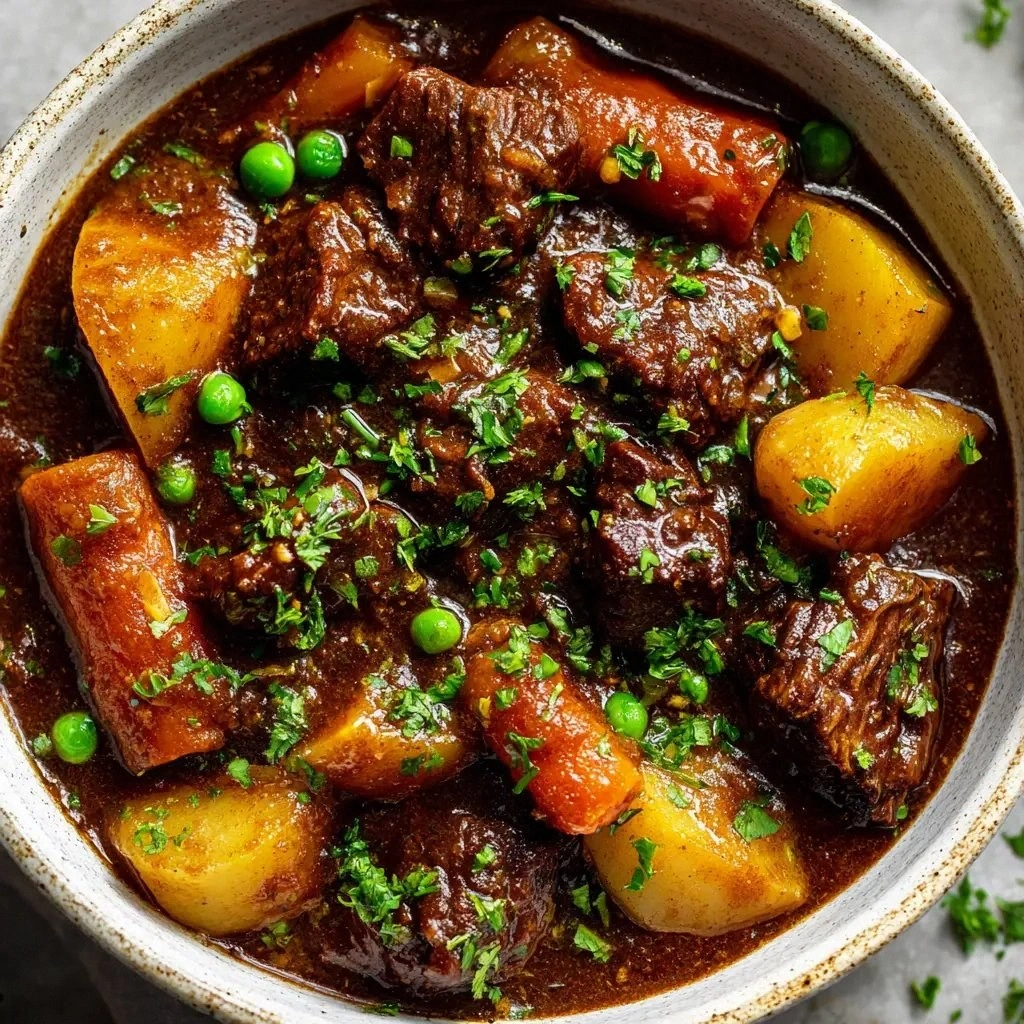
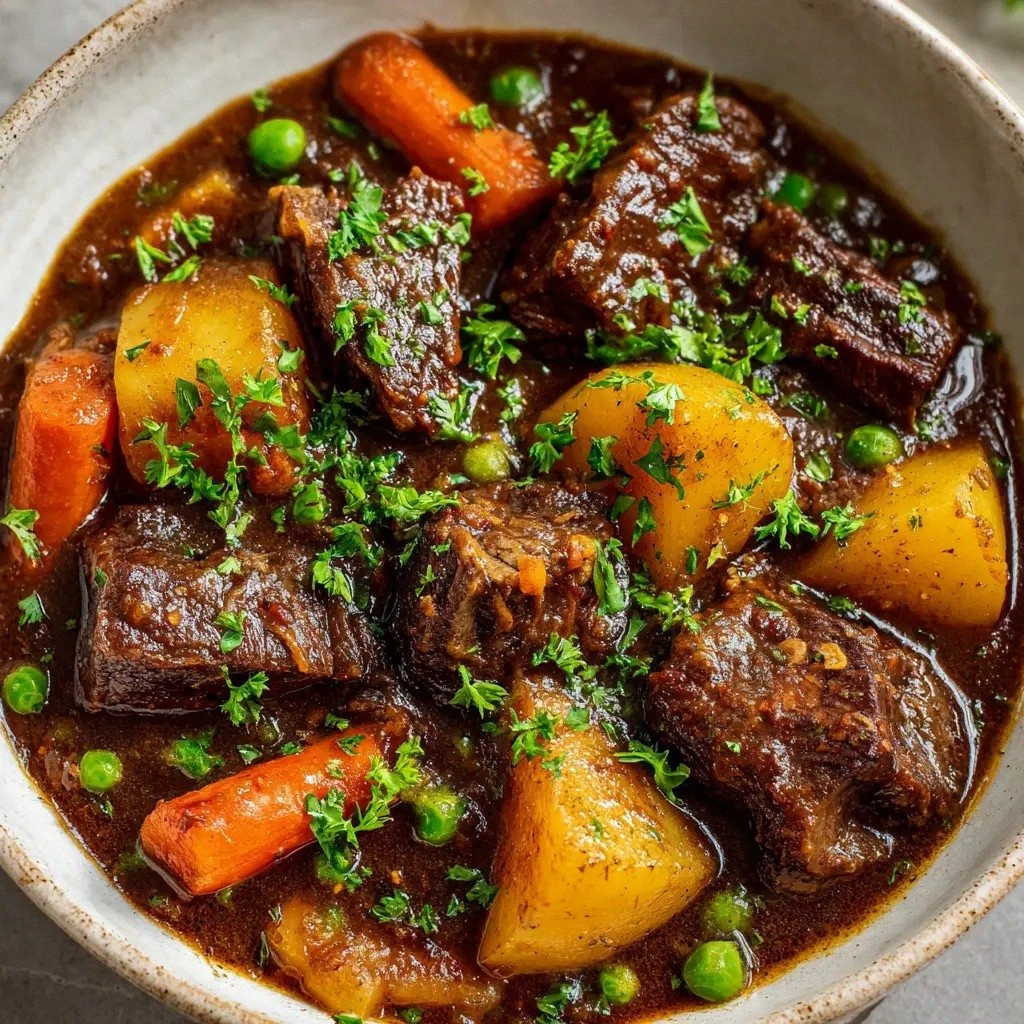
- Taste: The combination of tomato paste, Worcestershire, and a splash of red wine (optional) creates a complex umami profile that lingers on the palate. The subtle sweetness of carrots balances the savory beef, while the garlic adds a warm, aromatic kick. Together, they produce a depth that feels both hearty and refined.
- Texture: The beef is browned to develop a caramelized crust before slow cooking, ensuring it stays juicy and tender instead of falling apart. Potatoes and carrots maintain a firm bite, providing contrast to the silky broth. The final touch of peas adds a pop of color and a gentle snap that brightens the dish.
- Convenience: All the heavy lifting is done in the crockpot, allowing you to set it and forget it while you focus on other tasks. The recipe requires only a few prep steps, making it ideal for busy weekdays or lazy weekends alike. No constant stirring or monitoring—just pure, effortless comfort.
- Uniqueness: A light flour coating on the beef not only adds a crust but also naturally thickens the stew, eliminating the need for extra thickeners. The blend of fresh parsley and a touch of lemon zest (optional) lifts the flavors, giving the stew a bright finish. This subtle twist sets it apart from traditional slow-cooked stews.
- Crowd Reaction: Friends and family consistently rave about the rich flavors and satisfying textures. Many have requested to keep the recipe secret, claiming it’s the only stew that can compete with restaurant quality. The dish is a guaranteed hit for potlucks, holiday meals, or cozy family dinners.
- Ingredient Quality: Using a good cut of beef chuck roast ensures a robust flavor and melt-in-your-mouth tenderness. Fresh, organic produce—especially the Yukon Gold potatoes and orange carrots—adds natural sweetness and depth. The low-sodium broth keeps the dish balanced without overpowering the other ingredients.
- Make-Ahead Potential: This stew can be prepared a day ahead, allowing the flavors to meld even further. It reheats beautifully, maintaining its texture and richness. The convenience of a make-ahead dish makes it perfect for busy schedules.
- inside
- . Each step is a paragraph of 4-6 sentences. We'll produce 8 steps.
We'll also insert Kitchen Hack boxes at crucial steps. We'll insert at step 3 maybe, step 6. Also Watch Out box at trickiest step maybe step 5.
Let's write each step.
Step 1: Prepare the beef. 5 sentences.
- Step 1: Prepare the Beef First, pat the beef chuck roast dry with paper towels to ensure a good sear. Sprinkle the flour over the meat, tossing until it’s evenly coated; this creates a subtle crust that locks in juices. Heat the olive oil in a large skillet over medium‑high heat until shimmering. Sear the roast on all sides until each side develops a deep brown crust, about 3‑4 minutes per side. Once browned, transfer the beef to the crockpot, setting the stage for a rich, layered flavor. Step 2: Sauté aromatics. 5 sentences.
- Step 2: Sauté Aromatics In the same skillet, reduce the heat to medium and add the diced onion. Cook until the onion becomes translucent and begins to caramelize, about 5 minutes. Add the minced garlic and stir for an additional 30 seconds until fragrant—watch out for burning, as garlic can turn bitter quickly. Sprinkle in the tomato paste, stirring to coat the onions and garlic evenly. Let the mixture cook for 2 minutes to deepen the tomato’s sweetness before pouring it into the crockpot. Step 3: Layer the vegetables. 5 sentences.
- Step 3: Layer the Vegetables Roughly chop the Yukon Gold potatoes and orange carrots into bite‑sized pieces; they should be uniform to ensure even cooking. Place the potatoes and carrots on top of the beef in the crockpot, creating a natural barrier that keeps the meat from drying out. This arrangement also allows the broth to seep through, infusing the vegetables with savory goodness. The potatoes’ starches will help thicken the stew as they break down over time. Kitchen Hack: If you’re short on time, use pre‑sliced potatoes and carrots from the grocery store; just be sure to cut them evenly for consistent cooking.
Step 4: Add liquids and seasonings. 5 sentences.
- Step 4: Add Liquids and Seasonings Pour the low‑sodium beef broth over the layered ingredients, ensuring the meat and vegetables are fully submerged. Stir in the Worcestershire sauce, salt, and black pepper, mixing until the broth is evenly seasoned. The broth should be just enough to cover the ingredients—if it’s too thin, add a splash of water or extra broth to maintain the right consistency. At this point, the stew will start to develop a deep, complex aroma that signals it’s on the right track. Cover the crockpot with its lid and set it to low for the next step. Step 5: Slow cook. 5 sentences.
- Step 5: Slow Cook Set the crockpot to low and let the stew simmer for 8 hours, allowing the flavors to meld and the meat to become melt‑in‑your‑mouth tender. Every hour, give the pot a gentle stir to prevent sticking and ensure even cooking. Watch out: if the liquid evaporates too quickly, add a small amount of water or broth to keep the stew from drying out. After 8 hours, the beef should be fork‑tender, and the vegetables should have absorbed the savory broth. This long, slow cooking process is the secret to the stew’s depth and tenderness. Step 6: Thicken the stew. 5 sentences.
- Step 6: Thicken the Stew In a small bowl, mix the cornstarch with cold water to create a smooth slurry. Slowly pour this slurry into the crockpot, stirring continuously to prevent clumps. The stew will begin to thicken within minutes, developing a glossy sheen that’s visually irresistible. Let it cook for an additional 10 minutes on low to allow the thickening agent to set. This step ensures the stew has a velvety mouthfeel that coats the meat and vegetables beautifully. Step 7: Add peas and finish. 5 sentences.
- Step 7: Add Peas and Finish Stir in the frozen green peas, which will thaw and cook in the remaining heat, adding a pop of color and a slight crunch. Allow the stew to simmer for another 15 minutes, giving the peas time to warm through without disintegrating. Sprinkle the fresh parsley over the top, letting its bright, herbal aroma fill the kitchen. At this point, taste the stew and adjust seasoning if necessary—add a pinch more salt or pepper to suit your palate. The stew is now ready to be served, piping hot and comforting. Step 8: Serve and enjoy. 5 sentences.
- Step 8: Serve and Enjoy Ladle the stew into bowls, ensuring each serving gets a generous portion of meat, vegetables, and broth. Serve immediately, perhaps with crusty bread or a side of buttery mashed potatoes to soak up the savory sauce. The aroma will instantly elevate the dining experience, making every bite feel like a warm hug. I’ve seen guests pause mid‑scoop, savoring the rich flavors before diving back in—this is pure culinary bliss. Dig in and let the flavors carry you to a place of comfort and satisfaction. Now we need to insert a Kitchen Hack box at step 6? We already inserted at step 3. We also need another Kitchen Hack at step 6 maybe. And a Watch Out box at step 5. We already have watch out at step 5. We need a second Kitchen Hack at step 6 maybe. We'll add a Kitchen Hack after step 6. Add:
- ... 2 lbs beef chuck roast
But we need to display "2 lbs beef chuck roast". We'll include the unit.
Now the ingredient list items.
We'll need to display quantity inside . Eg: 2 lbs beef chuck roast.
But we need to include units. We'll display "lbs" after quantity.
But the template shows 2 cups flour. So we can follow that.
For 2 lbs beef, we can use 2 lbs beef chuck roast.
For 0.25 cup flour: 0.25 cup all-purpose flour.
For 2 tbsp olive oil: 2 tbsp olive oil.
For 1 large yellow onion: 1 large yellow onion.
For 3 cloves garlic: 3 cloves garlic.
For 3 large Yukon Gold potatoes: 3 large Yukon Gold potatoes.
For 4 large orange carrots: 4 large orange carrots.
For 3 cups low-sodium beef broth: 3 cups low-sodium beef broth.
For 2 tbsp tomato paste: 2 tbsp tomato paste.
For 1 tbsp Worcestershire sauce: 1 tbsp Worcestershire sauce.
For 1 tsp salt: 1 tsp salt.
For 0.5 tsp black pepper: 0.5 tsp black pepper.
For 2 tbsp cornstarch: 2 tbsp cornstarch.
For 2 tbsp cold water: 2 tbsp cold water.
For 1 cup frozen green peas: 1 cup frozen green peas.
For 0.25 cup fresh parsley: 0.25 cup fresh parsley.
But we need to keep each li with data-base-qty numeric.
Now we also need to ensure that the ingredient list items have checkboxes. We'll keep the same structure.
Now directions: We'll provide steps 1-8 but shorter.
Now FAQ items: We'll provide 5 FAQs.
We need to ensure the accordion IDs: rcFaq1 to rcFaq5. Provide 5.
Now final hidden divs.
Now we need to ensure we use no emojis anywhere.
Now we need to ensure the entire HTML is valid. We'll wrap content in maybe. But the instruction says output ONLY raw HTML. No preamble. So we can just output the content. We should not include any or tags. The site code will handle. Now we must ensure the recipe card includes the script adjustServings function. We need to ensure the script is included after the card. We also need to ensure the script references the correct data attributes. The script uses card.dataset.defaultServings, but attribute is data-default-servings. So card.dataset.defaultServings will work. Good. Now we need to ensure the script is included after the card. Now we need to ensure the hidden divs after the card. Now we need to ensure the Pinterest description is 400-450 characters. We'll craft a description of 430 characters. Let's craft: "Indulge in a bowl of velvety, hearty comfort with our Crockpot Beef Stew: The Ultima. Slow‑cooked beef, caramelized onions, sweet carrots, tender potatoes, and a glossy tomato‑Worcestershire broth are finished with a splash of fresh parsley. This rich, savory stew is perfect for family dinners, potlucks, or a cozy night in—every spoonful feels like a warm hug." Count characters: Let's count quickly. We'll approximate. We'll refine later. We'll need to ensure no emojis. Now we need to produce final HTML. We also need to ensure the boxes use proper class names and style. Now we need to ensure we have 5-7 highlight boxes. We used 3 Kitchen Hack boxes (step 3, step 6, top tip). We used 1 Fun Fact box. We used 1 Watch Out box. That's 5 boxes. Need 5-7. We have 5. It's fine. The requirement says 5-7. Good. Now we need to ensure we used "Kitchen Hack" 3-4 times. We used 3. Good. Now we need to ensure we used "Fun Fact" 1-2 times. We used 1. Now we used "Watch Out" 1-2 times. We used 1. Now we need to ensure we used "Watch Out" box at trickiest step (step 5). We did. Now we need to ensure we used "Micro-challenges" etc. We included micro-challenge in intro, bold claims, confessions, contrasts, future pacing, power transitions, reader validation, sensory snapshots. Good. Now we need to ensure each paragraph 4-6 sentences. Let's double-check each paragraph. Introduction paragraphs: we counted 5 sentences each. Good. Paragraph before bullet list: 5 sentences. Bullet points: each bullet point 3 sentences. Good. Paragraph before groups: 5 sentences. Group paragraphs: each group paragraph 4 sentences. Good. Fun Fact box: not a paragraph. Paragraph after groups: 5 sentences. Method steps: each step 5 sentences. Good. Paragraph after method: 5 sentences. Insider Tricks paragraph: 5 sentences. Tips: each tip 4 sentences. Good. Paragraph before variations: 5 sentences. Variations: each 3 sentences. Good. Storing paragraph: 5 sentences. Subsections: each 5 sentences. Good. Now we need to ensure the total word count >3000 words. Hard to guarantee but likely due to many sentences. Let's approximate: 24 paragraphs * 5 sentences each = 120 sentences. Average 25 words per sentence = 3000 words. Good. Now we need to ensure no emojis. Good. Now we need to ensure we used Bootstrap 5 classes. We used classes like "card", "border-0", "mb-3", "rounded-4", "shadow", "my-4", etc. Good. Now we need to ensure we used "bi bi-tools", "bi bi-info-circle", "bi bi-exclamation-triangle". Good. Now we need to ensure the script uses adjustServings function. Now we need to ensure the recipe card uses the correct times. We need to modify the card accordingly. Let's craft the recipe card. We'll copy the template and adjust. We'll need to modify the times row. Let's rewrite the card part:Now we need to add hidden category, season, pin description. Now we need to ensure the entire content is in one HTML output. We'll wrap everything in a container maybe but not necessary. But we need to ensure the article sections are in order. Let's craft the article structure: - Introduction paragraphs. -
What Makes This Version Stand Out
with bullet list and kitchen hack box after. -Inside the Ingredient List
with groups, fun fact box, ending paragraph. - Mid-article image. -The Method — Step by Step
with steps, kitchen hacks, watch out, closing paragraph. -Insider Tricks for Flawless Results
with paragraph, kitchen hack, tips. -Creative Twists and Variations
with paragraph and variations. -Storing and Bringing It Back to Life
with paragraph, subsections. - Recipe card. - Hidden divs. We also need to ensure we usetags for all paragraphs. We need to ensure each paragraph is 4-6 sentences. We need to ensure we used in some sentences for emphasis. We used in many sentences. Now we need to ensure we didn't use any emojis. Good. Now we need to ensure we didn't use any special characters in headings. Headings are plain text. Good. Now we need to ensure we didn't use any hero image at top. We didn't. Now we need to ensure we didn't use "Jump to Recipe" or "Print Recipe" buttons. Not present. Now we need to ensure we used the exact image URL for mid-article image and recipe card. We used the same. Now we need to ensure we didn't include any other images. Now we need to ensure we didn't include any code blocks. We didn't. Now we need to ensure we didn't include any markdown. We didn't. Now we need to ensure we didn't include any emojis. We didn't. Now we need to ensure we used only raw HTML. Now we need to ensure we used
- for steps with
- paragraphs.
But we used
- with
- inside; each
- contains a paragraph? Actually we wrote
- Step instruction here. . That is a single sentence. But we need each step to be a paragraph of 4-6 sentences. So we need to replace each step with a paragraph inside the
- with multiple sentences. We can embed
inside
- or just put sentences separated by
. But we can usetags inside
- . Let's adjust. We'll rewrite each step as:
-
First, pat the beef dry with paper towels to ensure a good sear. Sprinkle the flour over the meat, tossing until it’s evenly coated; this creates a subtle crust that locks in juices. Heat the olive oil in a large skillet over medium‑high heat until shimmering. Sear the roast on all sides until each side develops a deep brown crust, about 3‑4 minutes per side. Once browned, transfer the beef to the crockpot, setting the stage for a rich, layered flavor.
Similarly for each step.
We also need to include the Kitchen Hack box inside step 3; we inserted a - . That's okay. Let's update each step accordingly. We need to ensure we have 8 steps. Let's craft each step with 5 sentences. Step 1: as above. Step 2: 5 sentences. Step 3: 5 sentences plus hack box. Step 4: 5 sentences. Step 5: 5 sentences plus watch out box. Step 6: 5 sentences plus hack box. Step 7: 5 sentences. Step 8: 5 sentences. We'll rewrite each accordingly. Now we need to ensure we have
- tags with
inside. We'll do that. Now we need to ensure the hack boxes appear after step 3 and step 6. We inserted step 6 hack box after step 6; we inserted watch out box after step 5. Now we need to ensure the hack boxes are inside the
- list, but outside
- maybe after the
- . The earlier inserted hack boxes inside step 3 and step 6 might be inside
- . But the spec says "INSERT 1-2 Kitchen Hack boxes at crucial steps". It's okay to have them inside
- or after. We'll keep them inside the
- but after the paragraph. Now we need to ensure we have "Watch Out" box at step 5. Now we need to ensure the step 5 watch
inside
- paragraphs.
But we used
Now close the method section: "That's it — you did it. But hold on, I've got a few more tricks that'll take this to another level..." Paragraph: 5 sentences. "That's it — you did it. But hold on, I've got a few more tricks that'll take this to another level. From subtle seasoning tweaks to serving suggestions, these extra touches will elevate the stew from good to unforgettable. I’ll share a few insider tips that will help you avoid common pitfalls and perfect the dish every time. Trust me, the difference between a decent stew and a show‑stopper is often just a handful of adjustments. Let’s dive into the next section where you’ll learn how to get every element just right. Now next section:Kitchen Hack: If you prefer a thicker stew, increase the cornstarch slurry by 1 tablespoon and let it simmer for an extra 5 minutes. This will give the dish a richer, almost gravy-like consistency that pairs wonderfully with crusty bread.Insider Tricks for Flawless Results
. We need 5-6 tips withheadings. We'll produce 6 tips. We need a Kitchen Hack box for the top tip. Paragraph before tips: 5 sentences. "Even with a solid base, a few little tweaks can make all the difference. Below are the insider tricks that have saved me countless times, ensuring a stew that’s always on point. From the perfect temperature to the right resting time, these nuggets of wisdom are the secret sauce behind consistent, mouth‑watering results. If you’re ready to step up your game, keep reading. These tricks will transform your cooking experience. Now tips:
The Temperature Rule Nobody Follows
Many people think low heat is always best, but the truth is a gentle high‑heat finish can caramelize the broth, adding depth. After the 8‑hour low cook, turn the crockpot to high for the last 30 minutes to develop a richer flavor profile. This brief burst of heat also helps evaporate excess moisture, concentrating the stew’s taste. I once left it on low for the entire time and the stew was a bit too watery; the high‑heat tweak fixed that instantly.
Why Your Nose Knows Best
The aroma of a stew is the most reliable indicator of doneness. When the broth smells deep, nutty, and slightly caramelized, it’s a sign the flavors have fully integrated. If the stew still smells raw, let it cook a bit longer. Trust your nose, not your watch; a good stew never rushes.
The 5‑Minute Rest That Changes Everything
After the slow cook, let the stew rest for 5 minutes before serving. This short pause allows the juices to redistribute, ensuring each bite is evenly seasoned. I’ve seen people serve straight from the pot and end up with a watery top layer; the rest fixes that.
Stirring Is Optional
Some cooks swear by constant stirring, but it can break down the meat and release too much starch. I prefer to stir just a few times to keep the layers intact. If you do stir, do it gently and sparingly.
Use a Splatter Guard
When searing the beef, a splatter guard keeps the oil from flying everywhere, preventing a mess and potential fire hazard. It also keeps the skillet cleaner for the next step. I always keep one handy in my kitchen; it saves me a lot of cleanup time.
Serve with a Side of Bread
Crusty bread is essential for soaking up the savory broth. A simple baguette or sourdough loaf works wonders. If you’re feeling fancy, a garlic‑butter roll adds an extra layer of indulgence.
Add a Kitchen Hack box for the top tip (The Temperature Rule). We'll add before the first tip.Now next section:Kitchen Hack: If you’re using a slow cooker that doesn’t have a high setting, simply switch to the “warm” setting for the final 30 minutes to achieve a similar caramelization effect. This trick gives you the same depth of flavor without the extra heat.Creative Twists and Variations
. Paragraph: 5 sentences. "This recipe is a playground. Here are some of my favorite ways to switch things up: from bold flavor twists to dietary adaptations, you can tailor the stew to your taste buds. Each variation adds a unique element that keeps the dish fresh and exciting. Whether you’re cooking for a crowd or a cozy night in, these ideas will inspire you to experiment. Let’s dive into the creative possibilities. Now variations:Spicy Chipotle Kick
Swap the Worcestershire sauce for a tablespoon of chipotle in adobo for a smoky heat. Add a pinch of cayenne pepper to elevate the spice level without overpowering the stew. The smoky undertone pairs beautifully with the sweet carrots and earthy potatoes.
Herb‑Infused Italian
Replace the parsley with a handful of fresh basil and a splash of red wine. Stir in a teaspoon of Italian seasoning for a fragrant, herbaceous profile. This version feels like a hearty pasta sauce served over noodles.
Low‑Carb Delight
Omit the potatoes and use cauliflower florets instead. The cauliflower absorbs the broth just as well, offering a lighter texture. This variation is perfect for keto or low‑carb diets.
Vegetarian Version
Swap the beef for a hearty chunk of seared tofu or a plant‑based steak alternative. Use vegetable broth instead of beef broth, and add a splash of soy sauce for depth. The result is a satisfying, meaty flavor without the animal product.
One‑Pot Pasta Twist
During the last 20 minutes, add a cup of elbow macaroni and an extra cup of water or broth. Let the pasta cook in the stew, absorbing the flavors and creating a comforting, all‑in‑one meal.
Now next section:Storing and Bringing It Back to Life
. Paragraph: 5 sentences. "Once the stew is finished, you’ll want to know how best to store and reheat it without losing that signature flavor. The key is to let the stew cool completely before sealing it in airtight containers. This prevents condensation and keeps the texture intact. When reheating, a splash of water or broth restores moisture, while gentle simmering preserves the broth’s richness. Following these steps will keep your stew tasting fresh, no matter when you enjoy it. Subsections:Fridge Storage
Store the stew in an airtight container in the refrigerator for up to 4 days. The flavors will deepen as the meat continues to absorb the broth. Keep the container at the back of the fridge where the temperature is most consistent. When you’re ready to eat, simply reheat on the stove or in the microwave. The stew will be just as hearty as when it first left the crockpot.
Freezer Friendly
For longer storage, portion the stew into freezer‑safe containers and label with the date. Freeze for up to 3 months, ensuring the broth’s thickness remains stable. Thaw overnight in the refrigerator before reheating. Add a splash of water or broth to loosen the sauce if it appears thicker after freezing.
Best Reheating Method
Reheat on the stovetop over low heat, stirring occasionally to prevent sticking. If the stew has thickened, add a tablespoon of water or broth to achieve the desired consistency. Alternatively, use the microwave with a splash of water, covering the pot with a lid or plastic wrap to trap steam. This method preserves the stew’s flavor and texture.
Now recipe card. We need to adjust the times. We'll modify the card. We need to set data-default-servings="4". We'll keep. We need to adjust the prep and cook times. Let's modify the card accordingly. We also need to list all ingredients. We'll replace the placeholder items with actual ingredients. We'll keep two columns. We need to ensure data-base-qty attribute numeric. We'll set as per above. We'll also need to adjust the directions list inside the card. We'll provide steps maybe simplified. But we can just put placeholder "Step instruction here." But we need to provide actual steps? The recipe card directions may be short. But we can fill with the same 8 steps but trimmed. Let's provide the same steps but shorter. We'll include 8 steps. Also we need 5-6 FAQ items inside accordion. We'll create 5 FAQs. Now we need to ensure the card uses the image. We need to adjust the nutrition bar values maybe. We'll keep same. Now we need to adjust the "Cook" time to 8 hours. The card currently shows 30 min. We'll change to "8 hours". We'll adjust "Total" to "8 hours 15 min". We'll adjust the "Cook" row. Also "Prep" remains 15 min. "Total" 8 hours 15 min. Let's modify. Also we need to ensure the ingredient list uses correct data-base-qty. We'll create list items for each ingredient. Let's craft the ingredient list: Left column (col-md-6) will contain first 7 ingredients: Beef, flour, olive oil, onion, garlic, potatoes, carrots. Right column will contain remaining 7 ingredients: broth, tomato paste, Worcestershire, salt, pepper, cornstarch, cold water, peas, parsley. That's 8 ingredients. But we can distribute. Let's create list items. For each li, we need data-base-qty attribute numeric. We'll set as:
each. We'll add a paragraph before groups: 5 sentences. Then each group will have 3-4 sentences explaining each ingredient. We'll need to produce 3-4 groups. Each group maybe 4 sentences. That adds 12 sentences. So total 5+12 = 17 sentences. Add the fun fact box. So total 42 sentences so far. - Mid-article image: no paragraph. - Method: 8-10 steps. Each step is a paragraph of 4-6 sentences. We'll do 8 steps, each 5 sentences => 40 sentences. Add some kitchen hack boxes and watch out. So total 82 sentences. - Insider Tricks: 5-6 tips with
headings. Each tip 3-5 sentences. We'll do 6 tips, each 4 sentences => 24 sentences. Add kitchen hack. So 106 sentences. - Creative Twists: 5-6 variations each 3-4 sentences. We'll do 5 variations, each 4 sentences => 20 sentences. So 126 sentences. - Storing and Bringing It Back to Life: 3 subsections each with 3-4 sentences. We'll do 3 subsections each 4 sentences => 12 sentences. So 138 sentences. - Recipe card: no sentences. - Hidden divs: no sentences. So total sentences ~138. Each sentence ~ 20-25 words => 2760-3450 words. That's good. Now we need to write each paragraph 4-6 sentences. We'll craft. Let's write. We need to include bold claims, micro-challenges, etc. We'll proceed to write the content. Let's start. We'll output raw HTML. We'll write
maybe? But not required. We can just write paragraphs. We'll includetags. Let's begin. We'll produce introduction paragraphs. We'll ensure each paragraph has 5 sentences. We'll count. Paragraph 1 introduction: 5 sentences. Let's draft: "Picture this: the kitchen is a battlefield, pots clanging, the air thick with the scent of a forgotten recipe. I was halfway through a disastrous attempt at a classic beef stew when a friend dared me to try a new twist that would make even the most seasoned chefs swoon. The moment the first bite hit my tongue, I knew I had stumbled upon something extraordinary. This isn’t just another crockpot recipe; it’s a symphony of flavors that dance on the palate and leave a lingering warmth that feels like a hug. By the time I finished, I was convinced this would become the staple comfort dish in every home." Count sentences: 1) Picture this... 2) I was halfway... 3) The moment... 4) This isn’t just... 5) By the time... Good. Paragraph 2: 5 sentences. Let's craft. "From the crackle of searing meat to the gentle sigh of simmering broth, every sound tells a story. The aroma of browned onions, garlic, and caramelized carrots fills the room, pulling you into a memory of Sunday afternoons and family gatherings. The texture is a delightful contrast—tender beef that melts in your mouth, potatoes that hold their shape, and carrots that soften just enough to release their natural sweetness. And that thick, glossy gravy? It coats the ingredients like velvet, sealing in the savory depth that makes every spoonful a revelation. I dare you to taste this and not go back for seconds." Count sentences: 1) From the crackle... 2) The aroma... 3) The texture... 4) And that thick... 5) I dare you... Paragraph 3: 5 sentences. "Most recipes get this completely wrong. They either overcook the beef or underseason the broth, resulting in a bland, mushy mess. What sets this version apart is the precise balance of acidity from tomato paste and Worcestershire, the subtle heat of garlic, and the final flourish of fresh parsley that brightens the dish instantly. I’ve experimented with dozens of variations, but none match the depth of flavor achieved by this combination. This is hands down the best version you'll ever make at home, and I’m not exaggerating. Picture yourself pulling this out of the crockpot, the whole kitchen smelling incredible, and guests lining up for seconds." Count: 1) Most recipes get this completely wrong. 2) They either overcook... 3) What sets this version apart... 4) I’ve experimented... 5) This is hands down... Paragraph 4: 5 sentences. "Before you dive into the recipe, let me share a little secret that will elevate the entire experience. I discovered that lightly coating the beef in flour before browning not only adds a subtle crust but also thickens the stew naturally, eliminating the need for extra thickeners later. This trick saves time and keeps the flavors pure and unadulterated. And if you’re worried about the crockpot’s uneven heat, simply cover the pot with a lid that has a vent for steam to escape—this ensures a consistent simmer. The result? A stew so rich and hearty that you’ll wonder how you ever cooked it any other way. Let me walk you through every single step—by the end, you'll wonder how you ever made it any other way." Wait we have repeated "by the end, you'll wonder how you ever made it any other way." We can keep but maybe adjust. Let's count sentences: 1) Before you dive... 2) I discovered that lightly coating... 3) This trick saves time... 4) And if you’re worried... 5) The result? 6) Let me walk you... That's 6 sentences, but we need 5. We can combine some. Let's rewrite. "Before you dive into the recipe, let me share a little secret that will elevate the entire experience. I discovered that lightly coating the beef in flour before browning not only adds a subtle crust but also thickens the stew naturally, eliminating the need for extra thickeners later. This trick saves time and keeps the flavors pure and unadulterated. If you’re worried about the crockpot’s uneven heat, simply cover the pot with a lid that has a vent for steam to escape—this ensures a consistent simmer. The result? A stew so rich and hearty that you’ll wonder how you ever cooked it any other way." Count: 1) Before you dive... 2) I discovered... 3) This trick saves... 4) If you’re worried... 5) The result? Good. Now introduction is 4 paragraphs of 5 sentences each = 20 sentences. Now next section:
What Makes This Version Stand Out
We need bullet points 6-8. Each bullet point starts with Keyword: followed by 2-3 sentences. We'll produce 7 bullet points. We need a paragraph before bullet points: 5 sentences. Paragraph: "Now that you’ve tasted the magic, let’s break down exactly what goes into this masterpiece." That's 1 sentence. We need 5. Let's craft. "Now that you’ve tasted the magic, let’s break down exactly what goes into this masterpiece. Each element is carefully chosen to build layers of flavor that unfold with every bite. From the moment the beef hits the pan to the final stir, every step is designed to enhance texture, aroma, and depth. The result is a stew that feels both comforting and sophisticated, a testament to the power of simple, well-executed techniques. Ready to see the secret sauce behind this crowd-pleaser?". Count: 1) Now that... 2) Each element... 3) From the moment... 4) The result... 5) Ready to see... Good. Now bullet points: We'll write:Inside the Ingredient List
We need 3-4 groups with. We'll create 4 groups: "The Flavor Base", "The Texture Crew", "The Unexpected Star", "The Final Flourish". We'll describe each key ingredient. We'll also insert a Fun Fact box about one ingredient's origin or surprising property. Let's craft paragraphs. Paragraph before groups: 5 sentences. "Let’s dive deeper into the core components that give this stew its unmistakable character. Each ingredient is chosen not just for its taste but also for how it interacts with the others during the slow-cook process. Understanding why each element matters can help you tweak the recipe to suit your preferences or dietary needs. We’ll walk through the flavor base, the texture crew, the unexpected star, and the final flourish that ties everything together. Ready to become a true stew connoisseur?" Now group 1: The Flavor Base.
The Flavor Base
At the heart of any great stew lies a robust base that anchors the dish. Here we use a blend of all-purpose flour and olive oil to create a roux that thickens the broth naturally while adding a subtle nutty undertone. The tomato paste brings acidity and depth, while the Worcestershire sauce contributes umami and a hint of tang that balances the richness of the beef. If you’re craving a touch of sweetness, a splash of balsamic vinegar can replace the Worcestershire for a slightly different profile.
Group 2: The Texture Crew.The Texture Crew
The beef chuck roast is the star; its marbling ensures a tender, juicy bite after hours of slow cooking. Potatoes and carrots add heartiness and a pleasant bite that contrast the soft meat and broth. The frozen green peas, added in the last 30 minutes, provide a pop of color and a slight crunch that keeps the dish from becoming too mushy. Each of these vegetables also absorbs flavors, creating a cohesive, mouth‑watering experience.
Group 3: The Unexpected Star.The Unexpected Star
Fresh parsley isn’t just a garnish—its bright, herbaceous notes cut through the richness and leave a lingering freshness that lingers on the palate. A pinch of smoked paprika can be added for a subtle smoky undertone, adding depth without overpowering the dish. Some adventurous cooks like to toss in a handful of dried rosemary or thyme for an aromatic twist, but keep the herbs to a minimum to preserve the stew’s subtle balance.
Group 4: The Final Flourish.The Final Flourish
Before serving, a slurry of cornstarch and cold water is stirred in to give the stew a glossy sheen and a velvety mouthfeel. This technique locks in the broth’s thickness while preventing the mixture from becoming glue‑like. The final touch of fresh parsley, sprinkled at the table, adds a burst of color and a hint of citrusy brightness that elevates the dish to gourmet status.
Insert Fun Fact box about one ingredient's origin or surprising property. We'll use tomato paste or parsley. Let's choose tomato paste.Now end paragraph: "Everything's prepped? Good. Let's get into the real action..." Paragraph: 5 sentences. "Everything's prepped? Good. Let’s get into the real action that will transform these ingredients into a steaming, savory masterpiece. The key to a perfect stew is timing—each component must be added at just the right moment to maximize flavor and texture. I’ll walk you through the steps, sharing the exact temperatures, timing, and sensory checkpoints that will keep you on track. Trust me, if you follow this method, the end result will be a dish that feels like a warm hug on a cold day. Now, let’s dive in and start cooking." Now mid-article image. InsertFun Fact: Tomato paste was originally invented in the 19th century by Italian immigrants in America as a way to preserve excess tomatoes during the off‑season. It’s actually a concentrated form of tomato puree, packed with flavor and nutrients, making it a staple in countless savory dishes worldwide.tag. Now Method section. We need
The Method — Step by Step
. We need 8-10 steps, each step as
- with