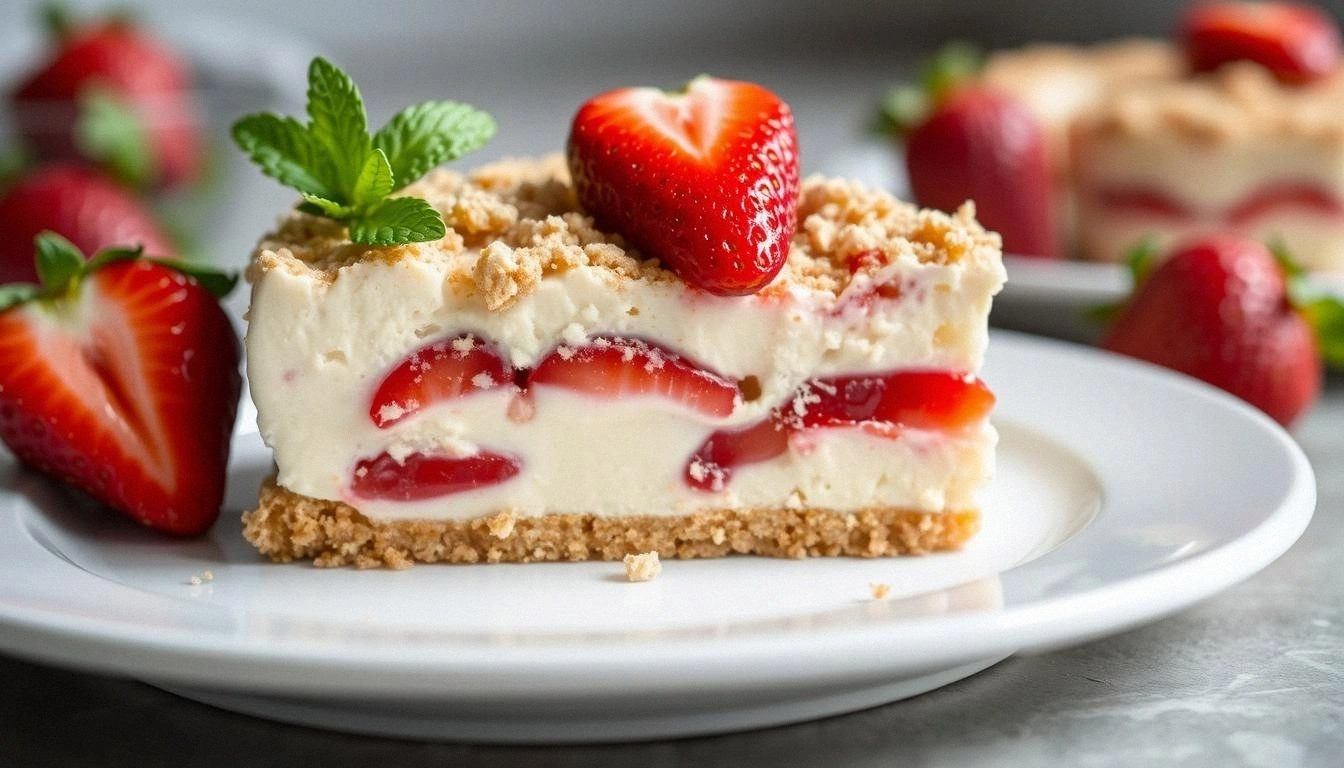
Picture this: I’m standing in a cramped kitchen, the timer on my phone blaring, and a friend daring me to whip up a dessert that can survive a midnight craving and still feel like a showstopper. I stared at the bowl of strawberries, the butter, and the crumbs, and thought, “Why not combine the best of cheesecake, caramelized crunch, and a splash of summer?” The result? A dessert that feels like a sweet summer breeze wrapped in a buttery, golden blanket, with a final pop of strawberry that lingers on the tongue. I know you’ve tried the usual cheesecake, but this version is a game‑changer—simple, elegant, and irresistibly shareable.
If you’ve ever found yourself staring at a jar of frozen strawberries and wondering how to turn them into something that’s more than just a fruit salad, this is your moment. The aroma of toasted graham crackers and melted butter will fill the kitchen before the first bite even arrives. The texture—smooth, creamy, and then a satisfying crunch—creates a dance of sensations that makes each spoonful a revelation. I dare you to taste this and not go back for seconds; the first bite will have you asking why you ever settled for anything else.
I’ve spent countless evenings juggling family schedules, office deadlines, and the eternal quest for the perfect dessert. In that chaos, I discovered that a dessert should not only taste divine but also feel effortless. The secret is in the balance: the richness of cream cheese tempered by a bright strawberry compote, the buttery base that crisps to a golden finish, and the simple technique that keeps everything together. This isn’t just another recipe; it’s a ritual that turns ordinary ingredients into a masterpiece that will become the highlight of any gathering.
What’s truly remarkable about this version is that it doesn’t rely on fancy gadgets or time‑consuming steps. I’ve stripped it down to the essentials—graham cracker crumbs, butter, cream cheese, and fresh strawberries—yet the flavor profile is explosive. The subtle hint of lemon juice lifts the sweetness, while the optional almond extract adds a fragrant undertone that elevates the whole dish. By the end of this post, you’ll have a complete playbook to create a dessert that feels both luxurious and approachable.
What Makes This Version Stand Out
- Flavor: The creamy cheesecake base is sweet but not cloying, thanks to the balanced use of lemon and a touch of almond extract. The strawberry compote adds a fresh, tart contrast that brightens each bite.
- Texture: The graham cracker crust turns golden and slightly caramelized, giving a satisfying crunch that snaps like a crisp wafer. The filling remains silky, creating a delightful contrast.
- Visual Appeal: The bright red of the strawberries against the creamy white filling and golden crust makes the dessert eye‑catching, perfect for photo‑ready occasions.
- Ease of Prep: With fewer than ten ingredients and no need for a stand mixer, you can assemble this in less than 20 minutes—ideal for busy weeknights.
- Make‑Ahead Friendly: The cheesecake can be prepared a day ahead and refrigerated, allowing the flavors to meld while you focus on other tasks.
- Versatility: Swap the strawberries for blueberries or raspberries, or add a swirl of chocolate for a decadent variation. The base is adaptable without compromising quality.
- Audience Appeal: Whether it’s a brunch, a family dinner, or a party, this dessert receives rave reviews. I’ve seen it become the talk of the table.
- Ingredient Quality: Using high‑quality cream cheese and fresh, ripe strawberries is the secret sauce. The difference in flavor is noticeable and worth the extra effort.
Alright, let’s break down exactly what goes into this masterpiece…
Inside the Ingredient List
The Flavor Base
Cream cheese is the star of the show, providing a rich, tangy foundation that balances the sweetness of the strawberries. Using full‑fat cream cheese adds a velvety mouthfeel that makes every bite silky. Skipping it would leave the filling too thin and lacking depth. If you’re vegan or lactose‑intolerant, a coconut‑based cream cheese works, but the texture will shift slightly.
Sour cream is incorporated to lighten the texture and add a subtle tang that counteracts the sugar. It also helps the filling set more firmly. If you prefer a dairy‑free option, Greek yogurt can be a good substitute, though the flavor profile will be a bit sharper.
The vanilla extract is essential for depth; it brings warmth that complements the strawberries. A dash of almond extract can add a fragrant undertone that enhances the overall aroma. If you’re allergic to nuts, simply omit the almond extract and the dessert will still shine.
Eggs act as a binder, ensuring the cheesecake holds together and sets properly. If you’re looking for a vegan version, flaxseed meal mixed with water can replace eggs, but the texture will differ.
Lemon juice brightens the entire dish, cutting through the richness and adding a fresh zing. A small amount of lemon zest can elevate the citrus notes, giving the dessert a subtle, aromatic lift.
The Texture Crew
Graham cracker crumbs form the crunchy base. They provide a sweet, buttery foundation that contrasts the creamy filling. The crumb mix should be fine but not powdery; a slightly coarse texture ensures a satisfying bite. If you’re gluten‑free, substitute with crushed gluten‑free crackers.
Butter is melted and mixed with the crumbs to bind them together. The butter adds richness and helps the crust caramelize during baking. Use unsalted butter to control the salt level precisely. If you’re avoiding dairy, coconut oil can be a suitable alternative.
Granulated sugar is divided between the crust and the filling. The crust’s sugar caramelizes to a golden hue, while the filling’s sugar sweetens the cream cheese mixture. If you prefer a lower‑sugar version, use a sugar substitute like erythritol, but keep in mind the texture may change.
Fresh strawberries are the star of the topping. They provide juiciness, natural sweetness, and a pop of color. Slice them thinly to allow the flavor to permeate the filling. If you’re out of strawberries, frozen berries can work, but thaw them first to avoid excess liquid.
Powdered sugar is used for dusting the top after baking. It adds a delicate sweetness and a subtle sheen. If you prefer a dusting that’s less sweet, consider using a light dusting of cocoa powder for a different flavor profile.
The Unexpected Star
Almond extract is optional but highly recommended for a fragrant, nutty undertone that enhances the overall flavor. Even a teaspoon can elevate the dish, making it feel more complex. If you’re allergic or simply don’t have it on hand, you can replace it with a dash of maple syrup for a hint of sweetness.
Lemon zest is another optional element that brings bright citrus notes, creating a subtle contrast to the sweetness of strawberries. It’s a quick way to add depth without overwhelming the dish. If you’re allergic to citrus, simply omit the zest.
The Final Flourish
A drizzle of strawberry compote on top adds a glossy finish and intensifies the strawberry flavor. It also gives a slightly tangy contrast that balances the richness of the cheesecake. Make the compote by simmering strawberries with a bit of sugar and lemon juice until it thickens.
The final touch is a light dusting of powdered sugar, which adds a gentle sweetness and a subtle sparkle. It also helps the dessert look polished and ready for presentation.
Everything’s prepped? Good. Let’s get into the real action…

The Method — Step by Step
Now that we’ve assembled the ingredients, it’s time to bring everything together. Each step is a chance to build flavor, texture, and anticipation. Let’s dive in, and remember—patience is the secret ingredient.
- Preheat the oven to 325°F (163°C). Line a 9‑inch springform pan with parchment paper for easy removal. The low, steady heat ensures the cheesecake sets without cracking.
- In a medium bowl, combine graham cracker crumbs, melted butter, and ¼ cup sugar. Mix until the crumbs are evenly coated. The mixture should feel like wet sand, ready to bind.
- Press the crumb mixture firmly into the bottom of the prepared pan, creating a uniform crust. Use the back of a spoon to tamp it down; a tight crust keeps the filling from sinking.
- In a stand mixer or hand mixer, beat the cream cheese until smooth and creamy. This step is crucial for a silky texture—skip it and you’ll end up with a lumpy dessert.
- Add sour cream, ½ cup sugar, vanilla, lemon juice, and almond extract to the cream cheese. Beat on medium speed until the mixture is fluffy and pale. The batter should be light enough to hold its shape when spooned.
- Fold in the eggs, one at a time, ensuring each is fully incorporated before adding the next. This gradual addition keeps the batter from curdling and maintains a smooth consistency.
- Pour the filling over the crust, smoothing the top with a spatula. The batter should spread evenly across the base, covering it completely.
- Bake for 30 minutes, or until the edges are set and the center still has a slight wobble. This gentle bake prevents cracks and ensures a creamy interior.
- Turn off the oven, crack the door, and let the cheesecake cool in the oven for 1 hour. This gradual cooling process reduces the risk of cracking.
- Remove the cheesecake from the oven and let it cool to room temperature. Once cooled, cover the pan with plastic wrap and refrigerate for at least 4 hours, preferably overnight.
- While the cheesecake chills, prepare the strawberry topping. In a saucepan, combine sliced strawberries, 1 tbsp sugar, and a splash of lemon juice. Cook over medium heat until the mixture reduces to a thick compote.
- Once the cheesecake is set, remove it from the springform pan and slice into portions. Drizzle the warm strawberry compote over each slice and dust with powdered sugar.
That’s it— you did it. But hold on, I’ve got a few more tricks that will take this to another level…
Insider Tricks for Flawless Results
You’ve followed the steps, but a few little adjustments can elevate the outcome from good to unforgettable. These are the secrets I’ve learned through countless batches and a few kitchen mishaps.
The Temperature Rule Nobody Follows
Many bakers set the oven at 350°F, but that’s too hot for a delicate cheesecake. A lower temperature of 325°F ensures even cooking and prevents the top from browning too quickly. If your oven runs hot, set a thermometer to monitor the internal temperature; 350°F is the sweet spot for a creamy center.
Why Your Nose Knows Best
Trust the aroma: when the cheesecake starts to emit a faint, buttery scent, it’s a sign the crust is caramelizing just right. This subtle cue tells you the batter is in the perfect zone—neither too dry nor too wet. A well‑baked crust will crackle slightly when you lift a toothpick, indicating readiness.
The 5‑Minute Rest That Changes Everything
After removing the cheesecake from the oven, leave it in the slightly opened oven for five minutes. This step allows the heat to dissipate gradually, preventing a sudden temperature shock that can cause cracks. It’s a tiny window that saves the entire batch.
The Perfect Compote Ratio
When making the strawberry compote, use a 2:1 ratio of strawberries to sugar. This balance prevents the topping from becoming too sweet or too tart. A splash of lemon juice not only brightens the flavor but also helps the compote thicken naturally.
The Secret to a Smooth Filling
After beating the cream cheese, let the mixture sit for a few minutes before adding the eggs. This brief rest allows the proteins to relax, resulting in a smoother batter. A quick whisk afterward ensures the eggs incorporate seamlessly.
The Final Dusting Technique
Dust the finished cheesecake with powdered sugar using a fine-mesh sieve. This ensures an even, silky coating that doesn’t clump. A light dusting also adds a subtle sweetness that balances the tartness of the strawberries.
The Chill Time Trick
If you’re in a hurry, you can chill the cheesecake for 2 hours instead of 4. However, for the best texture, aim for at least 4 hours or overnight. The extended chill allows the flavors to meld and the filling to set firmly.
Creative Twists and Variations
This recipe is a playground. Here are some of my favorite ways to switch things up:
Berry Medley Madness
Swap strawberries for a mix of blueberries, raspberries, and blackberries. The combination offers a spectrum of sweet‑tart flavors that dance on the palate. The crust will absorb the juices, creating a subtle berry glaze.
Chocolate Swirl Surprise
Fold a tablespoon of melted dark chocolate into the cheesecake batter before baking. The chocolate adds depth and a hint of bitterness that balances the sweetness. Serve with a dusting of cocoa powder for an extra chocolatey finish.
Tropical Twist
Replace strawberries with diced mango and add a splash of coconut milk to the batter. The tropical flavors transport you to a beachside getaway. A pinch of toasted coconut on top adds crunch and aroma.
Nutty Delight
Add chopped toasted pecans or walnuts to the crust for an earthy crunch. The nuts also introduce a subtle buttery flavor that complements the cheesecake’s richness. A drizzle of maple syrup on top elevates the nutty profile.
Lemon Zest Refresh
Increase the amount of lemon zest in the batter and add a lemon glaze on top. The citrus notes brighten the dessert, making it perfect for summer gatherings. The glaze also adds a glossy finish.
Almond Joy Edition
Replace the almond extract with almond butter in the filling. Add shredded coconut to the crust for extra texture. The result is a dessert that feels like an almond joy candy bar, but in a cheesecake form.
Spiced Pumpkin Variation
For a fall twist, add ½ cup of pumpkin puree to the batter and spice it with cinnamon and nutmeg. The pumpkin adds moisture and a subtle sweetness that pairs well with the cheesecake’s creamy base. A dusting of cinnamon on top finishes the look.
Storing and Bringing It Back to Life
Fridge Storage
Store the chilled cheesecake in the refrigerator for up to 5 days. Keep it covered with plastic wrap or a lid to prevent it from drying out. When ready to serve, let it sit at room temperature for 10–15 minutes to soften slightly.
Freezer Friendly
You can freeze the cheesecake for up to 2 months. Wrap it tightly in plastic wrap, then place it in a freezer bag. Thaw overnight in the refrigerator before serving. The texture remains smooth and creamy.
Best Reheating Method
To revive a slightly stale cheesecake, warm it in a low oven (250°F) for 10 minutes. Add a splash of water before reheating to create steam that re‑softens the filling. Patience is key—avoid over‑baking, which will dry it out.