Love this? Pin it for later! 📌
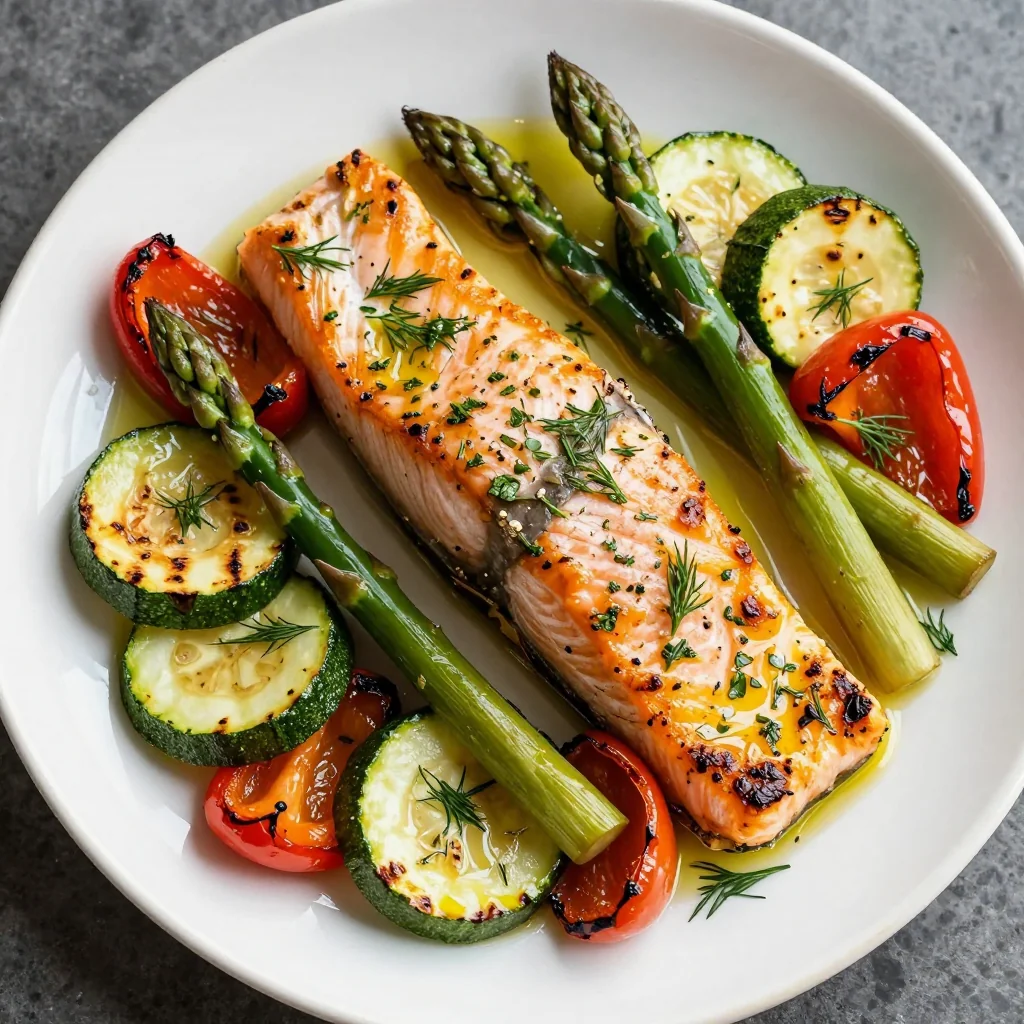
There’s a moment—usually around 5:47 p.m.—when the day tilts from “I’ve got this” to “What’s for dinner, and how fast can it appear?” That’s exactly when this sheet-pan salmon barges in like a superhero with a cape made of parchment paper. I developed the recipe last spring after one too many sink-full-of-dish nights; I wanted something that tasted like I’d fussed, required zero babysitting, and left me with enough energy to actually sit down and eat. The result? Silky, omega-rich salmon whose edges caramelize while a rainbow of vegetables roast underneath, all on a single pan, all in under 30 minutes. My kids call it “color food,” my neighbors request it for potlucks, and my husband—who swore he hated Brussels sprouts—now fights me for the crispy outer leaves. If you can hold a knife well enough to cube a sweet potato and can remember to set a timer, you can master this dish tonight.
Why This Recipe Works
- One Pan, Zero Fuss: Everything cooks together—no steamer baskets, no stovetop shuffling, no mountain of dishes.
- Customizable Veggies: Swap in whatever’s lurking in your crisper; the seasoning base works with almost any produce.
- Perfectly Timed Salmon: A two-temperature method guarantees flaking-tender centers and golden crusts without overcooking.
- Meal-Prep Star: Portions reheat like a dream, so you can stock the fridge with grab-and-go healthy lunches.
- Heart-Healthy Fats: Salmon delivers EPA & DHA omega-3s while olive oil and veggies add fiber and antioxidants.
- Family-Friendly Flavor: A touch of maple syrup in the glaze encourages even veggie-skeptics to clean their plates.
Ingredients You'll Need
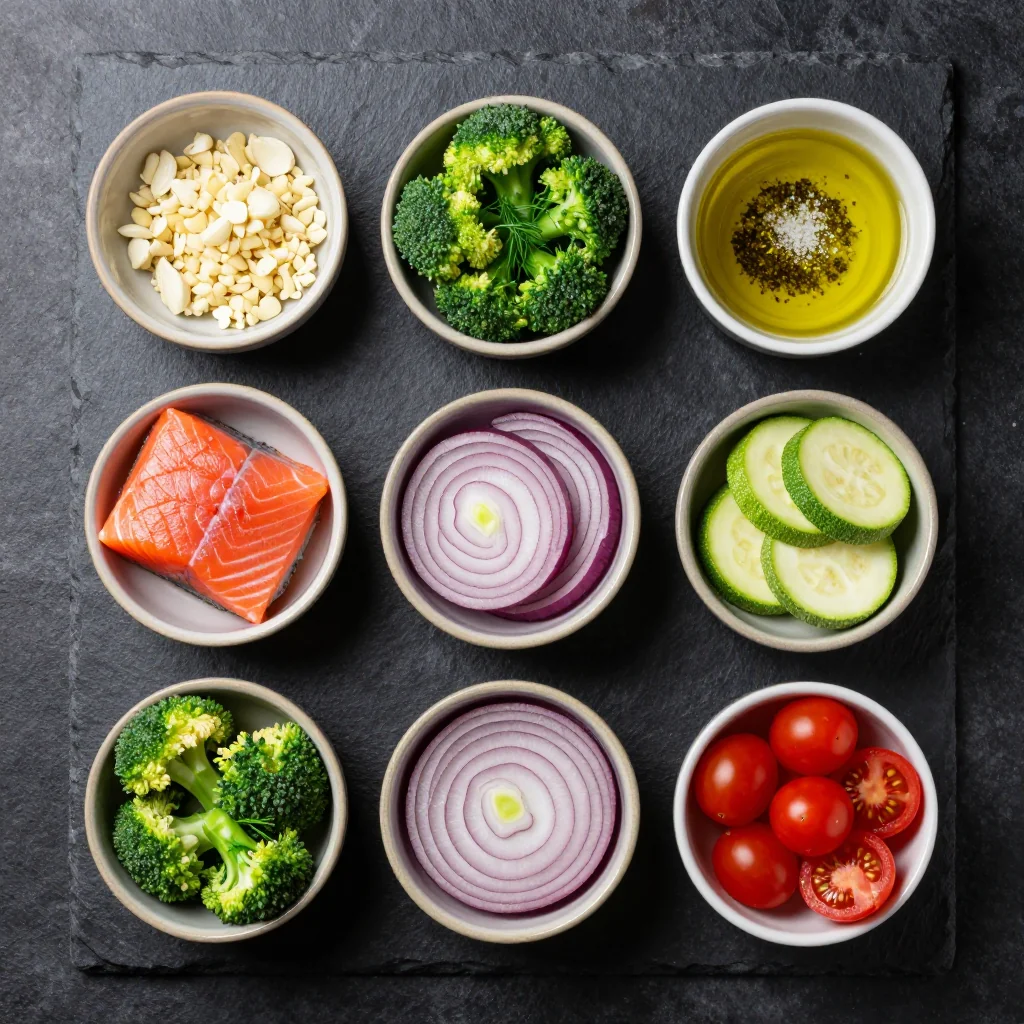
Quality ingredients make the difference between “pretty good” and “restaurant worthy.” Here’s what to look for, plus smart swaps for every aisle of the market.
Salmon
Buy 1¼–1½ lb of center-cut fillet, skin-on or skin-off according to preference. Wild-caught Coho or King salmon boasts deeper flavor, but sustainably farmed Atlantic is budget-friendlier and still omega-rich. Ask your fishmonger to remove pin bones or run your fingers along the flesh; any stragglers can be plucked with tweezers. If frozen, thaw 24 h in the fridge on a paper-towel-lined tray; pat very dry before seasoning so the exterior can caramelize, not steam.
Sweet Potato
One large (¾ lb) orange-fleshed sweet potato cubes into 1-inch pieces that roast in the same time as the salmon. No need to peel—skin adds fiber and turns candy-crisp. Substitute butternut, acorn squash, or even Yukon golds; just keep the 1-inch guideline so everything cooks evenly.
Broccolini & Bell Peppers
Broccolini’s slender stalks roast faster than standard broccoli, but if you only have crowns, split them into long florets with ½-inch stems. Red and yellow bell peppers bring sweetness; choose specimens with tight, glossy skin. In summer, zucchini or asparagus halves shine; in winter, add parsnip wedges or halved Brussels sprouts.
Olive Oil & Avocado Oil
A 50/50 blend raises the smoke point so the glaze can sizzle without turning bitter. If you keep only olive oil, that works—just avoid extra-virgin for the initial high-heat roast; save it for finishing.
Maple-Dijon Glaze
Pure maple syrup (Grade A amber) balances Dijon’s tang. Honey works, but maple’s subtle caramel notes marry beautifully with salmon. Use coarse-grain mustard for pops of texture or smooth Dijon for a silkier coat.
Smoked Paprika & Garlic Powder
These two pantry heroes give roasted vegetables a “did-this-grill-over-fire?” nuance. If you’re out, substitute ½ tsp cumin plus a pinch of cayenne for warmth.
How to Make Healthy Sheet Pan Salmon and Roasted Veggies
Heat the Oven & Prep the Sheet
Place one rack in the upper-middle and another in the center; we’re starting high for color, then dropping for gentle cooking. Line an 18×13-inch rimmed sheet pan with parchment (not wax) paper. Parchment prevents sticking and lets you funnel the glaze right over the salmon without scrubbing later.
Cube & Season the Vegetables
In a large bowl toss sweet-potato cubes, bell-pepper strips, and broccolini with 1 Tbsp avocado oil, 1 Tbsp olive oil, ¾ tsp kosher salt, ½ tsp black pepper, 1 tsp smoked paprika, and ½ tsp garlic powder. The aim is a glossy, not dripping, coat. Spread veggies in a single layer on two thirds of the sheet pan, grouping broccolini together; its quicker cook time makes for easy removal if it browns early.
Make the Maple-Dijon Glaze
Whisk 2 Tbsp Dijon mustard, 2 Tbsp maple syrup, 1 Tbsp soy sauce or tamari, 1 tsp apple-cider vinegar, and ½ tsp freshly grated ginger until silky. Reserve half for serving; using the same brush on raw and cooked fish avoids cross-contamination.
Season the Salmon
Pat salmon very dry. Brush flesh lightly with glaze, then sprinkle with ½ tsp kosher salt, ¼ tsp pepper, and ¼ tsp lemon zest. Place salmon skin-side down on the empty third of the sheet pan, leaving ½ inch between fish and vegetables for air flow.
Roast at 425 °F for 10 Minutes
Slide the pan onto the upper-middle rack. The high heat jump-starts caramelization; you’ll hear gentle sizzling. Meanwhile, the glaze begins to lacquer the salmon and vegetables pick up smoky edges.
Reduce to 375 °F & Continue 8–10 Minutes
Without removing the pan, lower the oven temperature. The salmon’s interior gently climbs to 125 °F (medium) or 130 °F (medium-well). If broccolini browns early, pluck it off with tongs and set aside.
Check Doneness
Salmon should flake but still look translucent in the very center; carry-over heat finishes the job while resting. Veggies should be fork-tender with charred tips. If you prefer darker color, broil 1–2 minutes at the end, watching like a hawk.
Rest, Drizzle, Serve
Tent loosely with foil 5 minutes. Drizzle reserved glaze over everything, add a squeeze of fresh lemon, shower with chopped parsley or dill, and bring the pan straight to the table for family-style flair.
Expert Tips
Dry = Crispy
Moisture is the enemy of browning. Pat salmon, and even the veggies, with paper towel before oiling so they roast, not steam.
Use Two Temperatures
Blasting at 425 °F gives color, then dropping to 375 °F prevents the glaze from burning while the interior stays silky.
Group by Cook Time
Cluster quick-cooking veg (asparagus, bell peppers) so you can remove them early if necessary while denser roots keep roasting.
Don’t Skip the Parchment
It prevents the glaze from cementing to the metal and lets you slide a spatula cleanly under the salmon for pristine fillets.
Thermometer > Clock
Ovens vary, fillets vary. An instant-read probe beats guessing; pull salmon at 125 °F for medium, 130 °F for medium-well.
Rest, Then Glaze Again
A second coat of the reserved glaze after resting adds fresh, punchy flavor that wakes up the roasted vegetables too.
Variations to Try
- Asian Twist: Swap maple syrup for hoisin, add a teaspoon of sesame oil and sprinkle sesame seeds and scallions at the end.
- Mediterranean Flair: Replace paprika with 1 tsp dried oregano and ¼ tsp fennel seeds; finish with olives, cherry tomatoes, and fresh basil.
- Spicy Cajun: Season veg with 1 tsp Cajun spice plus ⅛ tsp cayenne; brush salmon with a mix of grainy mustard, honey, and hot sauce.
- Low-Carb Swap: Trade sweet potato for cauliflower florets and zucchini rounds; reduce glaze sweetener by half.
- Different Fish: Thick cod, halibut, or steelhead trout work; add 2–3 extra minutes depending on thickness.
- Vegan Option: Replace salmon with marinated tofu slabs; brush with the same glaze and roast 15 minutes, turning once.
Storage Tips
Refrigerate: Cool portions completely, then store in airtight glass containers up to 4 days. Keep extra glaze separate so the veggies stay crisp.
Freeze: Freeze individual salmon fillets (without veg) in glaze for up to 2 months. Thaw overnight in fridge, then reheat at 300 °F for 10 minutes or until just warmed through.
Reheat: Microwave 60–90 seconds with a damp paper towel to prevent drying, or better yet, warm in a 300 °F oven 8 minutes. A quick skillet sear restores crispy edges.
Meal-Prep Combo: Portion salmon and veggies over quinoa or farro; add a spoon of reserved glaze as dressing. Boxes stay tasty for weekday lunches.
Frequently Asked Questions
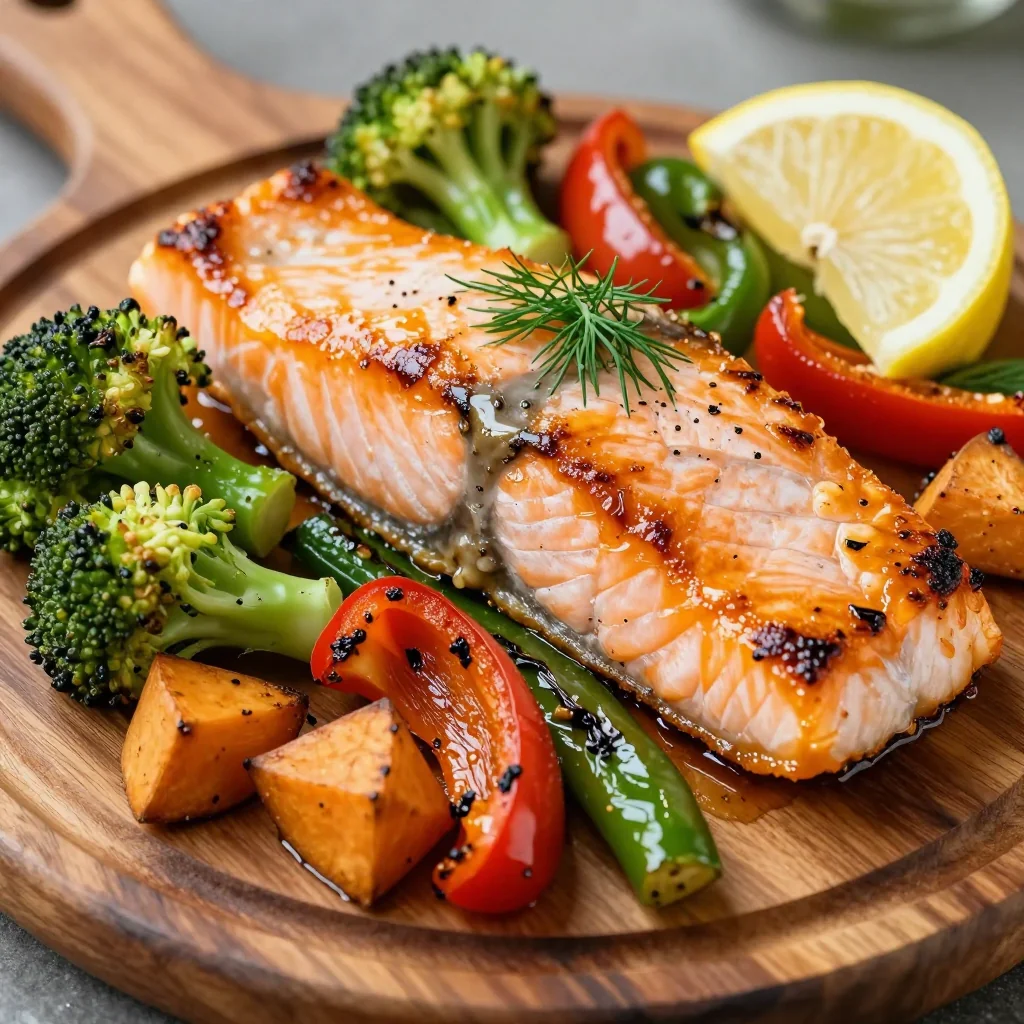
Healthy Sheet Pan Salmon and Roasted Veggies
Ingredients
Instructions
- Preheat & prep: Set racks in upper-middle and center positions. Heat oven to 425 °F. Line a rimmed 18×13-inch sheet pan with parchment.
- Season vegetables: Toss sweet potato, peppers, and broccolini with oils, salt, pepper, paprika, and garlic powder. Spread on two thirds of the pan.
- Make glaze: Whisk Dijon, maple syrup, soy sauce, vinegar, and ginger. Reserve half.
- Prep salmon: Pat dry; brush with some glaze; season with salt, pepper, and lemon zest. Place skin-side down on remaining third of pan.
- Roast: Bake 10 min at 425 °F; reduce to 375 °F and bake 8–10 min more, until salmon reaches desired doneness and vegetables are tender.
- Rest & serve: Tent loosely with foil 5 min. Drizzle reserved glaze, add lemon juice and parsley. Serve hot.
Recipe Notes
For extra-crispy sweet-potato edges, broil 1–2 minutes at the end. Store leftovers refrigerated up to 4 days or frozen 2 months.