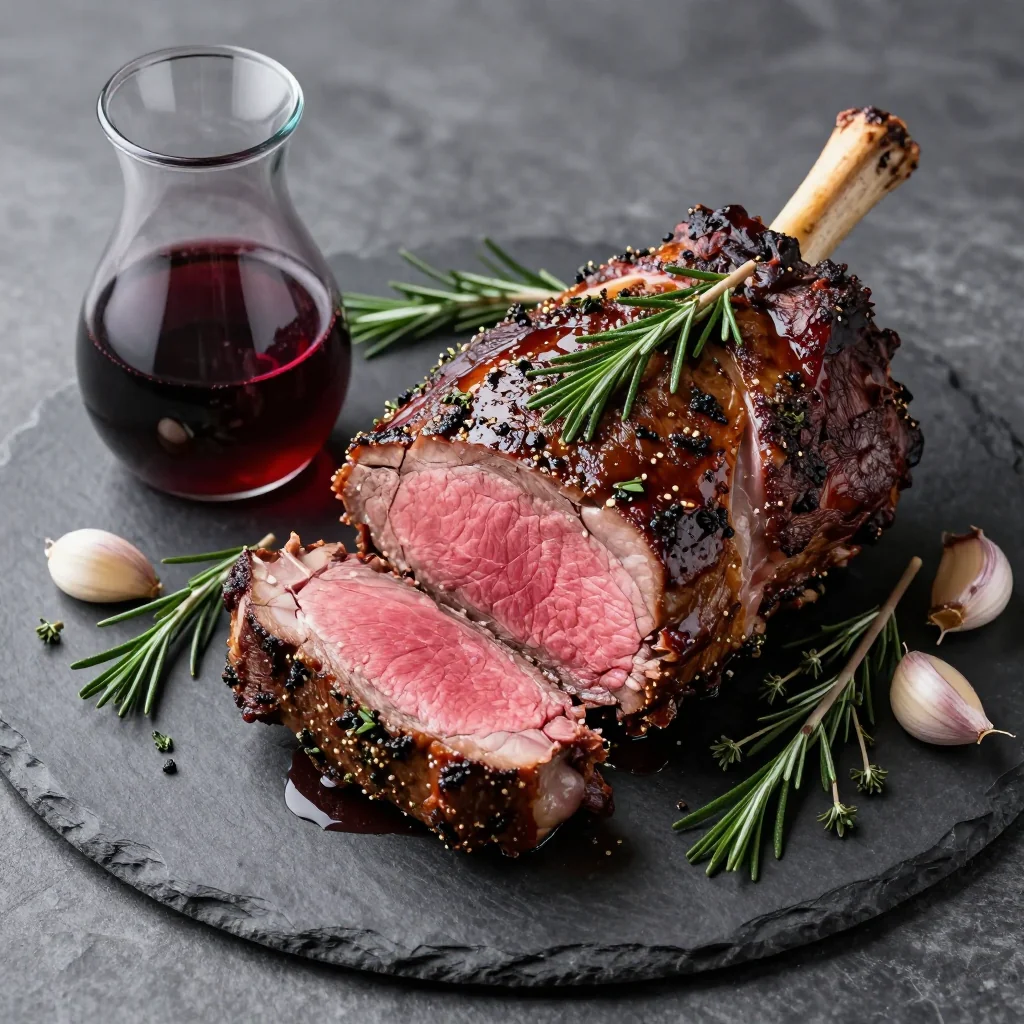
Love this? Pin it for later! 📌
There’s a moment—usually right after the candles are lit, the wine is poured, and the dining room hums with anticipation—when I carry the platter to the table and gently set down this burnished, mahogany-crusted roast. Conversation pauses, someone inhales audibly, and I know the holiday has officially begun. That, for me, is the magic of herb-roasted prime rib: it turns an ordinary December evening into a memory that lingers long after the last slice is served.
I started cooking prime rib for Christmas dinner almost fifteen years ago, back when my largest roasting pan was a hand-me-down from my grandmother and my “instant-read” thermometer took a full thirty seconds to register anything. The first year I fretted—would the center be too rare? Would the crust burn?—but when my father took a bite, closed his eyes, and quietly said, “This tastes like the holidays,” I knew I’d found our new tradition. Since then I’ve refined the method dozens of times, testing herb combinations, sear-roast sequences, and au-jus ratios until the recipe felt bullet-proof. Today I’m sharing the version that friends text me for in all-caps every November and that my own kids now request for their birthdays. It is unapologetically lavish, surprisingly low-stress, and exactly what you want anchoring an elegant holiday feast.
If you’ve never tackled prime rib before, breathe. We’ll walk through every detail—from choosing the right cut and calculating exact timing to building a silky red-wine au jus that pools like liquid velvet. By the time you pull the roast from the oven, you’ll feel like the protagonist of every feel-good food movie rolled into one.
Why This Recipe Works
- Reverse-sear for edge-to-edge perfection: Slow-roasting first, then blasting at high heat guarantees a rosy interior and a crackling herb crust.
- Compound butter under + over: Sliding an herby butter layer beneath the twine seasons the meat from the inside out and self-bastes every slice.
- Built-in temperature roadmap: Time-per-pound charts and pull-temps remove guesswork so you can relax with guests instead of hovering by the oven.
- Red-wine au jus in the same pan: Deglazing with bold cabernet lifts all the caramelized fond, turning drippings into a restaurant-worthy sauce in minutes.
- Make-ahead friendly: Season the roast 24–48 hours early; the herb permeates the beef and forms a dry-brine that intensifies flavor and crust texture.
- Impressive yet economical per serving: One large rib roast feeds a crowd, and leftovers morph into legendary sandwiches or hash the next morning.
Ingredients You'll Need
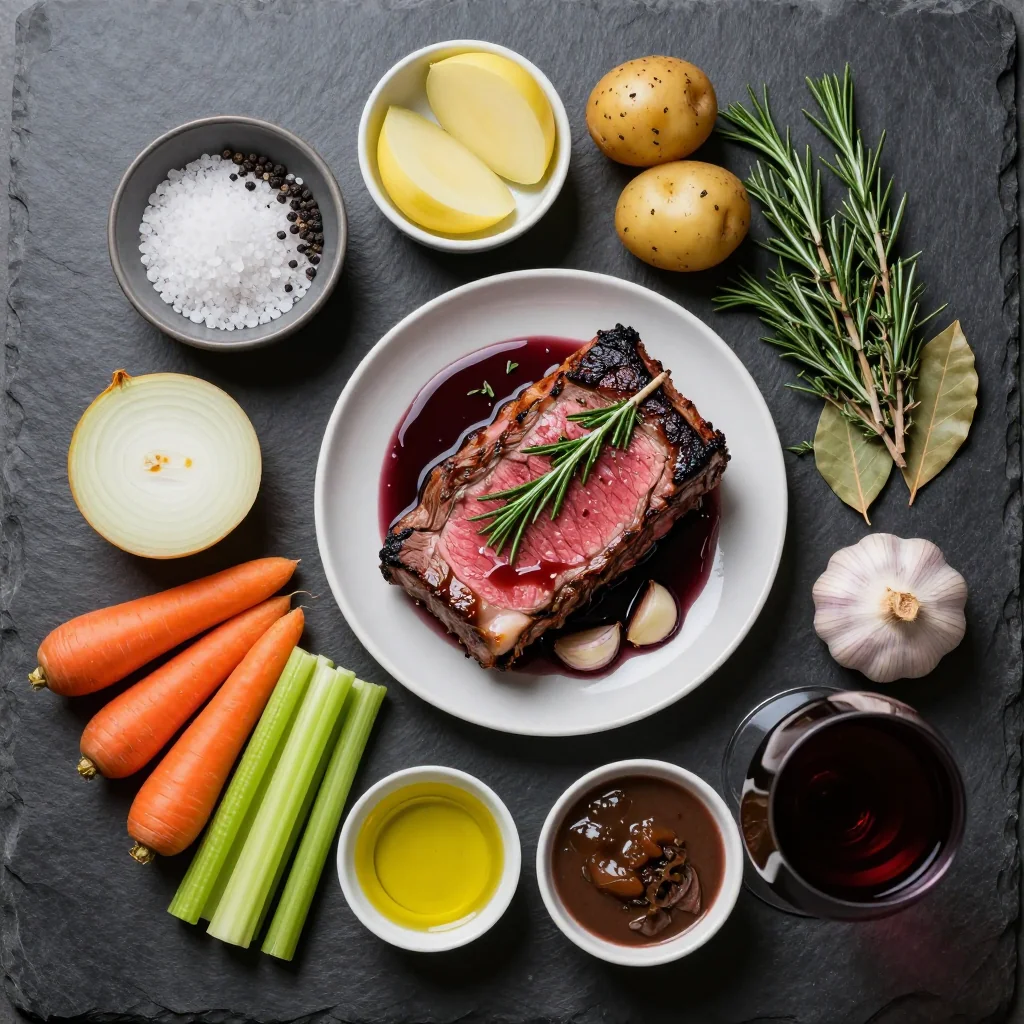
Great prime rib starts at the butcher counter. Ask for a bone-in standing rib roast from the small end (ribs 10–12) where the muscles are more tender and better marbled. I plan on one rib for every two diners, plus an extra rib for leftovers. If your crowd is smaller, a three-rib roast (about 6–7 lb) still roasts evenly; just shorten the cooking time slightly.
For the herb butter you’ll need softened unsalted butter. Salted butter can vary in salinity, so I prefer to control seasoning directly. Fresh rosemary, thyme, and parsley give the quintessential winter-green perfume; dried herbs will taste dusty here. Finely mince the leaves—woody stems can turn bitter. Garlic should be grated or pasted so it melts into the butter and doesn’t burn. A whisper of lemon zest brightens the rich beef, while kosher salt and cracked black pepper form the savory crust.
The au jus begins with the pan drippings—liquid gold—augmented by good red wine. Choose a dry, full-bodied variety such as Cabernet Sauvignon or Syrah that you’d happily drink. You’ll also need low-sodium beef stock (homemade if you’re feeling ambitious) and a splash of Worcestershire for depth. A pat of butter swirled in at the end adds glossy body and tames any sharp edges.
Optional but lovely: horseradish for serving, and flaky sea salt to finish each slice tableside. If you’d like a Yorkshire-pork-fat vibe, save a tablespoon of the rendered beef fat to whisk into the jus for extra silkiness.
How to Make Herb-Roasted Prime Rib with Red-Wine Au Jus for Elegant Holiday Feasts
Trim, Tie, and Dry-Brine
Pat the roast dry. If your butcher hasn’t removed the chine bone, slice it free so the roast sits flat. Leave the fat cap intact but score it in a crosshatch, cutting just to the meat so seasoning penetrates. Slide butcher’s twine between every two rib bones to keep the roast compact. Coat the entire exterior with 1 Tbsp kosher salt per rib, then refrigerate uncovered on a rack over a rimmed sheet pan 24–48 hours. This dry-brine seasons deeply and dries the surface for superior crust formation.
Make the Herb Butter
In a bowl combine ½ cup softened unsalted butter, 2 Tbsp minced rosemary, 2 Tbsp minced thyme, 1 Tbsp minced parsley, 4 cloves grated garlic, 1 tsp lemon zest, 1 tsp kosher salt, and 1 tsp cracked black pepper. Mash with a fork until uniform. Reserve 2 Tbsp for the au jus; the rest will blanket the roast.
Season and Bring to Room Temp
Two hours before roasting, remove the prime rib from the fridge. Spread the herb butter generously over every surface, nudging it into the scored seams and under the twine. This not only flavors but insulates. Insert a probe thermometer horizontally through the center of the eye, avoiding fat pockets or bone. Let the roast stand at room temperature; cold beef cooks unevenly.
Slow-Roast Low and Slow
Preheat oven to 200 °F (93 °C). Place the roast bone-side down on a rack in a shallow roasting pan. Roast until the internal temperature reaches 118 °F (rare) or 122 °F (medium-rare). Expect roughly 35 minutes per pound, but trust the thermometer, not the clock. When target temp is reached, remove and tent loosely with foil while you crank the oven to 500 °F (260 °C) for the reverse sear.
Blistering Reverse Sear
Return the roast to the screaming-hot oven for 6–10 minutes, watching closely, until the exterior is deeply bronzed and the herbs have frizzled into an aromatic crust. Internal temp will climb 5–7 more degrees. Transfer to a carving board, tent again, and rest 20–30 minutes. Resting allows juices to redistribute so slices stay succulent.
Build the Red-Wine Au Jus
Place the roasting pan over two burners set to medium. Pour off all but 2 Tbsp fat. Add 1 cup chopped shallots; sauté 2 minutes. Add 2 cups dry red wine; simmer, scraping the fond, until reduced by half. Stir in 2 cups low-sodium beef stock and the reserved herb butter. Simmer 8 minutes, then strain. Season with salt, pepper, and a pinch of sugar if the wine is tannic. Keep warm in a small saucepan until serving.
Carve with Confidence
Remove twine. Using a long slicing knife, cut along the bone to free the eye in one magnificent piece. Slice straight down across the grain into ½- to ¾-inch steaks. Reassemble on the platter for presentation, drizzle with a spoonful of au jus, and serve the rest tableside in a warm gravy boat.
Expert Tips
Thermometer Trumps Time
Prime rib thickness varies. Pull 5 °F below desired doneness; residual heat finishes the job while it rests.
Save the Drippings
Even if you’re making au jus ahead, pour the hot fat into a jar; a teaspoon whisked into mashed potatoes is transformative.
Chill Before Searing
If kitchen is warm, pop the roast back into the fridge 10 minutes before the final sear; a cooler surface prevents grey banding.
Rest on a Rack
Elevating the roast while it rests prevents the bottom crust from steaming and preserves that glorious crunch.
Brighten the Jus
A whisper of balsamic or a strip of orange peel simmered with the wine adds festive complexity without overpowering beef.
Horseradish Whip
Fold prepared horseradish into softly whipped cream with a squeeze of lemon; serve dollops alongside for cool contrast.
Variations to Try
- Smoky Coffee Rub – Swap herbs for 2 Tbsp finely ground espresso, 1 Tbsp brown sugar, 1 Tbsp smoked paprika, and 1 tsp cocoa powder.
- Mustard-Herb Crust – Slather roast with Dijon before butter for zippy tang and extra browning.
- Mushroom Au Jus – Add 1 cup sautéed creminos to the wine reduction for an earthy note.
- Garlic-Lovers – Insert slivers of garlic into the scored seams for hidden pockets of sweet roasted garlic.
- Boneless Convenience – Tie into a uniform shape; reduce cooking time by roughly 10% and follow same method.
Storage Tips
Cool leftover prime rib in thin slices; refrigerate in an airtight container up to 4 days. Warm gently in a 250 °F oven with a splash of au jus or beef stock to rehydrate—microwaves obliterate the rosy center. For longer storage, wrap slices in parchment then foil, place in a freezer bag, and freeze up to 3 months. Thaw overnight in fridge before reheating.
Au jus keeps 4 days refrigerated or 3 months frozen. Warm in a small saucepan; if it separates, whisk in a cube of cold butter over low heat to re-emulsify.
Frequently Asked Questions
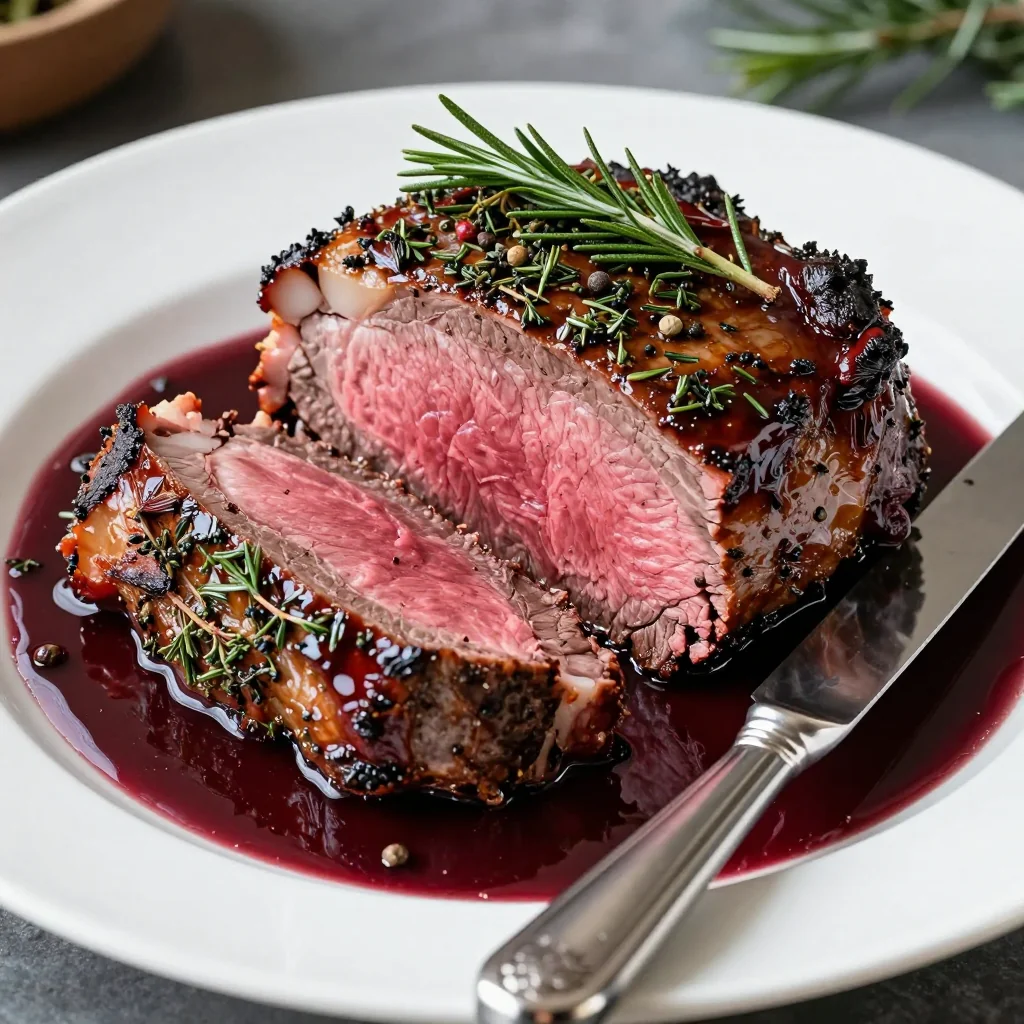
Herb-Roasted Prime Rib with Red-Wine Au Jus
Ingredients
Instructions
- Prep & Dry-Brine: Pat roast dry, score fat, tie with twine. Coat with 1 Tbsp kosher salt per rib. Refrigerate uncovered 24–48 hours.
- Make Herb Butter: Combine ½ cup butter, herbs, garlic, zest, 1 tsp salt, and pepper. Reserve 2 Tbsp for jus.
- Season: Slather roast with herb butter, insert probe thermometer, and rest at room temp 2 hours.
- Slow-Roast: Roast at 200 °F until internal temp reaches 122 °F (about 35 min/lb).
- Reverse Sear: Rest tented. Increase oven to 500 °F. Return roast 6–10 min until crust is dark and crisp.
- Au Jus: Deglaze pan with shallots & wine, reduce by half. Add stock, Worcestershire, reserved butter; simmer 8 min then strain.
- Rest & Carve: Let roast rest 30 min, slice across grain, serve with hot jus.
Recipe Notes
For medium doneness, pull roast at 128 °F. Leftovers reheat beautifully in a low oven with a splash of jus; avoid microwaving to preserve rosy color.