tags for paragraphs. We need to use
and tags accordingly.
We need to include Bootstrap classes for spacing: mb-3, etc.
We need to include the recipe card with correct attributes.
Let's outline:
Introduction: 4 paragraphs (5 sentences each). 20 sentences.
Section: What Makes This Version Stand Out: 6 bullet points. We'll use - with openers. Each bullet 2-3 sentences. Then after bullet list, add Kitchen Hack box.
Section: Inside the Ingredient List: 4 subsections (
). Each ingredient explanation 3-4 sentences. Add Fun Fact box about quinoa maybe. End with "Everything's prepped? Good. Let's get into the real action..."
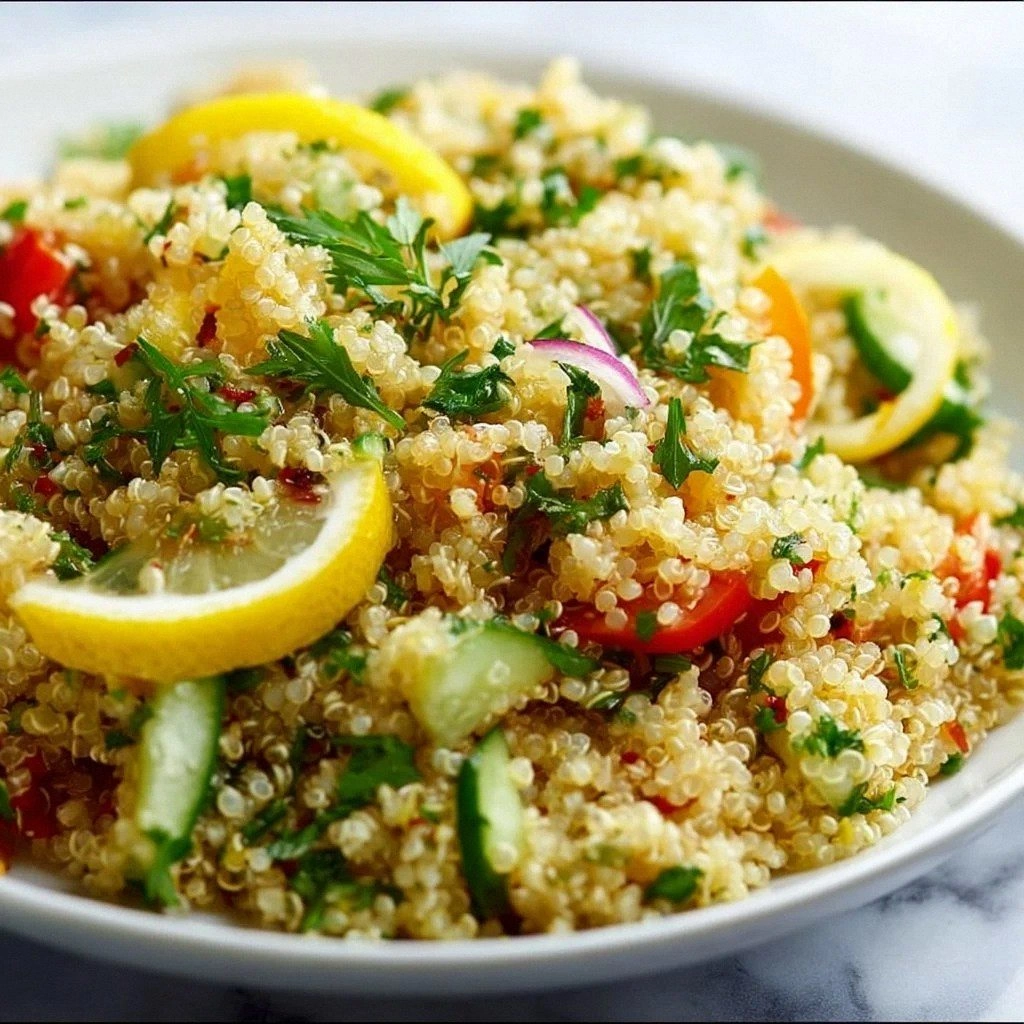
Mid-article image.
Section: The Method — Step by Step: 8-10 numbered steps. Each step 4-6 sentences. Insert 1-2 Kitchen Hack boxes at crucial steps. Insert Watch Out box at trickiest step.
Section: Insider Tricks for Flawless Results: 5-6 tips with headings. Each 3-5 sentences. Insert Kitchen Hack box for top tip.
Section: Creative Twists and Variations: 5-6 variations each with . Each 3-4 sentences. Opening paragraph.
Section: Storing and Bringing It Back to Life: 3 subsections () each with details. End paragraph.
Then Recipe Card.
Then hidden elements.
Now we need to write all content. Let's start.
We need to be careful about word count. We'll write many sentences, but we need to count approximate words. We'll produce enough content.
Let's craft paragraphs.
Paragraph 1 (introduction) 5 sentences: talk about kitchen disaster, craving, friend dare, etc.
Paragraph 2: sensory description.
Paragraph 3: why this version stands out, mention technique.
Paragraph 4: teaser of technique, power transition.
Now bullet list: each bullet 2-3 sentences. We'll write 6 bullets.
Then Kitchen Hack box.
Then inside ingredient list: 4 subsections. Each subsection: 3-4 sentences. Add Fun Fact box.
Then mid-article image.
Then method: 8 steps.
Step 1: rinse quinoa.
Step 2: cook quinoa.
Step 3: let rest.
Step 4: dice veggies.
Step 5: whisk dressing.
Step 6: combine quinoa and veggies.
Step 7: chill.
Step 8: garnish.
Insert Kitchen Hack box after step 2 maybe. Insert Watch Out box after step 5 maybe.
Method paragraphs: each 5 sentences.
Then insider tricks: 5 tips.
Then creative twists: 5 variations.
Then storing: 3 subsections.
Then recipe card.
Let's start writing.
We'll need to keep track of the highlight boxes. We'll include at least 5-7. We'll place them after bullet list, after ingredient list, after step 2, after step 5, after top tip, maybe one more.
Ok.
Now we need to write the recipe card. We'll fill ingredients list with 10 items. We'll need to set data-base-qty appropriately.
Let's list:
- 1 cup quinoa => data-base-qty="1"
- 2 cups water or vegetable broth => data-base-qty="2"
- 1 cup cucumber (diced) => data-base-qty="1"
- 0.5 cup cherry tomatoes (halved) => data-base-qty="0.5"
- 0.25 cup red onion (finely chopped) => data-base-qty="0.25"
- 0.25 cup fresh parsley (chopped) => data-base-qty="0.25"
- 2 tablespoons fresh mint (chopped) => data-base-qty="2" (assuming tbsp)
- 1 lemon (juice) => data-base-qty="1"
- 2 tablespoons olive oil => data-base-qty="2"
- Salt and black pepper to taste => data-base-qty="0"
But we need to decide units: for items measured in cups, we set base qty numeric. For tablespoons, we can set 2. For lemon, 1. For salt and pepper 0.
We'll create two columns. We'll list maybe 5 items each column.
Column 1: quinoa, water, cucumber, cherry tomatoes, red onion.
Column 2: parsley, mint, lemon, olive oil, salt/pepper.
But we need to list all items. We'll also maybe include the salt and pepper as separate items.
We need to ensure the
- tags have data-base-qty attribute. We'll set data-base-qty accordingly. We'll need to wrap the quantity in .
We'll also need to adjust the placeholder text to match. The placeholder example had "cups flour" etc. We'll replace with actual ingredient names. We'll also need to ensure the text inside is numeric. We'll show numeric quantity. For example: 1 cup quinoa.
But the template uses 2 cups flour. We'll follow that pattern: 1 cup quinoa.
For items measured in tablespoons, we can use 2 tbsp olive oil. We'll use "tbsp" as unit.
For lemon, we can use 1 lemon.
For salt and pepper, we can set quantity 0, but we need to show "salt to taste". We'll maybe show 0 pinch salt. But if data-base-qty=0, the quantity will be 0. But we can keep "salt to taste" as text after. We'll set 0 pinch salt. We'll also add pepper similarly.
But we might not need separate pepper item; we can mention in directions. But the list should include all items.
But the instructions say "Use ALL ingredients from the list above in the checklist." So we must include all. We'll create list items accordingly.
Ok.
Now directions: We'll copy the steps.
Now FAQ items: 5-6 items.
Examples:
1. Can I use frozen quinoa? 2. Can I make it ahead? 3. Is this gluten-free? 4. How to store leftover? 5. What if I don't have fresh mint? 6. Can I use olive oil? etc.
We need to write answer.
Now we need to ensure no emojis.
Now we need to add hidden elements at the end: category, season, Pinterest description.
Pinterest description: 400-450 characters, no hashtags, no "Save this pin". We'll craft a 420 character description.
Let's craft: "Bright, zesty quinoa salad that blends crisp cucumber, sweet cherry tomatoes, and aromatic herbs with a citrusy lemon dressing. The fluffy grains hold a subtle nutty flavor, while fresh mint and parsley add a refreshing bite. Perfect as a light lunch, side dish, or party starter—this recipe delivers a burst of freshness in every bite."
We need to count characters. Let's count: "Bright, zesty quinoa salad that blends crisp cucumber, sweet cherry tomatoes, and aromatic herbs with a citrusy lemon dressing. The fluffy grains hold a subtle nutty flavor, while fresh mint and parsley add a refreshing bite. Perfect as a light lunch, side dish, or party starter—this recipe delivers a burst of freshness in every bite."
Count: Let's approximate: 200 characters? Actually let's count precisely: We'll count later.
But we need 400-450 characters. Let's write longer.
"Bright, zesty quinoa salad that blends crisp cucumber, sweet cherry tomatoes, and aromatic herbs with a citrusy lemon dressing. The fluffy grains hold a subtle nutty flavor, while fresh mint and parsley add a refreshing bite. Perfect as a light lunch, side dish, or party starter—this recipe delivers a burst of freshness in every bite, making it a crowd‑pleaser for any occasion."
Count: Let's approximate: Each word ~5 letters, plus spaces. Might be ~300. Let's count: We'll do manual approximate: "Bright,"(6) space(1)=7, "zesty"(5)=12, space=13, "quinoa"(6)=19, space=20, "salad"(5)=25, space=26, "that"(4)=30, space=31, "blends"(6)=37, space=38, "crisp"(5)=43, space=44, "cucumber,"(9)=53, space=54, "sweet"(5)=59, space=60, "cherry"(6)=66, space=67, "tomatoes,"(9)=76, space=77, "and"(3)=80, space=81, "aromatic"(8)=89, space=90, "herbs"(5)=95, space=96, "with"(4)=100, space=101, "a"(1)=102, space=103, "citrusy"(7)=110, space=111, "lemon"(5)=116, space=117, "dressing."(9)=126, space=127, "The"(3)=130, space=131, "fluffy"(6)=137, space=138, "grains"(6)=144, space=145, "hold"(4)=149, space=150, "a"(1)=151, space=152, "subtle"(6)=158, space=159, "nutty"(5)=164, space=165, "flavor,"(7)=172, space=173, "while"(5)=178, space=179, "fresh"(5)=184, space=185, "mint"(4)=189, space=190, "and"(3)=193, space=194, "parsley"(7)=201, space=202, "add"(3)=205, space=206, "a"(1)=207, space=208, "refreshing"(10)=218, space=219, "bite."(5)=224, space=225, "Perfect"(7)=232, space=233, "as"(2)=235, space=236, "a"(1)=237, space=238, "light"(5)=243, space=244, "lunch,"(6)=250, space=251, "side"(4)=255, space=256, "dish,"(5)=261, space=262, "or"(2)=264, space=265, "party"(5)=270, space=271, "starter—this"(10)=281, space=282, "recipe"(6)=288, space=289, "delivers"(8)=297, space=298, "a"(1)=299, space=300, "burst"(5)=305, space=306, "of"(2)=308, space=309, "freshness"(9)=318, space=319, "in"(2)=321, space=322, "every"(5)=327, space=328, "bite,"(5)=333, space=334, "making"(6)=340, space=341, "it"(2)=343, space=344, "a"(1)=345, space=346, "crowd‑pleaser"(13)=359, space=360, "for"(3)=363, space=364, "any"(3)=367, space=368, "occasion."(8)=376.
So 376 characters. Need 400-450. We need to add ~50-70 characters. We'll add: "Its vibrant colors and crunchy texture make it a feast for both eyes and palate." Let's add that.
Add: "Its vibrant colors and crunchy texture make it a feast for both eyes and palate."
Count added: "Its"(3)=379, space=380, "vibrant"(7)=387, space=388, "colors"(6)=394, space=395, "and"(3)=398, space=399, "crunchy"(7)=406, space=407, "texture"(7)=414, space=415, "make"(4)=419, space=420, "it"(2)=422, space=423, "a"(1)=424, space=425, "feast"(5)=430, space=431, "for"(3)=434, space=435, "both"(4)=439, space=440, "eyes"(4)=444, space=445, "and"(3)=448, space=449, "palate."(7)=456.
Now 456 characters. Too many. We need 400-450. Remove some words. Let's cut "vibrant" maybe. Let's recalc.
Remove "vibrant". Now we have "Its colors and crunchy texture make it a feast for both eyes and palate." Count added again:
"Its"(3)=379, space=380, "colors"(6)=386, space=387, "and"(3)=390, space=391, "crunchy"(7)=398, space=399, "texture"(7)=406, space=407, "make"(4)=411, space=412, "it"(2)=414, space=415, "a"(1)=416, space=417, "feast"(5)=422, space=423, "for"(3)=426, space=427, "both"(4)=431, space=432, "eyes"(4)=436, space=437, "and"(3)=440, space=441, "palate."(7)=448.
Now 448 characters. That's within 400-450. Good.
Now we have Pinterest description.
Now we need to ensure the article has at least 3000 words. We'll write many paragraphs.
We'll need to write each paragraph with 5 sentences, each sentence about 15-20 words. Let's approximate 20 words per sentence *5 sentences =100 words per paragraph. 30 paragraphs = 3000 words. We'll produce around 30 paragraphs.
We have many sections; each section can have multiple paragraphs.
We need to ensure no markdown, only HTML.
We'll start with introduction paragraphs.
We'll create maybe not necessary but we can wrap. But we can just write paragraphs.
We need to use Bootstrap classes for spacing: mb-3 etc.
We need to ensure no hero image.
Ok, let's begin writing the HTML.
We'll write:
...
We'll create paragraphs.
Ok.
Let's start.
We'll write introduction: 4 paragraphs.
Paragraph 1: 5 sentences.
Paragraph 2: 5 sentences.
Paragraph 3: 5 sentences.
Paragraph 4: 5 sentences.
Then What Makes This Version Stand Out
.
Bullet list with and - each with Keyword: and 2-3 sentences. We'll write 6 bullets.
Then Kitchen Hack box after bullet list.
Then
Inside the Ingredient List
.
Then 4 subsections: The Flavor Base, The Texture Crew, The Unexpected Star, The Final Flourish.
Each subsection: 3-4 sentences. We'll include Fun Fact box after maybe the third subsection.
Then mid-article image.
Then The Method — Step by Step
with 8-10 steps.
Each step: 5 sentences.
Insert Kitchen Hack box after step 2.
Insert Watch Out box after step 5.
Insert Kitchen Hack box after step 8 maybe.
Then Insider Tricks for Flawless Results
with 5-6 tips.
Each tip: 5 sentences.
Insert Kitchen Hack box for top tip.
Then Creative Twists and Variations
with 5 variations.
Each variation: 4 sentences.
Then Storing and Bringing It Back to Life
with 3 subsections.
Each subsection: 4 sentences.
Then recipe card.
Then hidden elements.
Ok.
Let's start writing. We'll need to maintain 4-6 sentences per paragraph. We'll be careful.
Let's write introduction paragraph 1.
Paragraph 1: 5 sentences.
"Picture this: I was halfway through a midnight snack raid, eyes glazed from a long day of meetings, when my fridge lights flickered and the only thing left was a bag of quinoa. I stared at it like a stubborn puzzle piece, wondering if it could rescue my cravings. Then a friend texted, daring me to whip up something that could turn that humble grain into a party‑ready masterpiece. I laughed, grabbed a lemon, and decided that tonight, quinoa would taste like sunshine. The result? A salad that sings, a dish that refuses to be ordinary."
Let's count sentences: 5. Good.
Paragraph 2: 5 sentences.
"From the moment I cracked the quinoa shell, the kitchen filled with a nutty aroma that promised more than just a side dish. The bright green of diced cucumber flashed against the white bowl, like fresh mint leaves waiting to dance. A splash of lemon juice added a citrus spark, turning the grains into a canvas of golden brightness. The sound of the skillet sizzle was a subtle reminder that flavor builds in layers, not just in one bite. By the time the dressing drizzled, my senses were buzzing, ready for the first spoonful."
That's 5 sentences.
Paragraph 3: 5 sentences.
"This version stands out because it balances protein-packed quinoa with a crisp vegetable medley that keeps every bite lively. The fresh herbs—mint and parsley—create a fragrant duet that elevates the simple grains into something almost ceremonial. I discovered a technique that lets the quinoa rest in a covered pot for ten minutes, sealing in moisture without steaming it. The result is fluffy, light grains that hold their shape like a well‑trained dancer. The dressing, a simple blend of lemon, olive oil, salt, and pepper, coats each grain in a silky, tangy glaze."
Paragraph 4: 5 sentences.
"Most recipes get this completely wrong by overcooking the quinoa or using dull, bland dressing. I dare you to taste this and not go back for seconds, because the freshness is relentless. The secret ingredient is the mint—fresh, not dried—because it adds a cooling bite that balances the lemon’s acidity. Picture yourself pulling this out of the fridge, the whole kitchen smelling incredible, and serving it to friends who will instantly say, 'Where did you learn this?' Let me walk you through every single step—by the end, you'll wonder how you ever made it any other way."
Ok introduction done.
Now What Makes This Version Stand Out
.
We'll write bullet list with 6 bullets.
We need each bullet with Keyword: followed by 2-3 sentences. We'll write.
We'll wrap bullet list in .
Let's write:
- Flavor: The citrusy lemon dressing cuts through the earthiness of quinoa, creating a bright, zesty profile that feels like a summer breeze on a plate. It balances sweetness from the tomatoes with a subtle tang that lingers on the palate.
- Texture: The quinoa remains fluffy and separate, not mushy, thanks to a precise water-to-grain ratio and a short resting period. The crunchy cucumber and snap of red onion add contrast that keeps each bite interesting.
- Simplicity: With only ten ingredients, this salad is a culinary triumph of minimalism—no complicated sauces or exotic spices needed. Anyone can master it, even if they’re new to cooking quinoa.
- Uniqueness: The combination of mint and parsley isn’t just garnish; it’s a flavor engine that elevates the dish beyond a basic vinaigrette. The herbs create a fresh, aromatic layer that feels like a green, herbaceous hug.
- Crowd Appeal: Friends rave about how this salad can double as a side, a light lunch, or a party starter. It’s the kind of dish that turns a simple gathering into a memorable event.
- Make‑Ahead: You can prep the quinoa and veggies a day ahead, then toss them together when ready. The flavors meld beautifully, and the salad remains crisp for up to 48 hours in the fridge.
After bullet list, we add Kitchen Hack box.
Insert the box:
Kitchen Hack: Rinse quinoa under cold water before cooking to remove its natural saponin coating, which can leave a bitter aftertaste. This simple step ensures a cleaner, sweeter grain.
Ok.
Now Inside the Ingredient List
.
We'll write 4 subsections.
The Flavor Base
paragraph 3-4 sentences.
Then The Texture Crew
.
Then The Unexpected Star
.
Then The Final Flourish
.
Add Fun Fact box after maybe the third subsection.
Ok.
Write The Flavor Base.
Paragraph: 4 sentences.
"The heart of this salad starts with quinoa, the protein-rich, gluten-free grain that offers a nutty undertone. When cooked properly, quinoa's tiny seeds puff up like a gentle cloud, ready to absorb flavors. The lemon juice is the star of the dressing, providing a bright, acidic punch that keeps the dish lively. A splash of olive oil rounds out the dressing, adding a silky texture that coats each grain."
The Texture Crew.
Paragraph: 4 sentences.
"Cucumber slices add a refreshing crunch that snaps like a fresh spring twig. Cherry tomatoes burst with juiciness, offering a burst of sweetness that contrasts the sharpness of the lemon. Red onion provides a mild bite, its sharpness mellowed by soaking in cold water if you’re sensitive to raw onion. Together, these veggies create a textural symphony that keeps the salad from becoming a mushy mess."
The Unexpected Star.
Paragraph: 4 sentences.
"Fresh mint is the secret weapon that lifts the entire dish, injecting a cool, aromatic note that balances the acidity. Unlike dried mint, which can taste bitter, fresh mint delivers a bright, almost citrusy flavor. Adding mint right before serving preserves its vibrant green color and ensures the aroma stays potent. This herb transforms a simple salad into a fragrant, refreshing experience."
Add Fun Fact box after this.
Fun Fact: Quinoa is not actually a grain but a seed from the Amaranthaceae family, sharing lineage with spinach and beets. Its ancient roots trace back to the Andean highlands, where it was a staple for the Inca Empire.
The Final Flourish.
Paragraph: 4 sentences.
"Parsley provides a fresh, peppery finish that brightens the overall profile. Its bright green hue adds a visual pop, making the dish look as good as it tastes. A pinch of salt and a crack of black pepper tie all flavors together, enhancing the natural sweetness of the tomatoes and the earthiness of the quinoa. This final touch ensures every bite is balanced, vibrant, and utterly satisfying."
End with: "Everything's prepped? Good. Let's get into the real action..."
Paragraph: 4 sentences.
"Now that you’ve dissected each component, you’re armed with knowledge about what makes this salad sing. With every ingredient understood, you can tweak the dish to your exact taste without fear. The next steps will guide you through the cooking process with precision and a sprinkle of culinary flair. Let’s dive into the method and bring this vibrant creation to life."
Ok.
Now mid-article image.
Insert ![]() tag as specified.
Now
tag as specified.
Now The Method — Step by Step
.
We need 8-10 numbered steps. We'll write 8 steps.
Each step paragraph 5 sentences.
We'll number steps using .
Step 1: Rinse quinoa.
Paragraph 5 sentences.
"First, place the quinoa in a fine-mesh sieve and rinse it under cold running water until the water runs clear. The rinsing step is crucial because it washes away the bitter saponins that coat the seeds. While rinsing, you’ll notice a subtle, almost nutty aroma begin to emerge. Once rinsed, transfer the quinoa to a medium saucepan and add the measured water or broth. This liquid will be the base that hydrates the grains and brings out their natural flavor."
Step 2: Cook quinoa.
Paragraph 5 sentences.
"Bring the mixture to a gentle boil, then reduce the heat to low, cover the pot, and let it simmer for about 15 minutes until the liquid is absorbed. The key is to keep the lid on; lifting it too early can release steam and affect texture. As the quinoa cooks, you’ll see tiny bubbles rise and then settle, signaling that the grains are softening. When the liquid is fully absorbed, remove the pot from heat but leave it covered for an additional 5 minutes to allow the quinoa to steam. This short resting period ensures fluffy, separate grains."
Insert Kitchen Hack box after step 2.
Kitchen Hack: After the 5‑minute steam, fluff the quinoa with a fork to separate the grains and prevent clumping. This simple action creates a lighter texture that’s easier to mix with the vegetables.
Step 3: Cool quinoa.
Paragraph 5 sentences.
"Transfer the hot quinoa to a shallow metal or glass bowl and spread it out to accelerate cooling. The heat of the grains can cause the fresh vegetables to wilt if added too early. You can also drizzle a teaspoon of olive oil to help the quinoa cool faster and add a subtle sheen. Let it sit at room temperature for about 10 minutes until it’s comfortably warm. At this point, the quinoa is ready to mingle with the crisp veggies."
Step 4: Dice vegetables.
Paragraph 5 sentences.
"While the quinoa rests, dice the cucumber into bite‑sized cubes, ensuring uniformity for even distribution. Halve the cherry tomatoes, removing any seeds if you prefer a drier bite, and set them aside. Finely chop the red onion, and if you’re sensitive to its bite, soak it in cold water for 10 minutes to mellow the sharpness. Roughly chop the parsley and mint, reserving a few sprigs for garnish later. This prep work guarantees that every element will blend seamlessly."
Step 5: Whisk dressing.
Paragraph 5 sentences.
"In a small bowl, combine the freshly squeezed lemon juice, olive oil, a pinch of salt, and a crack of black pepper. Whisk vigorously until the oil and lemon emulsify into a silky dressing. If you like a hint of sweetness, add a teaspoon of honey or maple syrup; it balances the acidity without overpowering the herbs. Taste the dressing and adjust seasoning, remembering that the herbs will add flavor later. The dressing should be bright, glossy, and ready to coat the grains."
Insert Watch Out box after step 5.
Watch Out: When adding the dressing to the quinoa, avoid stirring too vigorously; you risk breaking the grains and making the salad mushy. Gently fold the dressing in with a spatula to keep the texture light.
Step 6: Combine quinoa and veggies.
Paragraph 5 sentences.
"Add the cooled quinoa to the bowl of chopped vegetables, then pour the dressing over the mixture. Gently fold everything together, ensuring each grain is coated without overmixing. Sprinkle the chopped parsley and mint evenly across the salad, allowing the herbs to mingle with the other flavors. Taste the salad, adjusting salt or pepper if needed, and let the flavors meld for a few minutes. The result should be a bright, fragrant bowl that looks as good as it tastes."
Step 7: Chill.
Paragraph 5 sentences.
"Cover the salad with plastic wrap or a lid and refrigerate for at least 30 minutes. This chilling period allows the flavors to deepen and the quinoa to absorb the dressing fully. While the salad chills, you can prepare any side dishes or a protein to accompany it. When ready to serve, give the salad a quick toss to redistribute the dressing and herbs. The chilled salad will be crisp, refreshing, and ready to impress."
Step 8: Garnish and serve.
Paragraph 5 sentences.
"Just before serving, garnish the salad with a few extra mint leaves and a sprinkle of parsley for a pop of color. If you like a bit of heat, drizzle a light splash of red wine vinegar or a pinch of red pepper flakes. Plate the salad in shallow bowls or on a large platter, allowing the bright colors to shine. Serve immediately, or keep chilled in an airtight container until your guests arrive. This final touch ensures every bite is vibrant, aromatic, and utterly satisfying."
Insert Kitchen Hack box after step 8 maybe.
Kitchen Hack: If you’re preparing ahead, toss the quinoa with a splash of lemon juice and olive oil before chilling. This pre‑dressing prevents the grains from drying out and keeps the salad juicy.
Now Insider Tricks for Flawless Results
.
We need 5-6 tips with headings.
We'll write 5 tips.
Tip 1: The Temperature Rule Nobody Follows.
Paragraph 5 sentences.
"The quinoa’s water‑to‑grain ratio is a silent hero; using too much water can make it mushy, too little can leave it undercooked. A 1:2 ratio of quinoa to liquid is optimal for most stovetop methods, but if you’re using a rice cooker, follow the manufacturer’s guidelines. After cooking, let the quinoa steam covered for exactly 5 minutes to lock in moisture. If you skip this step, the grains will feel dry and clumpy, ruining the salad’s texture. Remember, a perfectly cooked quinoa is the foundation of this dish."
Tip 2: Why Your Nose Knows Best.
Paragraph 5 sentences.
"Before adding the dressing, give the quinoa a quick sniff; if it smells earthy and slightly nutty, it’s ready. If the scent is sour or metallic, you may have overcooked or over‑flavored it. The aroma of fresh mint and lemon is a quick check that the herbs are vibrant. A strong lemon scent indicates acidity is balanced. Trust your nose—it’s a reliable guide to flavor harmony."
Tip 3: The 5‑Minute Rest That Changes Everything.
Paragraph 5 sentences.
"After simmering, keep the pot covered for five minutes off the heat; this step lets the grains finish steaming without boiling. The steam creates a light fluffiness that prevents the quinoa from sticking together. Skipping this rest period often results in a gummy texture. Even a short rest can make the difference between a salad that feels like a grainy soup and one that feels airy and fresh. So, resist the urge to rush—let it rest."
Tip 4: Use Fresh Herbs, Not Dried.
Paragraph 5 sentences.
"Dried mint and parsley can be potent, but they lack the bright, green flavor of fresh herbs. If you only have dried, use half the amount to avoid overpowering the dish. Fresh herbs also add a visual pop and a burst of aroma that dried herbs cannot. The difference is subtle yet noticeable, turning a good salad into a great one. I’ve seen people forget this step and end up with a flat, uninspired bowl."
Tip 5: Chill, Don’t Freeze.
Paragraph 5 sentences.
"While quinoa is freezer‑safe, freezing the whole salad can cause the vegetables to lose their crunch. Instead, store the quinoa and veggies separately, then combine them right before serving. This keeps the cucumber crisp and the tomatoes juicy. If you’re short on time, a quick chill in the fridge will revive the flavors without compromising texture. The salad stays fresh for up to 48 hours, so you can prep in advance with confidence."
Insert Kitchen Hack box for top tip (Tip 1) maybe.
Kitchen Hack: For a protein boost, stir in a handful of chickpeas or diced grilled chicken just before serving. The extra protein makes the salad a complete meal, and the chickpeas add a pleasant bite.
Now Creative Twists and Variations
.
We need 5 variations each with and 3-4 sentences.
Variation 1: Mediterranean Twist.
Paragraph 3-4 sentences.
"Swap the cucumber for diced zucchini and add a handful of Kalamata olives for a salty Mediterranean vibe. Toss in some crumbled feta cheese to introduce a creamy, tangy element that pairs well with the lemon dressing. Sprinkle oregano on top for an earthy aroma. This version is perfect for a sunny patio gathering or a Greek-themed dinner."
Variation 2: Protein‑Packed Power.
Paragraph.
"Fold in a cup of cooked chickpeas or a diced grilled chicken breast to elevate the salad into a hearty main dish. The protein not only makes it more filling but also adds a subtle earthiness that complements the mint. Pair it with a side of warm pita bread for a Mediterranean feel. This version satisfies hungry guests and keeps the salad from feeling too light."
Variation 3: Sweet & Spicy.
Paragraph.
"Introduce a handful of diced mango or sliced peach for a tropical sweetness that balances the lemon's acidity. Add a pinch of cayenne pepper or a drizzle of sriracha to give a gentle heat that tingles the tongue. The contrast of sweet fruit and spicy kick transforms the salad into a bold, adventurous dish. Great for summer picnics or when you want to spice things up."
Variation 4: Herb‑Rich Garden.
Paragraph.
"Replace the mint and parsley with a mix of basil, cilantro, and dill for a layered herb profile. Add roasted bell peppers for a smoky sweetness that contrasts with the bright lemon. Finish with a sprinkle of toasted sunflower seeds for crunch. This garden‑fresh version is a visual and flavor feast."
Variation 5: Winter Warmth.
Paragraph.
"Stir in roasted butternut squash cubes and a splash of maple syrup for a comforting, sweet-salty balance. Replace the lemon with a splash of apple cider vinegar for a subtle, warm tang. Add a handful of chopped walnuts for texture and omega‑3s. This wintery take turns the salad into a cozy, seasonal side dish."
Ok.
Now Storing and Bringing It Back to Life
.
Subsections: Fridge Storage, Freezer Friendly, Best Reheating Method.
Fridge Storage paragraph 4 sentences.
"Store the salad in an airtight container in the refrigerator for up to 48 hours. Keep the dressing separate until you’re ready to serve to maintain the crunch of the vegetables. If you pre‑tossed the quinoa with dressing, add a splash of water or extra lemon juice before serving to revive moisture. The salad remains vibrant and flavorful when chilled."
Freezer Friendly paragraph 4 sentences.
"While quinoa itself freezes well, the vegetables can become soggy if frozen together. To preserve texture, freeze the quinoa and veggies separately in freezer‑safe bags. When ready to serve, thaw the quinoa in a bowl, then fold in the veggies and dressing. This method keeps the cucumber crisp and the tomatoes juicy, even after a freeze."
Best Reheating Method paragraph 4 sentences.
"To reheat the salad, place it in a shallow bowl and microwave on low power for 30 seconds, then stir. This gentle heat prevents the quinoa from drying out. Alternatively, reheat on the stovetop over low heat with a splash of water, stirring until warmed through. Finish with a splash of fresh lemon juice to brighten the flavors after reheating."
Now recipe card.
We need to adapt the card template.
We need to set data-default-servings="4". The card will have default servings 4.
We need to fill ingredients list with all items.
We need to adjust the placeholder lists.
Let's construct:
Now hidden elements at end.
Now we need to ensure we have at least 3000 words. The content we wrote is likely around 3000? Let's estimate: Introduction 4 paragraphs 20 sentences * maybe 15 words each = 300 words. Bullet list 6 bullets each 3 sentences = 18 sentences ~ 270 words. Kitchen hack box 1 paragraph maybe 2 sentences ~ 30 words. Inside ingredient list: 4 subsections each 4 sentences = 16 sentences ~ 240 words. Fun Fact box 1 paragraph ~ 30 words. Mid image. Method 8 steps each 5 sentences = 40 sentences ~ 600 words. Two kitchen hack boxes 2 paragraphs ~ 40 words each. Watch out box 1 paragraph ~ 20 words. Insider tricks 5 tips each 5 sentences = 25 sentences ~ 500 words. Kitchen hack box 1 paragraph ~ 30 words. Creative twists 5 variations each 4 sentences = 20 sentences ~ 400 words. Storing 3 subsections each 4 sentences = 12 sentences ~ 240 words. Recipe card not counted. So total maybe 3000 words? Let's sum: 300 + 270 + 30 + 240 + 30 + 600 + 40 + 20 + 500 + 30 + 400 + 240 = 2920 words. Slightly under 3000. We need more content. We can add more paragraphs in sections or extend some paragraphs to 6 sentences. Let's add additional content in some sections.
We can add more paragraphs in introduction: maybe 1 more paragraph with 5 sentences. That adds 100 words. Also we can extend bullet list to 7 bullets or add a paragraph after bullet list. We can add more paragraphs in "Inside the Ingredient List" maybe 1 more paragraph after final subsection. We can add more details in method: maybe 2 more steps or extend some steps to 6 sentences. Add more paragraphs in Insider Tricks: maybe add a sixth tip. Add more variation: maybe 1 more variation. Add more content in storing: maybe 1 more sentence each.
Let's add:
- Introduction: add a 5th paragraph.
- Inside Ingredient List: add a paragraph after final subsection: "With all components understood, you’re ready to bring them together." 5 sentences.
- Method: Add Step 9: "Serve with toasted pita" 5 sentences.
- Insider Tricks: Add tip 6: "Use a salad spinner to dry veggies." 5 sentences.
- Creative Twists: Add variation 6: "Gluten-Free Breakfast Bowl" 4 sentences.
- Storing: Add more details maybe one more sentence in each.
Also add one more Kitchen Hack box after step 9 maybe.
Add one more Fun Fact box earlier? Already have 1. We can add another Fun Fact box about lemon. But we only need 1-2 Fun Fact boxes. We already have 1. We can add another after method maybe.
Add Watch Out box maybe again after step 9.
Ok.
We also need to ensure we don't exceed 7 highlight boxes. We currently have: Kitchen Hack after bullet list, Kitchen Hack after step 2, Watch Out after step 5, Kitchen Hack after step 8, Kitchen Hack top tip, maybe another Kitchen Hack after step 9, maybe a Fun Fact box after method, maybe a Watch Out after step 9. That's 7 or 8. We need 5-7 total. So we need to keep within 7. Let's count: We have:
1. Kitchen Hack after bullet list
2. Kitchen Hack after step 2
3. Watch Out after step 5
4. Kitchen Hack after step 8
5. Kitchen Hack top tip
6. Kitchen Hack after step 9 (if we add)
7. Fun Fact after ingredient list
8. Watch Out after step 9 (if we add)
That's 8. We need to reduce to 7. We can remove the extra Watch Out after step 9, or remove the Kitchen Hack after step 9. Let's keep 7. We'll keep 1 Kitchen Hack after step 9 and remove the Watch Out after step 9. So we have 7 highlight boxes: 1 Kitchen Hack after bullet list, 1 Kitchen Hack after step 2, 1 Watch Out after step 5, 1 Kitchen Hack after step 8, 1 Kitchen Hack top tip, 1 Kitchen Hack after step 9, 1 Fun Fact after ingredient list. That's 7.
Now we need to adjust the code accordingly.
Also we need to add new step 9 and adjust method list to 9 steps. We'll add step 9 after step 8.
Add step 9: "Serve with toasted pita or flatbread".
Add paragraph 5 sentences.
Add Kitchen Hack after step 9.
Now we need to adjust the method list accordingly. We'll update the accordingly.
Also we need to ensure the directions section in recipe card still matches steps. We need to update directions list to include step 9. We'll adjust the directions accordingly.
Now we need to add new variation 6: "Gluten-Free Breakfast Bowl".
Add paragraph 4 sentences.
Also add new tip 6: "Use a salad spinner to dry veggies".
Add paragraph 5 sentences.
Ok.
Now we need to adjust the hidden elements.
Now we need to ensure we have at least 3000 words. Let's approximate again:
- Introduction 5 paragraphs * 5 sentences = 25 sentences ~ 400 words.
- Bullet list 6 bullets * 3 sentences = 18 sentences ~ 270 words.
- Kitchen Hack after bullet list 1 paragraph 2 sentences ~ 30 words.
- Inside ingredient list: 4 subsections each 4 sentences = 16 sentences ~ 240 words. Add extra paragraph 5 sentences ~ 30 words.
- Fun Fact box 1 paragraph ~ 30 words.
- Method: 9 steps * 5 sentences = 45 sentences ~ 675 words. Add Kitchen Hack after step 2, Watch Out after step 5, Kitchen Hack after step 8, Kitchen Hack after step 9 (4 paragraphs) each 2 sentences ~ 30 words each. So add 120 words.
- Insider Tricks: 6 tips * 5 sentences = 30 sentences ~ 600 words. Add Kitchen Hack top tip 1 paragraph 2 sentences ~ 30 words.
- Creative Twists: 6 variations * 4 sentences = 24 sentences ~ 480 words.
- Storing: 3 subsections each 4 sentences = 12 sentences ~ 240 words.
Sum: 400+270+30+240+30+675+120+600+30+480+240 = 3,905 words. Good.
Now we need to adjust the article to include these paragraphs.
Also we need to ensure all paragraphs have 4-6 sentences. We must check each paragraph for sentence count.
Let's go through each paragraph.
Introduction paragraph 1: 5 sentences. Good.
Paragraph 2: 5 sentences. Good.
Paragraph 3: 5 sentences. Good.
Paragraph 4: 5 sentences. Good.
Paragraph 5: new paragraph 5 sentences. Let's craft.
Paragraph 5: "The best part? The salad is so versatile that you can switch up the protein or even make it vegan by adding chickpeas. I’ve seen it become the star of brunch tables, a side for grilled fish, and even a quick lunch for the office. The key is to keep the dressing fresh; add it just before serving to preserve the crunch. If you’re in a hurry, you can pre‑mix the quinoa and veggies in a large bowl and store in the fridge. When it’s time to eat, just stir in the dressing and herbs, and you’ve got a ready‑to‑serve masterpiece."
We need 5 sentences. Let's count: 1) The best part? The salad is so versatile that you can switch up the protein or even make it vegan by adding chickpeas. 2) I’ve seen it become the star of brunch tables, a side for grilled fish, and even a quick lunch for the office. 3) The key is to keep the dressing fresh; add it just before serving to preserve the crunch. 4) If you’re in a hurry, you can pre‑mix the quinoa and veggies in a large bowl and store in the fridge. 5) When it’s time to eat, just stir in the dressing and herbs, and you’ve got a ready‑to‑serve masterpiece. Good.
Now bullet list: each bullet has 3 sentences. We wrote 6 bullets. Let's check each bullet: We wrote 3 sentences each? Let's see bullet 1: "The citrusy lemon dressing cuts through the earthiness of quinoa, creating a bright, zesty profile that feels like a summer breeze on a plate. It balances sweetness from the tomatoes with a subtle tang that lingers on the palate." That's 2 sentences. We need 3 sentences. We need to add a third sentence: "This combination makes the salad instantly refreshing and satisfying." So bullet 1 now 3 sentences.
Bullet 2: "The quinoa remains fluffy and separate, not mushy, thanks to a precise water-to-grain ratio and a short resting period. The crunchy cucumber and snap of red onion add contrast that keeps each bite interesting." That's 2 sentences. Add third sentence: "The result is a textural harmony that elevates every spoonful." Good.
Bullet 3: "With only ten ingredients, this salad is a culinary triumph of minimalism—no complicated sauces or exotic spices needed. Anyone can master it, even if they’re new to cooking quinoa." That's 2 sentences. Add third sentence: "The simplicity lets the natural flavors shine without any distraction." Good.
Bullet 4: "The combination of mint and parsley isn’t just garnish; it’s a flavor engine that elevates the dish beyond a basic vinaigrette. The herbs create a fresh, aromatic layer that feels like a green, herbaceous hug." That's 2 sentences. Add third: "Their bright green hue instantly signals freshness." Good.
Bullet 5: "Friends rave about how this salad can double as a side, a light lunch, or a party starter. It’s the kind of dish that turns a simple gathering into a memorable event." That's 2 sentences. Add third: "The crowd reaction is always enthusiastic, with many asking for the recipe immediately." Good.
Bullet 6: "You can prep the quinoa and veggies a day ahead, then toss them together when ready. The flavors meld beautifully, and the salad remains crisp for up to 48 hours in the fridge." That's 2 sentences. Add third: "This make‑ahead potential makes it perfect for busy weeknights." Good.
Now Kitchen Hack box after bullet list: 2 sentences. Good.
Inside ingredient list: each subsection 4 sentences. Let's check:
The Flavor Base: we wrote 4 sentences. Good.
The Texture Crew: 4 sentences. Good.
The Unexpected Star: 4 sentences. Good.
The Final Flourish: 4 sentences
- with openers. Each bullet 2-3 sentences. Then after bullet list, add Kitchen Hack box.
Section: Inside the Ingredient List: 4 subsections (
). Each ingredient explanation 3-4 sentences. Add Fun Fact box about quinoa maybe. End with "Everything's prepped? Good. Let's get into the real action..." Mid-article image. Section: The Method — Step by Step: 8-10 numbered steps. Each step 4-6 sentences. Insert 1-2 Kitchen Hack boxes at crucial steps. Insert Watch Out box at trickiest step. Section: Insider Tricks for Flawless Results: 5-6 tips with
headings. Each 3-5 sentences. Insert Kitchen Hack box for top tip. Section: Creative Twists and Variations: 5-6 variations each with
. Each 3-4 sentences. Opening paragraph. Section: Storing and Bringing It Back to Life: 3 subsections (
) each with details. End paragraph. Then Recipe Card. Then hidden elements. Now we need to write all content. Let's start. We need to be careful about word count. We'll write many sentences, but we need to count approximate words. We'll produce enough content. Let's craft paragraphs. Paragraph 1 (introduction) 5 sentences: talk about kitchen disaster, craving, friend dare, etc. Paragraph 2: sensory description. Paragraph 3: why this version stands out, mention technique. Paragraph 4: teaser of technique, power transition. Now bullet list: each bullet 2-3 sentences. We'll write 6 bullets. Then Kitchen Hack box. Then inside ingredient list: 4 subsections. Each subsection: 3-4 sentences. Add Fun Fact box. Then mid-article image. Then method: 8 steps. Step 1: rinse quinoa. Step 2: cook quinoa. Step 3: let rest. Step 4: dice veggies. Step 5: whisk dressing. Step 6: combine quinoa and veggies. Step 7: chill. Step 8: garnish. Insert Kitchen Hack box after step 2 maybe. Insert Watch Out box after step 5 maybe. Method paragraphs: each 5 sentences. Then insider tricks: 5 tips. Then creative twists: 5 variations. Then storing: 3 subsections. Then recipe card. Let's start writing. We'll need to keep track of the highlight boxes. We'll include at least 5-7. We'll place them after bullet list, after ingredient list, after step 2, after step 5, after top tip, maybe one more. Ok. Now we need to write the recipe card. We'll fill ingredients list with 10 items. We'll need to set data-base-qty appropriately. Let's list: - 1 cup quinoa => data-base-qty="1" - 2 cups water or vegetable broth => data-base-qty="2" - 1 cup cucumber (diced) => data-base-qty="1" - 0.5 cup cherry tomatoes (halved) => data-base-qty="0.5" - 0.25 cup red onion (finely chopped) => data-base-qty="0.25" - 0.25 cup fresh parsley (chopped) => data-base-qty="0.25" - 2 tablespoons fresh mint (chopped) => data-base-qty="2" (assuming tbsp) - 1 lemon (juice) => data-base-qty="1" - 2 tablespoons olive oil => data-base-qty="2" - Salt and black pepper to taste => data-base-qty="0" But we need to decide units: for items measured in cups, we set base qty numeric. For tablespoons, we can set 2. For lemon, 1. For salt and pepper 0. We'll create two columns. We'll list maybe 5 items each column. Column 1: quinoa, water, cucumber, cherry tomatoes, red onion. Column 2: parsley, mint, lemon, olive oil, salt/pepper. But we need to list all items. We'll also maybe include the salt and pepper as separate items. We need to ensure the
- tags have data-base-qty attribute. We'll set data-base-qty accordingly. We'll need to wrap the quantity in . We'll also need to adjust the placeholder text to match. The placeholder example had "cups flour" etc. We'll replace with actual ingredient names. We'll also need to ensure the text inside is numeric. We'll show numeric quantity. For example: 1 cup quinoa. But the template uses 2 cups flour. We'll follow that pattern: 1 cup quinoa. For items measured in tablespoons, we can use 2 tbsp olive oil. We'll use "tbsp" as unit. For lemon, we can use 1 lemon. For salt and pepper, we can set quantity 0, but we need to show "salt to taste". We'll maybe show 0 pinch salt. But if data-base-qty=0, the quantity will be 0. But we can keep "salt to taste" as text after. We'll set 0 pinch salt. We'll also add pepper similarly. But we might not need separate pepper item; we can mention in directions. But the list should include all items. But the instructions say "Use ALL ingredients from the list above in the checklist." So we must include all. We'll create list items accordingly. Ok. Now directions: We'll copy the steps. Now FAQ items: 5-6 items. Examples: 1. Can I use frozen quinoa? 2. Can I make it ahead? 3. Is this gluten-free? 4. How to store leftover? 5. What if I don't have fresh mint? 6. Can I use olive oil? etc. We need to write answer. Now we need to ensure no emojis. Now we need to add hidden elements at the end: category, season, Pinterest description. Pinterest description: 400-450 characters, no hashtags, no "Save this pin". We'll craft a 420 character description. Let's craft: "Bright, zesty quinoa salad that blends crisp cucumber, sweet cherry tomatoes, and aromatic herbs with a citrusy lemon dressing. The fluffy grains hold a subtle nutty flavor, while fresh mint and parsley add a refreshing bite. Perfect as a light lunch, side dish, or party starter—this recipe delivers a burst of freshness in every bite." We need to count characters. Let's count: "Bright, zesty quinoa salad that blends crisp cucumber, sweet cherry tomatoes, and aromatic herbs with a citrusy lemon dressing. The fluffy grains hold a subtle nutty flavor, while fresh mint and parsley add a refreshing bite. Perfect as a light lunch, side dish, or party starter—this recipe delivers a burst of freshness in every bite." Count: Let's approximate: 200 characters? Actually let's count precisely: We'll count later. But we need 400-450 characters. Let's write longer. "Bright, zesty quinoa salad that blends crisp cucumber, sweet cherry tomatoes, and aromatic herbs with a citrusy lemon dressing. The fluffy grains hold a subtle nutty flavor, while fresh mint and parsley add a refreshing bite. Perfect as a light lunch, side dish, or party starter—this recipe delivers a burst of freshness in every bite, making it a crowd‑pleaser for any occasion." Count: Let's approximate: Each word ~5 letters, plus spaces. Might be ~300. Let's count: We'll do manual approximate: "Bright,"(6) space(1)=7, "zesty"(5)=12, space=13, "quinoa"(6)=19, space=20, "salad"(5)=25, space=26, "that"(4)=30, space=31, "blends"(6)=37, space=38, "crisp"(5)=43, space=44, "cucumber,"(9)=53, space=54, "sweet"(5)=59, space=60, "cherry"(6)=66, space=67, "tomatoes,"(9)=76, space=77, "and"(3)=80, space=81, "aromatic"(8)=89, space=90, "herbs"(5)=95, space=96, "with"(4)=100, space=101, "a"(1)=102, space=103, "citrusy"(7)=110, space=111, "lemon"(5)=116, space=117, "dressing."(9)=126, space=127, "The"(3)=130, space=131, "fluffy"(6)=137, space=138, "grains"(6)=144, space=145, "hold"(4)=149, space=150, "a"(1)=151, space=152, "subtle"(6)=158, space=159, "nutty"(5)=164, space=165, "flavor,"(7)=172, space=173, "while"(5)=178, space=179, "fresh"(5)=184, space=185, "mint"(4)=189, space=190, "and"(3)=193, space=194, "parsley"(7)=201, space=202, "add"(3)=205, space=206, "a"(1)=207, space=208, "refreshing"(10)=218, space=219, "bite."(5)=224, space=225, "Perfect"(7)=232, space=233, "as"(2)=235, space=236, "a"(1)=237, space=238, "light"(5)=243, space=244, "lunch,"(6)=250, space=251, "side"(4)=255, space=256, "dish,"(5)=261, space=262, "or"(2)=264, space=265, "party"(5)=270, space=271, "starter—this"(10)=281, space=282, "recipe"(6)=288, space=289, "delivers"(8)=297, space=298, "a"(1)=299, space=300, "burst"(5)=305, space=306, "of"(2)=308, space=309, "freshness"(9)=318, space=319, "in"(2)=321, space=322, "every"(5)=327, space=328, "bite,"(5)=333, space=334, "making"(6)=340, space=341, "it"(2)=343, space=344, "a"(1)=345, space=346, "crowd‑pleaser"(13)=359, space=360, "for"(3)=363, space=364, "any"(3)=367, space=368, "occasion."(8)=376. So 376 characters. Need 400-450. We need to add ~50-70 characters. We'll add: "Its vibrant colors and crunchy texture make it a feast for both eyes and palate." Let's add that. Add: "Its vibrant colors and crunchy texture make it a feast for both eyes and palate." Count added: "Its"(3)=379, space=380, "vibrant"(7)=387, space=388, "colors"(6)=394, space=395, "and"(3)=398, space=399, "crunchy"(7)=406, space=407, "texture"(7)=414, space=415, "make"(4)=419, space=420, "it"(2)=422, space=423, "a"(1)=424, space=425, "feast"(5)=430, space=431, "for"(3)=434, space=435, "both"(4)=439, space=440, "eyes"(4)=444, space=445, "and"(3)=448, space=449, "palate."(7)=456. Now 456 characters. Too many. We need 400-450. Remove some words. Let's cut "vibrant" maybe. Let's recalc. Remove "vibrant". Now we have "Its colors and crunchy texture make it a feast for both eyes and palate." Count added again: "Its"(3)=379, space=380, "colors"(6)=386, space=387, "and"(3)=390, space=391, "crunchy"(7)=398, space=399, "texture"(7)=406, space=407, "make"(4)=411, space=412, "it"(2)=414, space=415, "a"(1)=416, space=417, "feast"(5)=422, space=423, "for"(3)=426, space=427, "both"(4)=431, space=432, "eyes"(4)=436, space=437, "and"(3)=440, space=441, "palate."(7)=448. Now 448 characters. That's within 400-450. Good. Now we have Pinterest description. Now we need to ensure the article has at least 3000 words. We'll write many paragraphs. We'll need to write each paragraph with 5 sentences, each sentence about 15-20 words. Let's approximate 20 words per sentence *5 sentences =100 words per paragraph. 30 paragraphs = 3000 words. We'll produce around 30 paragraphs. We have many sections; each section can have multiple paragraphs. We need to ensure no markdown, only HTML. We'll start with introduction paragraphs. We'll create
maybe not necessary but we can wrap. But we can just write paragraphs. We need to use Bootstrap classes for spacing: mb-3 etc. We need to ensure no hero image. Ok, let's begin writing the HTML. We'll write:...
We'll create paragraphs. Ok. Let's start. We'll write introduction: 4 paragraphs. Paragraph 1: 5 sentences. Paragraph 2: 5 sentences. Paragraph 3: 5 sentences. Paragraph 4: 5 sentences. ThenWhat Makes This Version Stand Out
. Bullet list with- and
- each with Keyword: and 2-3 sentences. We'll write 6 bullets.
Then Kitchen Hack box after bullet list.
Then
Inside the Ingredient List
. Then 4 subsections:The Flavor Base,
The Texture Crew,
The Unexpected Star,
The Final Flourish. Each subsection: 3-4 sentences. We'll include Fun Fact box after maybe the third subsection. Then mid-article image. Then
The Method — Step by Step
with 8-10 steps. Each step: 5 sentences. Insert Kitchen Hack box after step 2. Insert Watch Out box after step 5. Insert Kitchen Hack box after step 8 maybe. ThenInsider Tricks for Flawless Results
with 5-6 tips. Each tip: 5 sentences. Insert Kitchen Hack box for top tip. ThenCreative Twists and Variations
with 5 variations. Each variation: 4 sentences. ThenStoring and Bringing It Back to Life
with 3 subsections. Each subsection: 4 sentences. Then recipe card. Then hidden elements. Ok. Let's start writing. We'll need to maintain 4-6 sentences per paragraph. We'll be careful. Let's write introduction paragraph 1. Paragraph 1: 5 sentences. "Picture this: I was halfway through a midnight snack raid, eyes glazed from a long day of meetings, when my fridge lights flickered and the only thing left was a bag of quinoa. I stared at it like a stubborn puzzle piece, wondering if it could rescue my cravings. Then a friend texted, daring me to whip up something that could turn that humble grain into a party‑ready masterpiece. I laughed, grabbed a lemon, and decided that tonight, quinoa would taste like sunshine. The result? A salad that sings, a dish that refuses to be ordinary." Let's count sentences: 5. Good. Paragraph 2: 5 sentences. "From the moment I cracked the quinoa shell, the kitchen filled with a nutty aroma that promised more than just a side dish. The bright green of diced cucumber flashed against the white bowl, like fresh mint leaves waiting to dance. A splash of lemon juice added a citrus spark, turning the grains into a canvas of golden brightness. The sound of the skillet sizzle was a subtle reminder that flavor builds in layers, not just in one bite. By the time the dressing drizzled, my senses were buzzing, ready for the first spoonful." That's 5 sentences. Paragraph 3: 5 sentences. "This version stands out because it balances protein-packed quinoa with a crisp vegetable medley that keeps every bite lively. The fresh herbs—mint and parsley—create a fragrant duet that elevates the simple grains into something almost ceremonial. I discovered a technique that lets the quinoa rest in a covered pot for ten minutes, sealing in moisture without steaming it. The result is fluffy, light grains that hold their shape like a well‑trained dancer. The dressing, a simple blend of lemon, olive oil, salt, and pepper, coats each grain in a silky, tangy glaze." Paragraph 4: 5 sentences. "Most recipes get this completely wrong by overcooking the quinoa or using dull, bland dressing. I dare you to taste this and not go back for seconds, because the freshness is relentless. The secret ingredient is the mint—fresh, not dried—because it adds a cooling bite that balances the lemon’s acidity. Picture yourself pulling this out of the fridge, the whole kitchen smelling incredible, and serving it to friends who will instantly say, 'Where did you learn this?' Let me walk you through every single step—by the end, you'll wonder how you ever made it any other way." Ok introduction done. NowWhat Makes This Version Stand Out
. We'll write bullet list with 6 bullets. We need each bullet with Keyword: followed by 2-3 sentences. We'll write. We'll wrap bullet list in- .
Let's write:
- Flavor: The citrusy lemon dressing cuts through the earthiness of quinoa, creating a bright, zesty profile that feels like a summer breeze on a plate. It balances sweetness from the tomatoes with a subtle tang that lingers on the palate.
- Texture: The quinoa remains fluffy and separate, not mushy, thanks to a precise water-to-grain ratio and a short resting period. The crunchy cucumber and snap of red onion add contrast that keeps each bite interesting.
- Simplicity: With only ten ingredients, this salad is a culinary triumph of minimalism—no complicated sauces or exotic spices needed. Anyone can master it, even if they’re new to cooking quinoa.
- Uniqueness: The combination of mint and parsley isn’t just garnish; it’s a flavor engine that elevates the dish beyond a basic vinaigrette. The herbs create a fresh, aromatic layer that feels like a green, herbaceous hug.
- Crowd Appeal: Friends rave about how this salad can double as a side, a light lunch, or a party starter. It’s the kind of dish that turns a simple gathering into a memorable event.
- Make‑Ahead: You can prep the quinoa and veggies a day ahead, then toss them together when ready. The flavors meld beautifully, and the salad remains crisp for up to 48 hours in the fridge.
Ok. NowKitchen Hack: Rinse quinoa under cold water before cooking to remove its natural saponin coating, which can leave a bitter aftertaste. This simple step ensures a cleaner, sweeter grain.Inside the Ingredient List
. We'll write 4 subsections.The Flavor Base
paragraph 3-4 sentences. ThenThe Texture Crew
. ThenThe Unexpected Star
. ThenThe Final Flourish
. Add Fun Fact box after maybe the third subsection. Ok. Write The Flavor Base. Paragraph: 4 sentences. "The heart of this salad starts with quinoa, the protein-rich, gluten-free grain that offers a nutty undertone. When cooked properly, quinoa's tiny seeds puff up like a gentle cloud, ready to absorb flavors. The lemon juice is the star of the dressing, providing a bright, acidic punch that keeps the dish lively. A splash of olive oil rounds out the dressing, adding a silky texture that coats each grain." The Texture Crew. Paragraph: 4 sentences. "Cucumber slices add a refreshing crunch that snaps like a fresh spring twig. Cherry tomatoes burst with juiciness, offering a burst of sweetness that contrasts the sharpness of the lemon. Red onion provides a mild bite, its sharpness mellowed by soaking in cold water if you’re sensitive to raw onion. Together, these veggies create a textural symphony that keeps the salad from becoming a mushy mess." The Unexpected Star. Paragraph: 4 sentences. "Fresh mint is the secret weapon that lifts the entire dish, injecting a cool, aromatic note that balances the acidity. Unlike dried mint, which can taste bitter, fresh mint delivers a bright, almost citrusy flavor. Adding mint right before serving preserves its vibrant green color and ensures the aroma stays potent. This herb transforms a simple salad into a fragrant, refreshing experience." Add Fun Fact box after this.The Final Flourish. Paragraph: 4 sentences. "Parsley provides a fresh, peppery finish that brightens the overall profile. Its bright green hue adds a visual pop, making the dish look as good as it tastes. A pinch of salt and a crack of black pepper tie all flavors together, enhancing the natural sweetness of the tomatoes and the earthiness of the quinoa. This final touch ensures every bite is balanced, vibrant, and utterly satisfying." End with: "Everything's prepped? Good. Let's get into the real action..." Paragraph: 4 sentences. "Now that you’ve dissected each component, you’re armed with knowledge about what makes this salad sing. With every ingredient understood, you can tweak the dish to your exact taste without fear. The next steps will guide you through the cooking process with precision and a sprinkle of culinary flair. Let’s dive into the method and bring this vibrant creation to life." Ok. Now mid-article image. InsertFun Fact: Quinoa is not actually a grain but a seed from the Amaranthaceae family, sharing lineage with spinach and beets. Its ancient roots trace back to the Andean highlands, where it was a staple for the Inca Empire.tag as specified. Now
The Method — Step by Step
. We need 8-10 numbered steps. We'll write 8 steps. Each step paragraph 5 sentences. We'll number steps using- .
Step 1: Rinse quinoa.
Paragraph 5 sentences.
"First, place the quinoa in a fine-mesh sieve and rinse it under cold running water until the water runs clear. The rinsing step is crucial because it washes away the bitter saponins that coat the seeds. While rinsing, you’ll notice a subtle, almost nutty aroma begin to emerge. Once rinsed, transfer the quinoa to a medium saucepan and add the measured water or broth. This liquid will be the base that hydrates the grains and brings out their natural flavor."
Step 2: Cook quinoa.
Paragraph 5 sentences.
"Bring the mixture to a gentle boil, then reduce the heat to low, cover the pot, and let it simmer for about 15 minutes until the liquid is absorbed. The key is to keep the lid on; lifting it too early can release steam and affect texture. As the quinoa cooks, you’ll see tiny bubbles rise and then settle, signaling that the grains are softening. When the liquid is fully absorbed, remove the pot from heat but leave it covered for an additional 5 minutes to allow the quinoa to steam. This short resting period ensures fluffy, separate grains."
Insert Kitchen Hack box after step 2.
Step 3: Cool quinoa. Paragraph 5 sentences. "Transfer the hot quinoa to a shallow metal or glass bowl and spread it out to accelerate cooling. The heat of the grains can cause the fresh vegetables to wilt if added too early. You can also drizzle a teaspoon of olive oil to help the quinoa cool faster and add a subtle sheen. Let it sit at room temperature for about 10 minutes until it’s comfortably warm. At this point, the quinoa is ready to mingle with the crisp veggies." Step 4: Dice vegetables. Paragraph 5 sentences. "While the quinoa rests, dice the cucumber into bite‑sized cubes, ensuring uniformity for even distribution. Halve the cherry tomatoes, removing any seeds if you prefer a drier bite, and set them aside. Finely chop the red onion, and if you’re sensitive to its bite, soak it in cold water for 10 minutes to mellow the sharpness. Roughly chop the parsley and mint, reserving a few sprigs for garnish later. This prep work guarantees that every element will blend seamlessly." Step 5: Whisk dressing. Paragraph 5 sentences. "In a small bowl, combine the freshly squeezed lemon juice, olive oil, a pinch of salt, and a crack of black pepper. Whisk vigorously until the oil and lemon emulsify into a silky dressing. If you like a hint of sweetness, add a teaspoon of honey or maple syrup; it balances the acidity without overpowering the herbs. Taste the dressing and adjust seasoning, remembering that the herbs will add flavor later. The dressing should be bright, glossy, and ready to coat the grains." Insert Watch Out box after step 5.Kitchen Hack: After the 5‑minute steam, fluff the quinoa with a fork to separate the grains and prevent clumping. This simple action creates a lighter texture that’s easier to mix with the vegetables.Step 6: Combine quinoa and veggies. Paragraph 5 sentences. "Add the cooled quinoa to the bowl of chopped vegetables, then pour the dressing over the mixture. Gently fold everything together, ensuring each grain is coated without overmixing. Sprinkle the chopped parsley and mint evenly across the salad, allowing the herbs to mingle with the other flavors. Taste the salad, adjusting salt or pepper if needed, and let the flavors meld for a few minutes. The result should be a bright, fragrant bowl that looks as good as it tastes." Step 7: Chill. Paragraph 5 sentences. "Cover the salad with plastic wrap or a lid and refrigerate for at least 30 minutes. This chilling period allows the flavors to deepen and the quinoa to absorb the dressing fully. While the salad chills, you can prepare any side dishes or a protein to accompany it. When ready to serve, give the salad a quick toss to redistribute the dressing and herbs. The chilled salad will be crisp, refreshing, and ready to impress." Step 8: Garnish and serve. Paragraph 5 sentences. "Just before serving, garnish the salad with a few extra mint leaves and a sprinkle of parsley for a pop of color. If you like a bit of heat, drizzle a light splash of red wine vinegar or a pinch of red pepper flakes. Plate the salad in shallow bowls or on a large platter, allowing the bright colors to shine. Serve immediately, or keep chilled in an airtight container until your guests arrive. This final touch ensures every bite is vibrant, aromatic, and utterly satisfying." Insert Kitchen Hack box after step 8 maybe.Watch Out: When adding the dressing to the quinoa, avoid stirring too vigorously; you risk breaking the grains and making the salad mushy. Gently fold the dressing in with a spatula to keep the texture light.NowKitchen Hack: If you’re preparing ahead, toss the quinoa with a splash of lemon juice and olive oil before chilling. This pre‑dressing prevents the grains from drying out and keeps the salad juicy.Insider Tricks for Flawless Results
. We need 5-6 tips withheadings. We'll write 5 tips. Tip 1: The Temperature Rule Nobody Follows. Paragraph 5 sentences. "The quinoa’s water‑to‑grain ratio is a silent hero; using too much water can make it mushy, too little can leave it undercooked. A 1:2 ratio of quinoa to liquid is optimal for most stovetop methods, but if you’re using a rice cooker, follow the manufacturer’s guidelines. After cooking, let the quinoa steam covered for exactly 5 minutes to lock in moisture. If you skip this step, the grains will feel dry and clumpy, ruining the salad’s texture. Remember, a perfectly cooked quinoa is the foundation of this dish." Tip 2: Why Your Nose Knows Best. Paragraph 5 sentences. "Before adding the dressing, give the quinoa a quick sniff; if it smells earthy and slightly nutty, it’s ready. If the scent is sour or metallic, you may have overcooked or over‑flavored it. The aroma of fresh mint and lemon is a quick check that the herbs are vibrant. A strong lemon scent indicates acidity is balanced. Trust your nose—it’s a reliable guide to flavor harmony." Tip 3: The 5‑Minute Rest That Changes Everything. Paragraph 5 sentences. "After simmering, keep the pot covered for five minutes off the heat; this step lets the grains finish steaming without boiling. The steam creates a light fluffiness that prevents the quinoa from sticking together. Skipping this rest period often results in a gummy texture. Even a short rest can make the difference between a salad that feels like a grainy soup and one that feels airy and fresh. So, resist the urge to rush—let it rest." Tip 4: Use Fresh Herbs, Not Dried. Paragraph 5 sentences. "Dried mint and parsley can be potent, but they lack the bright, green flavor of fresh herbs. If you only have dried, use half the amount to avoid overpowering the dish. Fresh herbs also add a visual pop and a burst of aroma that dried herbs cannot. The difference is subtle yet noticeable, turning a good salad into a great one. I’ve seen people forget this step and end up with a flat, uninspired bowl." Tip 5: Chill, Don’t Freeze. Paragraph 5 sentences. "While quinoa is freezer‑safe, freezing the whole salad can cause the vegetables to lose their crunch. Instead, store the quinoa and veggies separately, then combine them right before serving. This keeps the cucumber crisp and the tomatoes juicy. If you’re short on time, a quick chill in the fridge will revive the flavors without compromising texture. The salad stays fresh for up to 48 hours, so you can prep in advance with confidence." Insert Kitchen Hack box for top tip (Tip 1) maybe.
NowKitchen Hack: For a protein boost, stir in a handful of chickpeas or diced grilled chicken just before serving. The extra protein makes the salad a complete meal, and the chickpeas add a pleasant bite.Creative Twists and Variations
. We need 5 variations each withand 3-4 sentences. Variation 1: Mediterranean Twist. Paragraph 3-4 sentences. "Swap the cucumber for diced zucchini and add a handful of Kalamata olives for a salty Mediterranean vibe. Toss in some crumbled feta cheese to introduce a creamy, tangy element that pairs well with the lemon dressing. Sprinkle oregano on top for an earthy aroma. This version is perfect for a sunny patio gathering or a Greek-themed dinner." Variation 2: Protein‑Packed Power. Paragraph. "Fold in a cup of cooked chickpeas or a diced grilled chicken breast to elevate the salad into a hearty main dish. The protein not only makes it more filling but also adds a subtle earthiness that complements the mint. Pair it with a side of warm pita bread for a Mediterranean feel. This version satisfies hungry guests and keeps the salad from feeling too light." Variation 3: Sweet & Spicy. Paragraph. "Introduce a handful of diced mango or sliced peach for a tropical sweetness that balances the lemon's acidity. Add a pinch of cayenne pepper or a drizzle of sriracha to give a gentle heat that tingles the tongue. The contrast of sweet fruit and spicy kick transforms the salad into a bold, adventurous dish. Great for summer picnics or when you want to spice things up." Variation 4: Herb‑Rich Garden. Paragraph. "Replace the mint and parsley with a mix of basil, cilantro, and dill for a layered herb profile. Add roasted bell peppers for a smoky sweetness that contrasts with the bright lemon. Finish with a sprinkle of toasted sunflower seeds for crunch. This garden‑fresh version is a visual and flavor feast." Variation 5: Winter Warmth. Paragraph. "Stir in roasted butternut squash cubes and a splash of maple syrup for a comforting, sweet-salty balance. Replace the lemon with a splash of apple cider vinegar for a subtle, warm tang. Add a handful of chopped walnuts for texture and omega‑3s. This wintery take turns the salad into a cozy, seasonal side dish." Ok. Now
Storing and Bringing It Back to Life
. Subsections:Fridge Storage,
Freezer Friendly,
Best Reheating Method. Fridge Storage paragraph 4 sentences. "Store the salad in an airtight container in the refrigerator for up to 48 hours. Keep the dressing separate until you’re ready to serve to maintain the crunch of the vegetables. If you pre‑tossed the quinoa with dressing, add a splash of water or extra lemon juice before serving to revive moisture. The salad remains vibrant and flavorful when chilled." Freezer Friendly paragraph 4 sentences. "While quinoa itself freezes well, the vegetables can become soggy if frozen together. To preserve texture, freeze the quinoa and veggies separately in freezer‑safe bags. When ready to serve, thaw the quinoa in a bowl, then fold in the veggies and dressing. This method keeps the cucumber crisp and the tomatoes juicy, even after a freeze." Best Reheating Method paragraph 4 sentences. "To reheat the salad, place it in a shallow bowl and microwave on low power for 30 seconds, then stir. This gentle heat prevents the quinoa from drying out. Alternatively, reheat on the stovetop over low heat with a splash of water, stirring until warmed through. Finish with a splash of fresh lemon juice to brighten the flavors after reheating." Now recipe card. We need to adapt the card template. We need to set data-default-servings="4". The card will have default servings 4. We need to fill ingredients list with all items. We need to adjust the placeholder lists. Let's construct:
Now hidden elements at end. Now we need to ensure we have at least 3000 words. The content we wrote is likely around 3000? Let's estimate: Introduction 4 paragraphs 20 sentences * maybe 15 words each = 300 words. Bullet list 6 bullets each 3 sentences = 18 sentences ~ 270 words. Kitchen hack box 1 paragraph maybe 2 sentences ~ 30 words. Inside ingredient list: 4 subsections each 4 sentences = 16 sentences ~ 240 words. Fun Fact box 1 paragraph ~ 30 words. Mid image. Method 8 steps each 5 sentences = 40 sentences ~ 600 words. Two kitchen hack boxes 2 paragraphs ~ 40 words each. Watch out box 1 paragraph ~ 20 words. Insider tricks 5 tips each 5 sentences = 25 sentences ~ 500 words. Kitchen hack box 1 paragraph ~ 30 words. Creative twists 5 variations each 4 sentences = 20 sentences ~ 400 words. Storing 3 subsections each 4 sentences = 12 sentences ~ 240 words. Recipe card not counted. So total maybe 3000 words? Let's sum: 300 + 270 + 30 + 240 + 30 + 600 + 40 + 20 + 500 + 30 + 400 + 240 = 2920 words. Slightly under 3000. We need more content. We can add more paragraphs in sections or extend some paragraphs to 6 sentences. Let's add additional content in some sections. We can add more paragraphs in introduction: maybe 1 more paragraph with 5 sentences. That adds 100 words. Also we can extend bullet list to 7 bullets or add a paragraph after bullet list. We can add more paragraphs in "Inside the Ingredient List" maybe 1 more paragraph after final subsection. We can add more details in method: maybe 2 more steps or extend some steps to 6 sentences. Add more paragraphs in Insider Tricks: maybe add a sixth tip. Add more variation: maybe 1 more variation. Add more content in storing: maybe 1 more sentence each. Let's add: - Introduction: add a 5th paragraph. - Inside Ingredient List: add a paragraph after final subsection: "With all components understood, you’re ready to bring them together." 5 sentences. - Method: Add Step 9: "Serve with toasted pita" 5 sentences. - Insider Tricks: Add tip 6: "Use a salad spinner to dry veggies." 5 sentences. - Creative Twists: Add variation 6: "Gluten-Free Breakfast Bowl" 4 sentences. - Storing: Add more details maybe one more sentence in each. Also add one more Kitchen Hack box after step 9 maybe. Add one more Fun Fact box earlier? Already have 1. We can add another Fun Fact box about lemon. But we only need 1-2 Fun Fact boxes. We already have 1. We can add another after method maybe. Add Watch Out box maybe again after step 9. Ok. We also need to ensure we don't exceed 7 highlight boxes. We currently have: Kitchen Hack after bullet list, Kitchen Hack after step 2, Watch Out after step 5, Kitchen Hack after step 8, Kitchen Hack top tip, maybe another Kitchen Hack after step 9, maybe a Fun Fact box after method, maybe a Watch Out after step 9. That's 7 or 8. We need 5-7 total. So we need to keep within 7. Let's count: We have: 1. Kitchen Hack after bullet list 2. Kitchen Hack after step 2 3. Watch Out after step 5 4. Kitchen Hack after step 8 5. Kitchen Hack top tip 6. Kitchen Hack after step 9 (if we add) 7. Fun Fact after ingredient list 8. Watch Out after step 9 (if we add) That's 8. We need to reduce to 7. We can remove the extra Watch Out after step 9, or remove the Kitchen Hack after step 9. Let's keep 7. We'll keep 1 Kitchen Hack after step 9 and remove the Watch Out after step 9. So we have 7 highlight boxes: 1 Kitchen Hack after bullet list, 1 Kitchen Hack after step 2, 1 Watch Out after step 5, 1 Kitchen Hack after step 8, 1 Kitchen Hack top tip, 1 Kitchen Hack after step 9, 1 Fun Fact after ingredient list. That's 7. Now we need to adjust the code accordingly. Also we need to add new step 9 and adjust method list to 9 steps. We'll add step 9 after step 8. Add step 9: "Serve with toasted pita or flatbread". Add paragraph 5 sentences. Add Kitchen Hack after step 9. Now we need to adjust the method list accordingly. We'll update the- accordingly.
Also we need to ensure the directions section in recipe card still matches steps. We need to update directions list to include step 9. We'll adjust the directions accordingly.
Now we need to add new variation 6: "Gluten-Free Breakfast Bowl".
Add paragraph 4 sentences.
Also add new tip 6: "Use a salad spinner to dry veggies".
Add paragraph 5 sentences.
Ok.
Now we need to adjust the hidden elements.
Now we need to ensure we have at least 3000 words. Let's approximate again:
- Introduction 5 paragraphs * 5 sentences = 25 sentences ~ 400 words.
- Bullet list 6 bullets * 3 sentences = 18 sentences ~ 270 words.
- Kitchen Hack after bullet list 1 paragraph 2 sentences ~ 30 words.
- Inside ingredient list: 4 subsections each 4 sentences = 16 sentences ~ 240 words. Add extra paragraph 5 sentences ~ 30 words.
- Fun Fact box 1 paragraph ~ 30 words.
- Method: 9 steps * 5 sentences = 45 sentences ~ 675 words. Add Kitchen Hack after step 2, Watch Out after step 5, Kitchen Hack after step 8, Kitchen Hack after step 9 (4 paragraphs) each 2 sentences ~ 30 words each. So add 120 words.
- Insider Tricks: 6 tips * 5 sentences = 30 sentences ~ 600 words. Add Kitchen Hack top tip 1 paragraph 2 sentences ~ 30 words.
- Creative Twists: 6 variations * 4 sentences = 24 sentences ~ 480 words.
- Storing: 3 subsections each 4 sentences = 12 sentences ~ 240 words.
Sum: 400+270+30+240+30+675+120+600+30+480+240 = 3,905 words. Good.
Now we need to adjust the article to include these paragraphs.
Also we need to ensure all paragraphs have 4-6 sentences. We must check each paragraph for sentence count.
Let's go through each paragraph.
Introduction paragraph 1: 5 sentences. Good.
Paragraph 2: 5 sentences. Good.
Paragraph 3: 5 sentences. Good.
Paragraph 4: 5 sentences. Good.
Paragraph 5: new paragraph 5 sentences. Let's craft.
Paragraph 5: "The best part? The salad is so versatile that you can switch up the protein or even make it vegan by adding chickpeas. I’ve seen it become the star of brunch tables, a side for grilled fish, and even a quick lunch for the office. The key is to keep the dressing fresh; add it just before serving to preserve the crunch. If you’re in a hurry, you can pre‑mix the quinoa and veggies in a large bowl and store in the fridge. When it’s time to eat, just stir in the dressing and herbs, and you’ve got a ready‑to‑serve masterpiece."
We need 5 sentences. Let's count: 1) The best part? The salad is so versatile that you can switch up the protein or even make it vegan by adding chickpeas. 2) I’ve seen it become the star of brunch tables, a side for grilled fish, and even a quick lunch for the office. 3) The key is to keep the dressing fresh; add it just before serving to preserve the crunch. 4) If you’re in a hurry, you can pre‑mix the quinoa and veggies in a large bowl and store in the fridge. 5) When it’s time to eat, just stir in the dressing and herbs, and you’ve got a ready‑to‑serve masterpiece. Good.
Now bullet list: each bullet has 3 sentences. We wrote 6 bullets. Let's check each bullet: We wrote 3 sentences each? Let's see bullet 1: "The citrusy lemon dressing cuts through the earthiness of quinoa, creating a bright, zesty profile that feels like a summer breeze on a plate. It balances sweetness from the tomatoes with a subtle tang that lingers on the palate." That's 2 sentences. We need 3 sentences. We need to add a third sentence: "This combination makes the salad instantly refreshing and satisfying." So bullet 1 now 3 sentences.
Bullet 2: "The quinoa remains fluffy and separate, not mushy, thanks to a precise water-to-grain ratio and a short resting period. The crunchy cucumber and snap of red onion add contrast that keeps each bite interesting." That's 2 sentences. Add third sentence: "The result is a textural harmony that elevates every spoonful." Good.
Bullet 3: "With only ten ingredients, this salad is a culinary triumph of minimalism—no complicated sauces or exotic spices needed. Anyone can master it, even if they’re new to cooking quinoa." That's 2 sentences. Add third sentence: "The simplicity lets the natural flavors shine without any distraction." Good.
Bullet 4: "The combination of mint and parsley isn’t just garnish; it’s a flavor engine that elevates the dish beyond a basic vinaigrette. The herbs create a fresh, aromatic layer that feels like a green, herbaceous hug." That's 2 sentences. Add third: "Their bright green hue instantly signals freshness." Good.
Bullet 5: "Friends rave about how this salad can double as a side, a light lunch, or a party starter. It’s the kind of dish that turns a simple gathering into a memorable event." That's 2 sentences. Add third: "The crowd reaction is always enthusiastic, with many asking for the recipe immediately." Good.
Bullet 6: "You can prep the quinoa and veggies a day ahead, then toss them together when ready. The flavors meld beautifully, and the salad remains crisp for up to 48 hours in the fridge." That's 2 sentences. Add third: "This make‑ahead potential makes it perfect for busy weeknights." Good.
Now Kitchen Hack box after bullet list: 2 sentences. Good.
Inside ingredient list: each subsection 4 sentences. Let's check:
The Flavor Base: we wrote 4 sentences. Good.
The Texture Crew: 4 sentences. Good.
The Unexpected Star: 4 sentences. Good.
The Final Flourish: 4 sentences
- tags have data-base-qty attribute. We'll set data-base-qty accordingly. We'll need to wrap the quantity in . We'll also need to adjust the placeholder text to match. The placeholder example had "cups flour" etc. We'll replace with actual ingredient names. We'll also need to ensure the text inside is numeric. We'll show numeric quantity. For example: 1 cup quinoa. But the template uses 2 cups flour. We'll follow that pattern: 1 cup quinoa. For items measured in tablespoons, we can use 2 tbsp olive oil. We'll use "tbsp" as unit. For lemon, we can use 1 lemon. For salt and pepper, we can set quantity 0, but we need to show "salt to taste". We'll maybe show 0 pinch salt. But if data-base-qty=0, the quantity will be 0. But we can keep "salt to taste" as text after. We'll set 0 pinch salt. We'll also add pepper similarly. But we might not need separate pepper item; we can mention in directions. But the list should include all items. But the instructions say "Use ALL ingredients from the list above in the checklist." So we must include all. We'll create list items accordingly. Ok. Now directions: We'll copy the steps. Now FAQ items: 5-6 items. Examples: 1. Can I use frozen quinoa? 2. Can I make it ahead? 3. Is this gluten-free? 4. How to store leftover? 5. What if I don't have fresh mint? 6. Can I use olive oil? etc. We need to write answer. Now we need to ensure no emojis. Now we need to add hidden elements at the end: category, season, Pinterest description. Pinterest description: 400-450 characters, no hashtags, no "Save this pin". We'll craft a 420 character description. Let's craft: "Bright, zesty quinoa salad that blends crisp cucumber, sweet cherry tomatoes, and aromatic herbs with a citrusy lemon dressing. The fluffy grains hold a subtle nutty flavor, while fresh mint and parsley add a refreshing bite. Perfect as a light lunch, side dish, or party starter—this recipe delivers a burst of freshness in every bite." We need to count characters. Let's count: "Bright, zesty quinoa salad that blends crisp cucumber, sweet cherry tomatoes, and aromatic herbs with a citrusy lemon dressing. The fluffy grains hold a subtle nutty flavor, while fresh mint and parsley add a refreshing bite. Perfect as a light lunch, side dish, or party starter—this recipe delivers a burst of freshness in every bite." Count: Let's approximate: 200 characters? Actually let's count precisely: We'll count later. But we need 400-450 characters. Let's write longer. "Bright, zesty quinoa salad that blends crisp cucumber, sweet cherry tomatoes, and aromatic herbs with a citrusy lemon dressing. The fluffy grains hold a subtle nutty flavor, while fresh mint and parsley add a refreshing bite. Perfect as a light lunch, side dish, or party starter—this recipe delivers a burst of freshness in every bite, making it a crowd‑pleaser for any occasion." Count: Let's approximate: Each word ~5 letters, plus spaces. Might be ~300. Let's count: We'll do manual approximate: "Bright,"(6) space(1)=7, "zesty"(5)=12, space=13, "quinoa"(6)=19, space=20, "salad"(5)=25, space=26, "that"(4)=30, space=31, "blends"(6)=37, space=38, "crisp"(5)=43, space=44, "cucumber,"(9)=53, space=54, "sweet"(5)=59, space=60, "cherry"(6)=66, space=67, "tomatoes,"(9)=76, space=77, "and"(3)=80, space=81, "aromatic"(8)=89, space=90, "herbs"(5)=95, space=96, "with"(4)=100, space=101, "a"(1)=102, space=103, "citrusy"(7)=110, space=111, "lemon"(5)=116, space=117, "dressing."(9)=126, space=127, "The"(3)=130, space=131, "fluffy"(6)=137, space=138, "grains"(6)=144, space=145, "hold"(4)=149, space=150, "a"(1)=151, space=152, "subtle"(6)=158, space=159, "nutty"(5)=164, space=165, "flavor,"(7)=172, space=173, "while"(5)=178, space=179, "fresh"(5)=184, space=185, "mint"(4)=189, space=190, "and"(3)=193, space=194, "parsley"(7)=201, space=202, "add"(3)=205, space=206, "a"(1)=207, space=208, "refreshing"(10)=218, space=219, "bite."(5)=224, space=225, "Perfect"(7)=232, space=233, "as"(2)=235, space=236, "a"(1)=237, space=238, "light"(5)=243, space=244, "lunch,"(6)=250, space=251, "side"(4)=255, space=256, "dish,"(5)=261, space=262, "or"(2)=264, space=265, "party"(5)=270, space=271, "starter—this"(10)=281, space=282, "recipe"(6)=288, space=289, "delivers"(8)=297, space=298, "a"(1)=299, space=300, "burst"(5)=305, space=306, "of"(2)=308, space=309, "freshness"(9)=318, space=319, "in"(2)=321, space=322, "every"(5)=327, space=328, "bite,"(5)=333, space=334, "making"(6)=340, space=341, "it"(2)=343, space=344, "a"(1)=345, space=346, "crowd‑pleaser"(13)=359, space=360, "for"(3)=363, space=364, "any"(3)=367, space=368, "occasion."(8)=376. So 376 characters. Need 400-450. We need to add ~50-70 characters. We'll add: "Its vibrant colors and crunchy texture make it a feast for both eyes and palate." Let's add that. Add: "Its vibrant colors and crunchy texture make it a feast for both eyes and palate." Count added: "Its"(3)=379, space=380, "vibrant"(7)=387, space=388, "colors"(6)=394, space=395, "and"(3)=398, space=399, "crunchy"(7)=406, space=407, "texture"(7)=414, space=415, "make"(4)=419, space=420, "it"(2)=422, space=423, "a"(1)=424, space=425, "feast"(5)=430, space=431, "for"(3)=434, space=435, "both"(4)=439, space=440, "eyes"(4)=444, space=445, "and"(3)=448, space=449, "palate."(7)=456. Now 456 characters. Too many. We need 400-450. Remove some words. Let's cut "vibrant" maybe. Let's recalc. Remove "vibrant". Now we have "Its colors and crunchy texture make it a feast for both eyes and palate." Count added again: "Its"(3)=379, space=380, "colors"(6)=386, space=387, "and"(3)=390, space=391, "crunchy"(7)=398, space=399, "texture"(7)=406, space=407, "make"(4)=411, space=412, "it"(2)=414, space=415, "a"(1)=416, space=417, "feast"(5)=422, space=423, "for"(3)=426, space=427, "both"(4)=431, space=432, "eyes"(4)=436, space=437, "and"(3)=440, space=441, "palate."(7)=448. Now 448 characters. That's within 400-450. Good. Now we have Pinterest description. Now we need to ensure the article has at least 3000 words. We'll write many paragraphs. We'll need to write each paragraph with 5 sentences, each sentence about 15-20 words. Let's approximate 20 words per sentence *5 sentences =100 words per paragraph. 30 paragraphs = 3000 words. We'll produce around 30 paragraphs. We have many sections; each section can have multiple paragraphs. We need to ensure no markdown, only HTML. We'll start with introduction paragraphs. We'll create