Picture this: you’re in the middle of a hectic week, the kitchen smells like burnt toast, and your stomach is growling louder than a freight train. You’re craving comfort food, but the usual mac and cheese or pizza feels stale. That night, a friend dared you to try a new take on a humble baked potato, and you decided to play along. The result? A loaded baked potato with steak that’s so bold, it practically shouts “taste me.”
From the first crack of the potato skins to the sizzling steak in the pan, every element sings in harmony. The aroma of roasted potatoes mingles with the smoky scent of seared meat, while the crunch of the crust feels like a crisp whisper against the soft, buttery interior. When you lift the lid, steam rises like a fragrant cloud, and the visual contrast of golden skin against a creamy, cheesy center is simply irresistible. The moment the first bite lands, the flavors explode: salty, umami, peppery, and a hint of citrusy brightness from the lemon. It’s the kind of dish that turns an ordinary dinner into a memorable feast.
I’ve tried countless versions of baked potato recipes, from simple butter and sour cream to extravagant truffle-infused creations. Most end up either too dry, too greasy, or just plain bland. This version, however, balances everything with surgical precision. It’s hands down the best version you’ll ever make at home, and I dare you to taste it and not go back for seconds. The secret lies in the harmony of textures and the subtle layering of flavors that keeps every bite fresh and exciting.
If you’ve ever struggled with getting a potato to stay fluffy inside while the outside stays perfectly crisp, you’re not alone. I’ve had my share of overcooked, soggy potatoes that made me question my cooking skills. This recipe solves that problem with a simple pre-bake technique and a strategic use of oils that lock in moisture. The result is a potato that’s a cloud of fluff wrapped in a buttery, golden shell that shatters like thin ice when you bite.
Let me walk you through every single step—by the end, you’ll wonder how you ever made it any other way. From selecting the right potatoes to seasoning the steak to the final garnish, I’ll share the exact techniques that elevate this dish from ordinary to extraordinary. Ready to transform your kitchen into a flavor laboratory? Let’s dive in.
What Makes This Version Stand Out
Flavor Depth: Every ingredient is chosen for its ability to contribute a distinct layer of taste, from the smoky Cajun seasoning to the bright zing of lemon juice. The combination creates a flavor profile that feels both familiar and adventurous.
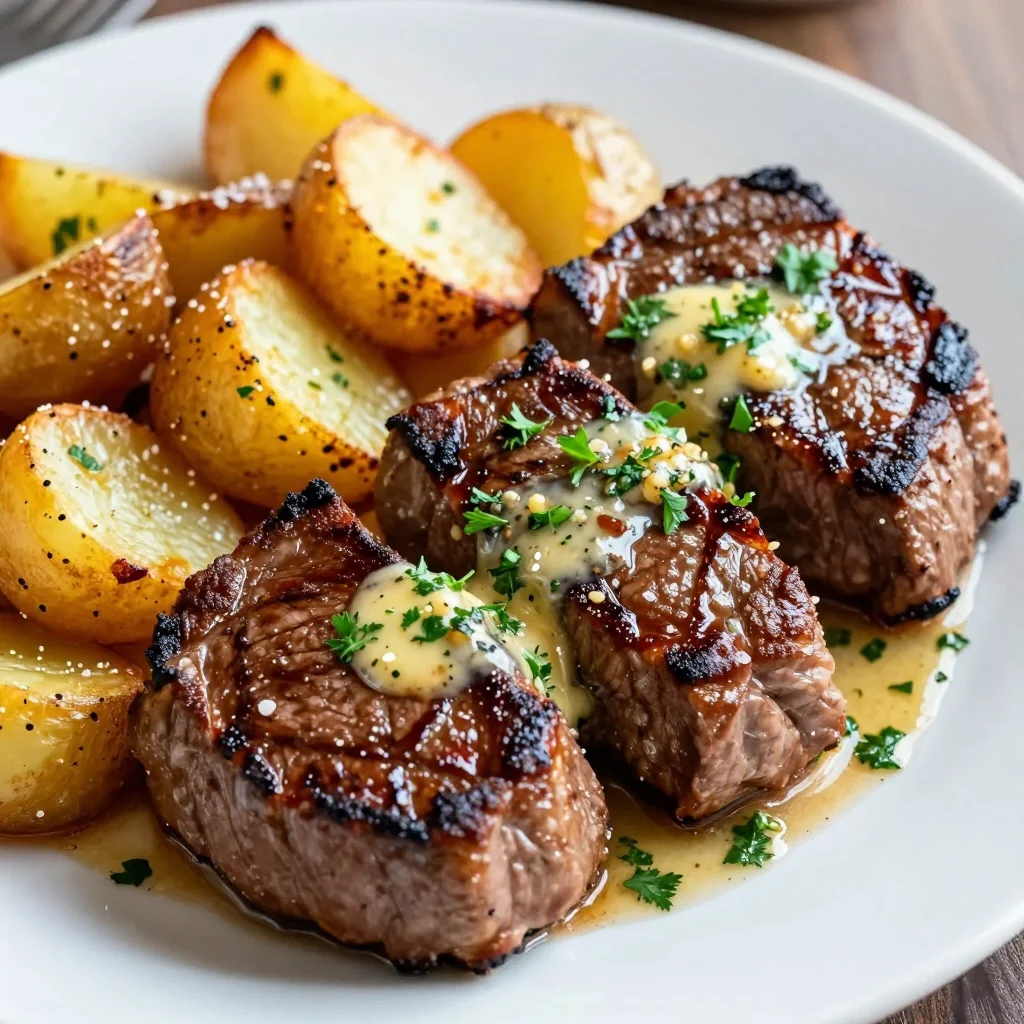
Texture Contrast: The potato’s exterior is crisp and caramelized, while the interior is airy and creamy, complemented by a silky sauce that coats the meat like velvet. The steak adds a satisfying chew that balances the softness of the baked potato.
Simplicity: Despite its luxurious taste, the recipe requires only a handful of pantry staples and a quick prep time. You can whip up this meal in under an hour, making it perfect for busy weeknights.
Ingredient Quality: Using high‑quality steak and fresh herbs ensures that each bite is rich and flavorful. The recipe doesn’t rely on processed sauces; everything is made from scratch.
Crowd‑Pleaser: This dish is a showstopper at dinner parties, family gatherings, or a cozy night in. Its hearty nature satisfies both meat lovers and potato aficionados alike.
Make‑Ahead Potential: The potatoes can be baked ahead of time and reheated with a splash of water, while the steak can be grilled and sliced later, allowing you to serve a restaurant‑style dish without last‑minute rush.
Visual Appeal: The golden crust, the glistening steak, and the fresh parsley garnish make this plate Instagram‑ready. It’s a feast for the eyes as well as the palate.
Alright, let’s break down exactly what goes into this masterpiece…
Inside the Ingredient List
The Flavor Base
Olive oil and sea salt are the silent heroes that bring the potato to life. The oil creates a crisp barrier that prevents the potato from drying out, while the sea salt adds a subtle briny note that enhances every other flavor. Skipping the oil results in a soggy crust that feels like a missed opportunity. If you’re watching calories, you can reduce the oil to 1 tablespoon, but the texture won’t be as satisfying.
Avocado oil is a game‑changer for the steak. Its high smoke point allows you to sear the meat without burning, and it adds a buttery, nutty undertone that complements the Cajun seasoning. If avocado oil isn’t on hand, grapeseed or canola work as acceptable substitutes, though the flavor profile will shift slightly.
The Texture Crew
The potatoes themselves are the foundation. Russet potatoes are ideal because their high starch content creates a fluffy interior once baked. Choosing potatoes that are firm and free of blemishes ensures a consistent texture throughout. If you prefer a slightly firmer bite, consider using a mix of russet and Yukon Gold for a buttery twist.
Butter is essential for the creamy sauce that coats the steak and potato. It provides a rich mouthfeel and helps the Parmesan melt into a silky coating. A tablespoon of butter is enough to lift the flavor without overpowering the other ingredients.
The Unexpected Star
Red pepper flakes are the unsung hero that adds a subtle heat without dominating the dish. They provide a gentle kick that wakes up the palate and pairs beautifully with the savory steak. If you’re sensitive to spice, reduce the amount to a pinch, or swap for smoked paprika for a smoky warmth.
Fresh parsley brings a burst of color and a clean, herbal brightness that cuts through the richness. It also adds a fresh contrast that balances the creamy sauce and the hearty steak. A tablespoon is sufficient, but you can double it for a more pronounced herbal note.
The Final Flourish
Heavy cream is the secret to the sauce’s silky texture. It blends with the butter and Parmesan to create a velvety coating that clings to every surface. Using 1 cup ensures the sauce is thick enough to coat the steak and potatoes without being runny.
Lemon juice is the bright counterpoint that lifts the entire dish. It cuts through the richness, adds a citrusy zing, and prevents the flavors from becoming too heavy. A tablespoon is just enough to brighten the sauce without overpowering the other components.
Everything’s prepped? Good. Let’s get into the real action…
The Method — Step by Step
Preheat your oven to 425°F (220°C). While the oven heats, wash the russet potatoes thoroughly, then pat them dry with a clean towel. Pierce each potato with a fork five to seven times to allow steam to escape during baking. This simple step prevents the potatoes from bursting and ensures even cooking.
Place the potatoes on a baking sheet lined with parchment paper. Drizzle each potato with 2 tablespoons of olive oil, then sprinkle a generous pinch of sea salt over them. The oil coats the skin, creating a crisp, caramelized surface, while the salt enhances the natural sweetness of the potato. Bake for 35-40 minutes, turning once, until the skins are golden and the insides are soft.
While the potatoes bake, prepare the steak. Pat the steak dry with paper towels, then season both sides with 1 tablespoon of Cajun seasoning, 1/2 teaspoon of red pepper flakes, and 1/2 teaspoon of freshly cracked pepper. Let the steak rest at room temperature for about 10 minutes; this allows the seasoning to penetrate the meat and promotes even cooking.
Heat a large cast‑iron skillet over medium‑high heat. Add 1 tablespoon of avocado oil, letting it shimmer until it’s almost smoking. Place the steak in the pan, leaving space between each piece. Sear the steak for 2-3 minutes on each side for medium‑rare, or adjust the time for your preferred doneness. The goal is a beautiful crust that locks in juices.
Remove the steak from the skillet and let it rest on a cutting board for 5 minutes. This resting period allows the juices to redistribute, keeping the meat tender and juicy. Slice the steak into thin strips, then set aside until the potatoes are ready.
When the potatoes are done, remove them from the oven and let them cool for 5 minutes. Slice each potato in half lengthwise, then gently scoop out the interior with a spoon, leaving about 1/4 inch of potato on the skin. Transfer the scooped potato flesh to a mixing bowl.
To the potato flesh, add 2 tablespoons of butter, 1 cup of heavy cream, 1/2 cup of grated Parmesan, 1 tablespoon of lemon juice, and 2 tablespoons of fresh parsley. Whisk vigorously until the mixture is smooth, creamy, and the Parmesan has melted into a glossy sauce. The sauce should coat the back of a spoon; if it’s too thick, add a splash of milk to reach the desired consistency.
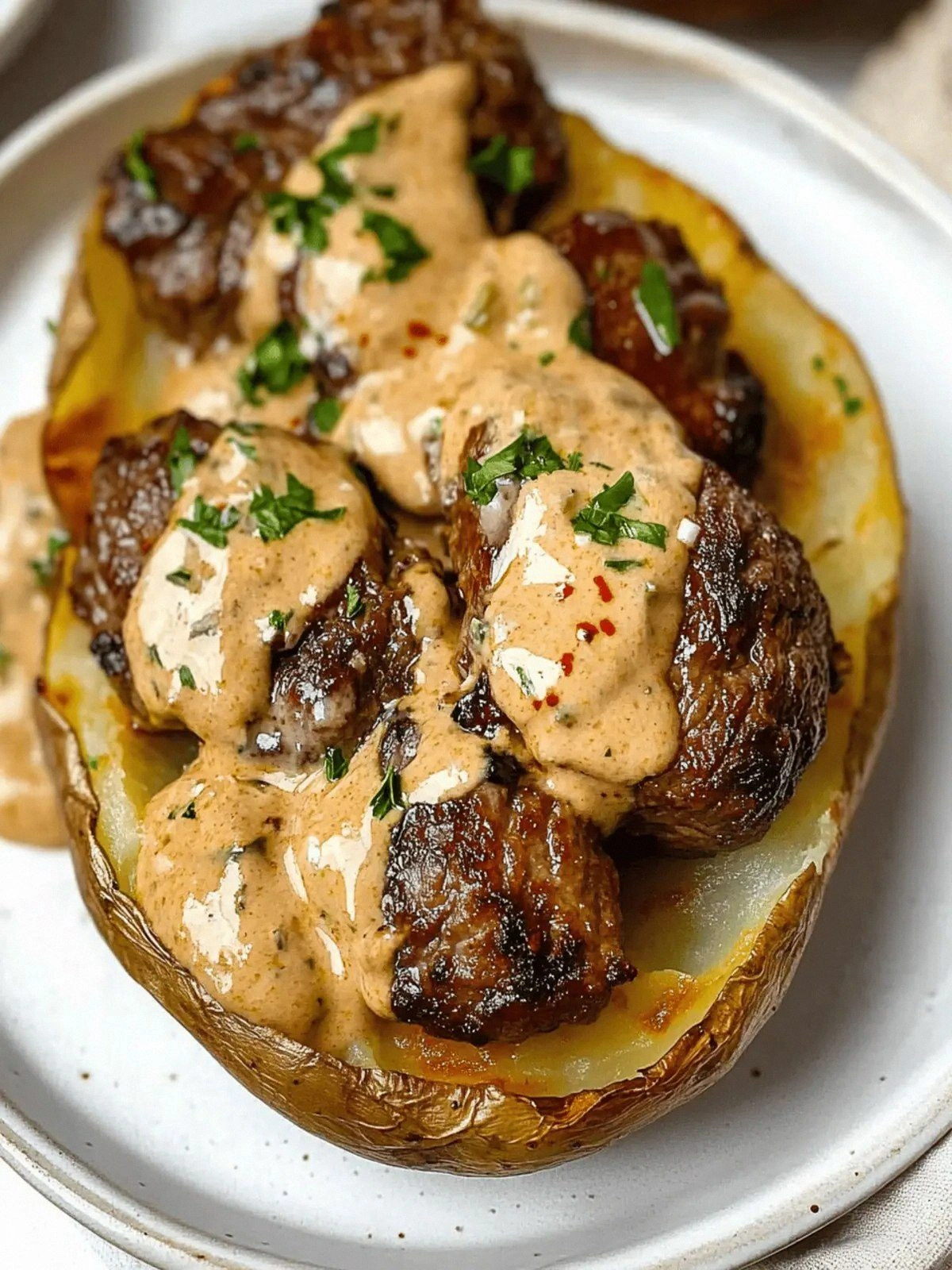
Return the creamy potato mixture to the skins, then top each with the sliced steak. Spoon additional sauce over the steak, ensuring every bite is drenched in flavor. Sprinkle a final pinch of sea salt and freshly cracked pepper to taste. The steak’s juices will mingle with the sauce, creating a harmonious blend.
Serve immediately, garnishing with extra parsley if desired. The steam rising from the potatoes will create a fragrant cloud that invites everyone to dig in. The first bite should reveal a crunchy exterior, a creamy interior, and a steak that’s juicy and flavorful.
Enjoy your masterpiece! If you’re looking to elevate the dish even further, consider adding a splash of bourbon to the sauce or sprinkling smoked seaweed flakes for an umami kick. The possibilities are endless, but the core recipe remains a comforting classic.
That’s it — you did it. But hold on, I've got a few more tricks that'll take this to another level…
Insider Tricks for Flawless Results
The Temperature Rule Nobody Follows
Many cooks assume that a lower oven temperature is better for baking potatoes, but that’s a myth. Baking at 425°F ensures a crisp exterior while the interior stays fluffy. If you lower the heat to 350°F, the skins will become soggy and the potatoes will take longer to cook, disrupting the balance of textures.
Why Your Nose Knows Best
When the potatoes finish baking, trust your nose to gauge doneness. A fragrant, nutty aroma indicates the skins have caramelized properly. If you’re unsure, insert a fork into the center; it should slide in easily without resistance.
The 5-Minute Rest That Changes Everything
Letting the steak rest for 5 minutes after searing is crucial. Resting allows the juices to redistribute throughout the meat, preventing them from running out when you cut. A rested steak will be tender, moist, and full of flavor.
How to Keep the Sauce from Splattering
When adding the heavy cream to the skillet, do so slowly and stir continuously. This prevents the cream from scorching on the pan’s hot surface and ensures a smooth, glossy sauce. If you notice splattering, reduce the heat slightly and continue stirring.
Maximizing the Parmesan’s Melt
Grated Parmesan melts more evenly than pre‑shredded cheese. Use a microplane or fine grater to produce small, uniform pieces. This technique ensures the cheese integrates seamlessly into the sauce without clumping.
Creative Twists and Variations
This recipe is a playground. Here are some of my favorite ways to switch things up:
Smoky Chipotle Twist
Swap the Cajun seasoning for chipotle powder and add a splash of chipotle in adobo sauce to the sauce. The smoky heat pairs beautifully with the creamy potato and gives the steak a deep, earthy flavor that’s perfect for autumn evenings.
Vegan Version
Use a plant‑based steak substitute, replace butter with vegan margarine, and swap heavy cream for coconut milk. Finish with nutritional yeast to mimic the Parmesan flavor. The result is a hearty, dairy‑free comfort dish that still delivers on taste.
Cheese Lover’s Delight
Add shredded cheddar and a drizzle of ranch dressing to the sauce before topping the potatoes. The extra cheese layers the dish with gooey richness, turning it into a true melt‑in‑your‑mouth experience.
Herb‑Infused Variation
Replace parsley with a mix of fresh basil and oregano. Add a handful of chopped sun‑dried tomatoes for a burst of umami. The herbaceous blend elevates the dish to a Mediterranean flair.
Breakfast Edition
Serve the loaded potatoes with a fried egg on top and sprinkle with chives. The runny yolk adds a silky texture that transforms the dish into a breakfast‑for‑dinner sensation.
Low‑Carb Adaptation
Replace the potato with cauliflower “tater tots.” Roast the cauliflower until golden, then top with the same steak and sauce. This version keeps the flavor while dramatically cutting carbs.
Storing and Bringing It Back to Life
Fridge Storage
Store leftovers in an airtight container in the refrigerator for up to 3 days. The potato will stay moist, and the steak will retain its tenderness. Keep the sauce separate until ready to reheat to avoid sogginess.
Freezer Friendly
For longer storage, freeze the entire dish in a freezer‑safe container for up to 2 months. When reheating, thaw overnight in the refrigerator, then warm in a low‑heat oven (300°F) until heated through. The potato may lose a bit of crispness, but the sauce will still be luscious.
Best Reheating Method
To reheat, add a splash of water to the pot before microwaving to create steam. Cover loosely and heat on medium for 2–3 minutes, stirring occasionally. The water prevents the potato from drying out and helps the sauce thicken back to its original silky texture.