Picture this: I’m standing in a cramped kitchen, a battered pot on the stove, a handful of vegetables that look like they’ve survived a summer in a grocery aisle, and a craving that refuses to stay quiet. I’ve tried every cousin of couscous I could find—plain, saffron, even a quick‑fire version that tasted like a dusty memory of a trip to Morocco. None of them had the same depth, the same fragrant embrace of spices, the way the roasted vegetables seemed to sing together like a well‑tuned orchestra. That night, I decided to rewrite the rulebook and make my own version, and it turned out to be a revelation.
When the vegetables hit the hot pan, the air filled with a smoky aroma that made my eyes water in the best way possible. The colors exploded—scarlet, amber, emerald—each piece glistening with a thin sheen of olive oil that caught the light like tiny jewels. As the peppers softened, their natural sugars caramelized, turning into a subtle, sweet glaze that clung to the couscous. The spices—cumin, smoked paprika, coriander, a hint of turmeric—released their oils, turning the air itself into a fragrant blanket. I was already halfway to a culinary epiphany.
What makes this version stand out isn’t just the ingredient list; it’s the way each component interacts. The couscous is cooked in broth, not water, to soak up the smoky, earthy flavors. The vegetables are roasted at a high heat to create those coveted charred edges that add a slight crunch and a deep, almost caramelized taste. The addition of toasted almonds gives a satisfying bite, while the dried apricots or raisins introduce a burst of natural sweetness that balances the heat from the spices. And the final flourish of fresh parsley or cilantro and a squeeze of lemon wedges lifts everything into a bright, fresh crescendo.
I dare you to taste this and not go back for seconds. This is hands down the best version you'll ever make at home, and it’s simple enough that even a novice can follow. If you’ve ever struggled with balancing spices or getting the right texture on couscous, you’re not alone—and I’ve got the fix. Picture yourself pulling this out of the oven, the whole kitchen smelling incredible, and knowing you’ve just cooked a dish that will impress guests and satisfy your own palate. Let me walk you through every single step—by the end, you'll wonder how you ever made it any other way.
What Makes This Version Stand Out
- Flavor Fusion: The blend of cumin, smoked paprika, coriander, and a touch of turmeric creates a warm, earthy base that carries the roasted vegetables beautifully. The subtle sweetness of apricots or raisins balances the heat and adds depth.
- Texture Contrast: Roasted vegetables develop a caramelized exterior while remaining tender inside, while toasted almonds provide a satisfying crunch against the fluffy couscous.
- Simple Preparation: Each ingredient is used in its natural form, with minimal chopping and no need for pre‑marinades or complex sauces.
- Ingredient Quality: Fresh, seasonal produce and high‑quality olive oil elevate the dish, making every bite feel premium without extra cost.
- Make‑Ahead Friendly: The couscous can be reheated in the microwave or on the stovetop, and the roasted vegetables can be stored separately, keeping the dish fresh for days.
- Crowd‑Pleaser: The vibrant colors and layered flavors make it a showstopper for dinner parties or casual family meals alike.
- Balanced Nutrition: With protein from chickpeas, healthy fats from olive oil and almonds, and fiber from vegetables, this dish offers a well‑rounded meal.
- Scalable: The recipe scales cleanly, making it easy to adjust for larger groups or smaller portions without losing flavor.
Alright, let’s break down exactly what goes into this masterpiece…
Inside the Ingredient List
The Flavor Base
At the heart of this dish is a simple yet potent spice blend. Ground cumin, smoked paprika, and a whisper of turmeric form the aromatic backbone that lingers on the tongue long after the last bite. These spices are not merely seasoning; they’re the glue that binds the roasted vegetables to the couscous, creating a harmonious flavor profile. If you skip any of them, the dish loses its character, becoming a bland, forgettable bowl of grains.
The Texture Crew
The vegetables—red bell pepper, yellow bell pepper, zucchini, red onion, carrots, and cherry tomatoes—are the texture crew. Their varied shapes and natural sugars caramelize differently, giving the dish a complex mouthfeel. The almonds add a crunch that contrasts with the soft couscous and tender vegetables. Skipping the almonds would make the dish feel flat, lacking that satisfying bite that keeps you coming back.
The Unexpected Star
Chickpeas and dried apricots or raisins are the unexpected stars that bring protein, fiber, and a hint of sweetness. Chickpeas offer a hearty, nutty flavor that grounds the dish, while the dried fruit introduces a subtle caramelized sweetness that balances the heat from the spices. If you’re vegan or prefer a lighter dish, you can replace the chickpeas with a protein‑rich bean or even a tofu crumble.
The Final Flourish
Fresh parsley or cilantro and lemon wedges are the final flourish, adding brightness and a fresh herbal note. The lemon’s acidity cuts through the richness of the olive oil and almonds, while the herbs provide a fresh, green counterpoint to the warm spices. Without these finishing touches, the dish would feel heavy and unbalanced.
Everything’s prepped? Good. Let’s get into the real action…
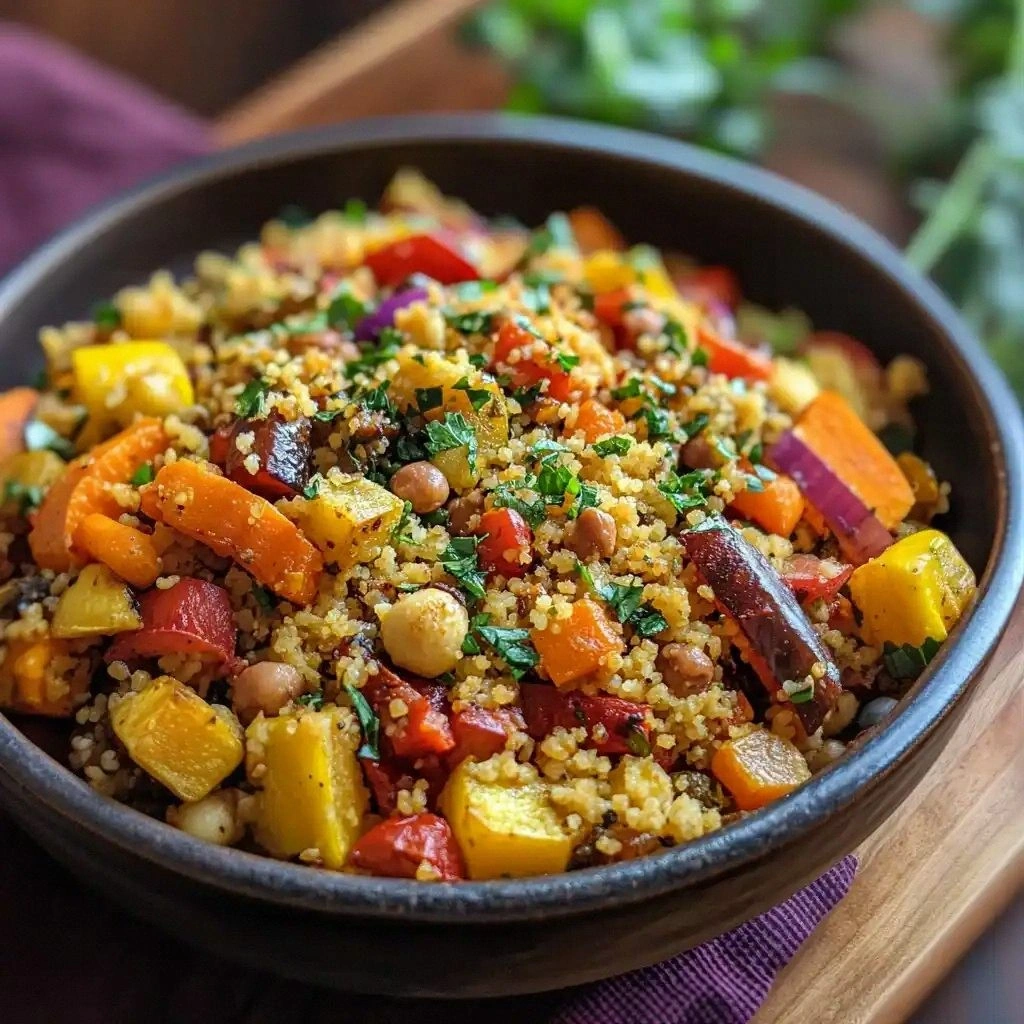
The Method — Step by Step
- Preheat your oven to 425°F (220°C). While the oven warms, wash and slice all vegetables into bite‑size pieces, ensuring uniform thickness for even roasting. Toss them with 2 tablespoons of olive oil, a pinch of salt, and freshly ground black pepper. Spread the mixture in a single layer on a baking sheet and slide it into the oven. The high heat will caramelize the edges, creating a slightly crispy exterior that’s a delight to bite into. I swear, that sizzle when it hits the pan? Absolute perfection.
- While the vegetables roast, bring 1 cup of vegetable broth to a simmer in a medium saucepan. Add 1 cup of couscous, a dash of salt (¼ tsp), and a tablespoon of olive oil. Stir, cover, and remove from heat. Let the couscous sit for 5 minutes, then fluff with a fork to separate the grains. This quick steam method ensures the couscous remains fluffy and absorbs the savory broth.
- In a small bowl, whisk together 1 teaspoon each of ground cumin and smoked paprika, ½ teaspoon of ground coriander, and ½ teaspoon of turmeric. This spice mix will coat the vegetables and the couscous, creating a unified flavor profile that’s both warm and aromatic. If you’re a spice lover, feel free to add a pinch of cayenne for extra heat.
- When the vegetables are roasted to your desired level—tender inside with caramelized edges—remove them from the oven and set aside. While they’re still hot, drizzle them with a tablespoon of olive oil and sprinkle the spice blend over them. Toss gently to coat evenly. The heat will release the spices’ oils, turning the vegetables into a fragrant, savory canvas.
- Add the roasted vegetables to the pot of couscous. Stir in ½ cup of canned chickpeas (drained and rinsed) and ¼ cup of toasted almonds. The chickpeas provide protein, while the almonds add a satisfying crunch that contrasts the soft grains.
- Fold in ¼ cup of dried apricots or raisins. Their natural sweetness will balance the heat from the spices and give the dish a subtle, caramelized flavor. If you prefer a drier dish, you can omit the dried fruit entirely.
- Finish the dish with a handful of fresh parsley or cilantro and a squeeze of lemon juice. The acidity brightens the dish, cutting through the richness and giving it a fresh, vibrant finish. This is the moment of truth—your dish should smell aromatic, taste balanced, and look visually stunning.
- Serve immediately, garnishing with extra lemon wedges and a sprinkle of chopped almonds if desired. The couscous will be steaming, the vegetables will be tender, and the overall aroma will fill the kitchen. That final plating step is pure magic.
That’s it — you did it. But hold on, I've got a few more tricks that'll take this to another level…
Insider Tricks for Flawless Results
The Temperature Rule Nobody Follows
Many cooks think a lower oven temperature will give better results, but roasting at a high heat (425°F) is essential for that caramelized crust on the vegetables. The high temperature also ensures the spices release their oils quickly, creating a deep, smoky flavor that permeates the dish. I’ve tried roasting at 350°F and it left the vegetables soggy and the spices flat.
Why Your Nose Knows Best
Before you add the final lemon squeeze, give the dish a sniff. If it smells bright and fresh, you’re ready. A lackluster aroma often means you need more acid or a bit more spice. Trusting your nose can prevent a bland, forgettable meal.
The 5‑Minute Rest That Changes Everything
After roasting the vegetables, let them rest for 5 minutes before tossing them with the spice mix. This rest period allows the juices to redistribute, making the vegetables juicier and more flavorful. Skipping this step often results in dry, unevenly seasoned veggies.
Use Toasted Almonds for Extra Crunch
Toasting almonds enhances their nutty flavor and gives them a crunch that holds up against the moist couscous. Toss them in a dry skillet over medium heat until golden and fragrant, then let them cool before adding. If you prefer a different nut, pistachios or walnuts work beautifully.
Keep the Couscous Fluffy
The key to fluffy couscous is not stirring vigorously after the 5‑minute resting period. Gently fluff with a fork to separate the grains. Over‑mixing can break down the grains and create a gummy texture.
Creative Twists and Variations
This recipe is a playground. Here are some of my favorite ways to switch things up:
Spicy Moroccan Chili Couscous
Replace the dried apricots with a handful of roasted red pepper flakes and add a splash of harissa paste. The heat will intensify, making the dish perfect for a winter evening. Guests will love the smoky, spicy kick.
Vegan Power Bowl
Swap the chickpeas for edamame or a scoop of lentils. Add a drizzle of tahini sauce for extra creaminess. This variation provides a plant‑based protein punch while keeping the dish hearty.
Herb‑Infused Couscous
Replace fresh parsley with a mix of mint, basil, and dill. The herbs give a refreshing, Mediterranean twist that pairs well with a side of grilled chicken or fish.
Sweet & Savory Breakfast Couscous
Use a pinch of cinnamon and a splash of maple syrup instead of dried apricots. Top with fresh berries and a dollop of Greek yogurt for a sweet breakfast that’s surprisingly filling.
Quick Stir‑Fry Couscous
Skip the oven and stir‑fry the vegetables in a wok with a splash of soy sauce and sesame oil. Toss in the cooked couscous and stir until heated through. This version saves time without sacrificing flavor.
Smoked Paprika & Pine Nut Variation
Swap almonds for toasted pine nuts and add a sprinkle of smoked paprika to the final garnish. The pine nuts add a buttery, nutty flavor that pairs wonderfully with the smoky spices.
Storing and Bringing It Back to Life
Fridge Storage
Store leftovers in an airtight container in the refrigerator for up to 3 days. The couscous may absorb some moisture, so add a splash of broth or a drizzle of olive oil before reheating to restore fluffiness.
Freezer Friendly
Cool the dish completely, then divide into freezer‑safe portions. Freeze for up to 2 months. When ready to eat, thaw overnight in the refrigerator or microwave on a low setting. A quick stir in a skillet with a splash of water will revive the texture.
Best Reheating Method
Reheat in a saucepan with a tablespoon of water or broth, covering loosely. Heat over low heat, stirring occasionally until hot. The added liquid prevents the couscous from drying out and brings back its original lightness.