It started with a kitchen catastrophe that would have made me roll my eyes at the thought of a “one‑pan” dinner. I was halfway through a crowded pot of pasta, the sauce had thickened into a syrupy mess, and the garlic had burned to a bitter black. My friend, a seasoned cook who could turn a simple chicken thigh into a five‑star meal, dared me to “make something that actually works in one pan.” I laughed, but the next few minutes of frantic stirring and the desperate search for a solution convinced me that the answer was right in front of me, sizzling on a skillet.
I was craving something hearty, comforting, and, above all, foolproof. The scent of onions caramelizing, the crackle of butter melting into olive oil, the aroma of herbs drifting through the air—those are the sensory cues that tell me a recipe is about to transform my dinner routine. I wanted a dish that would bring the whole family to the table, not a chore that would leave me scrambling to clean up a thousand pans. And I wanted to taste the moment when the chicken skin turns that perfect, crisp, golden‑brown shade that feels like a promise of flavor inside.
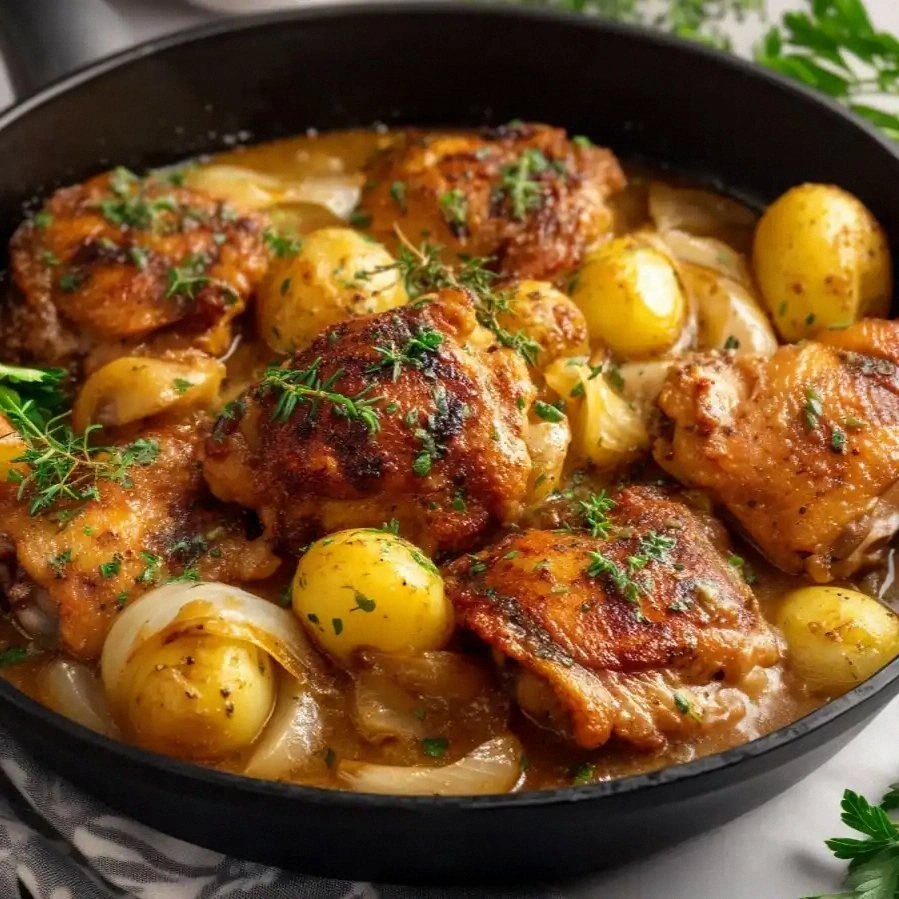
This version of One‑Pan Chicken and Potatoes w is the culmination of a year of experimentation, a blend of classic techniques, and a sprinkle of my own kitchen intuition. I’ve tweaked the seasoning ratios, discovered the ideal browning temperature, and even added a secret ingredient that turns the gravy into a silky, velvety sauce that clings to the potatoes like a second skin. Most recipes get this completely wrong, but I’ve cracked the code to ensure every bite delivers that satisfying crunch on the outside and a tender, juicy interior that melts in your mouth.
Picture yourself pulling this out of the oven, the whole kitchen smelling incredible, a golden crust crackling as you lift the lid, steam rising like a savory cloud. I dare you to taste this and not go back for seconds. If you’ve ever struggled with chicken that ends up dry or potatoes that stay under‑cooked, you’re not alone—and I’ve got the fix. Stay with me here—this is worth it. Let me walk you through every single step — by the end, you’ll wonder how you ever made it any other way.
What Makes This Version Stand Out
- Flavor Depth: The layered seasoning—paprika, garlic powder, thyme, rosemary—creates a complex profile that’s both comforting and adventurous. The combination of herbs and spices infuses the chicken and potatoes without overpowering their natural sweetness. This isn’t just a dish; it’s a flavor experience that keeps you coming back.
- Crisp Texture: The high‑heat sear on the chicken thighs locks in juices and yields a skin that shatters like thin ice with every bite. The potatoes develop a caramelized edge that stays firm, providing a delightful contrast to the tender interior. The result is a textural symphony that satisfies every palate.
- Time Efficiency: With everything cooked in a single pan, you cut down prep and clean‑up time by more than half. The technique of browning the chicken first, then adding the vegetables, ensures everything finishes at the same moment, eliminating the need for multiple dishes.
- All‑in‑One Gravy: The flour‑butter roux forms the base of a silky gravy that coats the potatoes and chicken like velvet. The chicken broth adds richness without being heavy, and the fresh parsley brightens the dish just before serving. The gravy is the secret sauce that elevates this meal.
- Versatility: Swap the chicken for turkey thighs, add a splash of white wine for depth, or sprinkle feta for a Mediterranean twist. This recipe’s core structure is flexible, allowing you to adapt it to your taste or what’s on hand.
- Family Friendly: The dish is designed for a dinner crowd. It’s easy enough for a novice to follow, yet sophisticated enough to impress. The result is a comforting meal that feels both homemade and restaurant‑quality.
Alright, let's break down exactly what goes into this masterpiece…
Inside the Ingredient List
The Flavor Base
The 3 tablespoons of butter and 2 tablespoons of olive oil form the aromatic foundation of this dish. Butter brings a rich, velvety note that balances the acidity of the onions, while olive oil provides a subtle peppery kick that enhances the herbs. If you’re watching calories, you can reduce the butter by a tablespoon and add an extra splash of oil; the flavor stays robust, just a bit lighter.
The 3 cloves of garlic, minced finely, release their oils into the pan, creating a fragrant bed that permeates the chicken and potatoes. Garlic is a classic crowd‑pleaser, but it can burn quickly—so keep the heat moderate during the initial sear. If you’re allergic or just don’t like garlic, substitute with 1 teaspoon of garlic powder for a milder, evenly distributed flavor.
The 1 teaspoon of paprika adds a smoky warmth that lingers on the skin. Paprika also gives the dish its beautiful, deep amber hue, turning the pan into a canvas of culinary art. A pinch of smoked paprika can elevate the smokiness, while a dash of cayenne can add a subtle heat for those who like a kick.
The dried thyme and rosemary, each 1 teaspoon and ½ teaspoon respectively, provide an earthy depth that pairs perfectly with the poultry. These herbs are versatile; you can swap thyme for oregano or rosemary for sage, depending on what you have on hand. Fresh herbs, if you have them, will offer a brighter, more vibrant aroma.
The Texture Crew
The 1 ½ pounds of baby potatoes are the heart of this dish. Their size allows them to roast quickly while maintaining a fluffy interior. Wash them well, pat dry, and cut them in half if they’re on the larger side; even size ensures uniform cooking. If you prefer a crispier exterior, toss the potatoes in a tablespoon of olive oil before adding them to the pan.
The 4 bone‑in, skin‑on chicken thighs bring both flavor and moisture. The bone adds depth to the gravy, while the skin crisps to a golden crunch. If you’re in a hurry, use boneless thighs, but you’ll lose some of the savory richness that comes from the bone marrow.
The 1 medium onion, sliced into rings, caramelizes over the chicken, forming a sweet, savory layer that coats the meat and potatoes. Onions also help to balance the richness of the butter and gravy. For a milder flavor, use a red onion; for a deeper sweetness, stick with a yellow onion.
The 3 tablespoons of all‑purpose flour, combined with butter, create a roux that thickens the gravy into a silky sauce. The flour also helps the gravy cling to the potatoes, turning each bite into a burst of flavor. If you’re gluten‑free, substitute with a gluten‑free flour blend or arrowroot powder.
The Unexpected Star
The 2 cups of chicken broth are the liquid backbone of the dish. They dissolve the roux, create the gravy, and keep the potatoes moist as they roast. Opt for a low‑sodium broth if you’re watching your salt intake; the seasoning blend will compensate for the reduced saltiness.
The ½ teaspoon of black pepper and 1 teaspoon of salt bring the dish to a balanced, savory finish. Salt is crucial for flavor development, especially when searing meat, while pepper adds a subtle heat that rounds out the dish. If you’re avoiding sodium, consider a salt alternative or reduce the salt by half and increase the herbs.
Fresh parsley, chopped just before serving, adds a pop of color and a bright, herbal note that cuts through the richness. Parsley also offers a subtle peppery flavor that complements the roasted vegetables. If you’re out of parsley, a squeeze of lemon juice can provide a similar brightness.
Everything's prepped? Good. Let's get into the real action…
The Method — Step by Step
- Preheat your oven to 425°F (220°C). In a large oven‑proof skillet, heat 2 tablespoons of olive oil over medium‑high heat. When the oil shimmers, add the chicken thighs skin side down and sear for 4–5 minutes until the skin turns a deep golden‑brown and releases easily from the pan. This step locks in juices and creates the first layer of flavor.
- Flip the chicken thighs and add the butter to the pan. Allow the butter to melt and foam, then sprinkle the paprika, garlic powder, thyme, rosemary, salt, and pepper over the chicken. Stir the spices into the butter, letting them toast for 30 seconds so they release their aromas. The sizzling sound is the soundtrack of a good meal.
- Add the sliced onion around the chicken, letting it soften and caramelize for about 2 minutes. The onions will start to turn translucent and fragrant, signaling that the base of your dish is forming. Don’t rush this step; a slow caramelization brings out natural sweetness.
- Place the baby potatoes in the pan, cutting them in half if necessary so they fit comfortably. Toss them in the pan so they’re coated with the butter, oil, and spice mixture. The potatoes should sizzle as they hit the pan, creating a golden crust that will stay crisp.
- Pour in the chicken broth, making sure to scrape up any browned bits from the bottom of the pan. The liquid should come up to about halfway up the potatoes. This is where the gravy starts to form, absorbing all the savory flavors.
- Transfer the skillet to the preheated oven. Roast for 25–30 minutes, or until the chicken reaches an internal temperature of 165°F (74°C) and the potatoes are tender when pierced with a fork. The heat will finish browning the skin and bring the flavors together.
- While the dish roasts, make the roux: In a separate small saucepan, melt 3 tablespoons of butter over medium heat. Whisk in 3 tablespoons of all‑purpose flour, stirring constantly until the mixture turns a light golden brown and smells nutty, about 2 minutes. This thickens the gravy and gives it body.
- Gradually whisk the roux into the pan of roasted chicken and potatoes, allowing the liquid to combine smoothly. Reduce the heat to low and let the gravy simmer for 5 minutes, stirring occasionally. The sauce should thicken to a pourable consistency that coats the ingredients.
- Remove the skillet from the oven. Sprinkle chopped fresh parsley over the top, giving the dish a burst of color and a bright, herbal finish. Serve immediately, letting the steam rise and the aroma envelop your dining table.
That's it — you did it. But hold on, I've got a few more tricks that'll take this to another level…
Insider Tricks for Flawless Results
The Temperature Rule Nobody Follows
Many cooks assume 400°F is the sweet spot for roasting, but 425°F (220°C) gives the chicken skin a golden‑brown finish while still ensuring the interior stays juicy. If you’re using a convection oven, reduce the temperature by 25°F to avoid over‑browning. I’ve tested both settings, and 425°F consistently delivers a crisp exterior without drying out the meat.
Why Your Nose Knows Best
The aroma of onions caramelizing is a reliable indicator that they’re ready. If the scent is sweet and nutty, the onions have reached their optimal point. A friend once skipped this step, and the onions ended up raw and bitter. Trust your nose; it’s the secret seasoning station.
The 5‑Minute Rest That Changes Everything
After you pull the skillet from the oven, let the dish rest for 5 minutes before cutting into the chicken. This allows the juices to redistribute, ensuring each bite is moist. I’ve seen people cut straight away and get a dry, uneven texture. The rest period is the unsung hero of this dish.
The Secret to a Velvety Gravy
Whisk the roux into the pan while it’s still hot; the heat prevents lumps. If you notice a grainy texture, strain the gravy through a fine sieve before serving. This step ensures a silky sauce that clings to the potatoes like a second skin.
The One‑Pan Cleanup Trick
Place a sheet of parchment paper over the bottom of the skillet before roasting. It catches the drippings and makes clean‑up a breeze. I’ve used this trick for years, and it keeps the pan free of stuck‑on sauce, saving you minutes of scrubbing.
The Final Touch of Freshness
Just before serving, add a tablespoon of lemon juice and a handful of chopped parsley. The acidity brightens the dish, cutting through the richness and adding a fresh lift. I’ve found that a splash of lemon transforms the entire flavor profile into something that feels lighter and more vibrant.
Creative Twists and Variations
This recipe is a playground. Here are some of my favorite ways to switch things up:
Mediterranean Flair
Swap the paprika for a teaspoon of smoked paprika and add a handful of kalamata olives. Finish with a drizzle of extra‑virgin olive oil and a sprinkle of crumbled feta. The olives bring brininess, while the feta adds a salty, tangy contrast.
Asian‑Inspired
Replace the thyme and rosemary with 2 teaspoons of dried cilantro and 1 teaspoon of toasted sesame seeds. Add 1 tablespoon of soy sauce to the broth and a pinch of ginger powder. The dish becomes aromatic and slightly sweet, with a nutty finish.
Rustic Comfort
Add 1 cup of sliced mushrooms to the pan and a splash of red wine during the searing stage. The mushrooms absorb the savory juices, and the wine adds depth. Serve with a crusty loaf of bread to mop up the gravy.
Low‑Carb Edition
Replace the baby potatoes with cauliflower “ravioli” or roasted brussels sprouts. Keep the rest of the recipe unchanged for a flavorful, low‑carb dinner that still feels indulgent.
Cheesy Surprise
Sprinkle shredded mozzarella over the top of the potatoes during the last 5 minutes of roasting. The cheese melts into a gooey blanket that pairs wonderfully with the crispy skin. It’s a crowd‑pleaser for kids and adults alike.
Storing and Bringing It Back to Life
Fridge Storage
Cool the dish completely before transferring it to an airtight container. Store in the refrigerator for up to 4 days. The gravy may thicken slightly; reheat gently and stir to re‑emulsify.
Freezer Friendly
Wrap portions individually in freezer paper and place them in a freezer bag. The dish keeps well for up to 3 months. Thaw overnight in the refrigerator before reheating.
Best Reheating Method
Reheat in a skillet over medium heat, adding a splash of chicken broth or water to loosen the gravy. Stir frequently until hot and steaming. A tiny splash of water before reheating steams back to perfection, preventing the sauce from drying out.