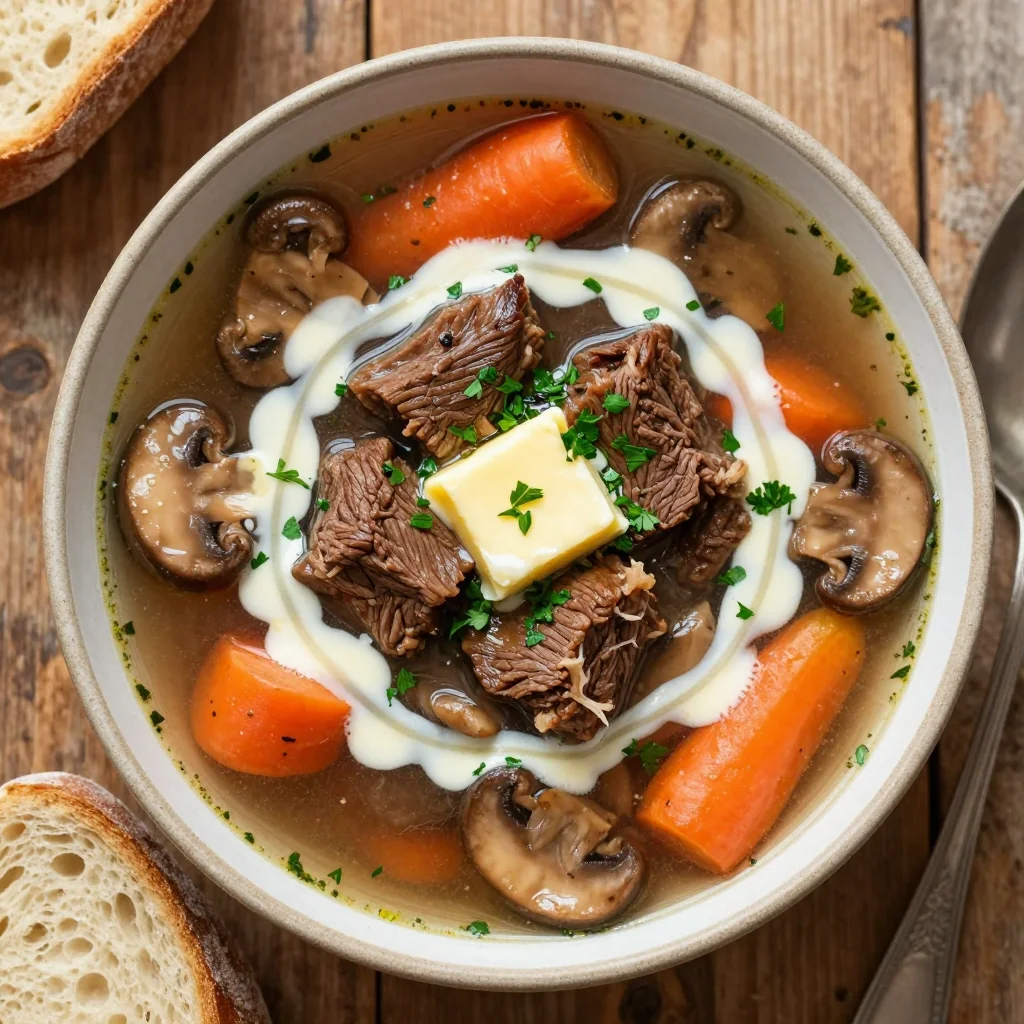
Love this? Pin it for later! 📌
When January's chill settles deep into your bones and the produce drawer looks more like a science experiment than dinner potential, this humble stew becomes my culinary superhero. Last weekend, I stood in my kitchen doorway surveying the aftermath of holiday cooking—limp carrots languishing in the crisper, potatoes sprouting hopeful eyes, and half-used cartons of broth threatening to expire. Instead of reaching for my usual takeout menu panic button, I grabbed my Dutch oven and created what my family now calls "the everything stew."
This recipe was born from necessity but perfected through love. My grandmother used to make something similar during the Great Depression, calling it "clean the cellar soup." She'd simmer whatever root vegetables survived winter storage into a pot of liquid comfort that somehow tasted better than anything requiring a shopping list. I've carried her philosophy into my modern kitchen, transforming forgotten produce into a stew so satisfying that even my vegetable-skeptical teenager requests it weekly.
What makes this stew magical isn't just its ability to rescue wilting vegetables—it's the way it transforms simple ingredients into something extraordinary. The slow simmering process coaxes sweetness from carrots, creaminess from potatoes, and creates a broth so rich you'll swear there's cream hiding somewhere. Best of all, it requires zero special equipment beyond a heavy pot and enough patience to let the flavors develop properly.
Why This Recipe Works
- Zero Waste Champion: Transforms aging vegetables into restaurant-quality comfort food, reducing food waste while saving money.
- Hands-Off Cooking: After initial prep, the stew simmers unattended while you tackle laundry, homework help, or that Netflix queue.
- Flavor Amplification: Browning vegetables before simmering creates deep, complex flavors that taste like they cooked all day.
- Pantry Flexible: Works with any combination of root vegetables, canned beans, or frozen vegetables you have available.
- Meal Prep Hero: Tastes even better the next day, making it perfect for Sunday cooking that feeds you through Wednesday.
- Budget Friendly: Feeds a crowd for under ten dollars using ingredients you probably already own.
Ingredients You'll Need

This recipe celebrates the beauty of humble ingredients, proving that you don't need exotic produce to create something memorable. Each component brings its own superpower to the pot, working together in delicious harmony.
The Foundation Trio: Onions, carrots, and celery form the aromatic base that flavors the entire stew. Don't skip the celery leaves—they're packed with intense celery flavor and add beautiful flecks of green. If your carrots have seen better days, peel them aggressively and they'll be perfect for stewing.
Potatoes - The Comfort Factor: I prefer Yukon Gold potatoes for their buttery flavor and ability to hold their shape, but russets work beautifully if that's what you have. Waxy red potatoes will maintain their structure better if you prefer distinct chunks in your stew.
The Umami Boosters: Tomato paste and soy sauce might seem odd in a vegetable stew, but they're game-changers. The tomato paste adds depth and subtle sweetness, while soy sauce contributes that elusive umami quality that makes vegetarian food taste satisfying and complete.
Herbs - Fresh vs. Dried: Dried thyme and bay leaves are non-negotiable for that classic stew flavor. If you have fresh herbs, add them at the end rather than during cooking. That sprinkle of fresh parsley on top isn't just for looks—it adds a bright, fresh note that elevates the entire dish.
How to Make Pantry Cleanout Winter Vegetable Stew with Carrots and Potatoes
Prep Your Vegetables
Start by washing all your vegetables thoroughly—even the potatoes, since we'll be keeping those nutrient-rich skins on. Dice the onions into ½-inch pieces, slice the carrots into ¼-inch rounds, and chop the celery into half-moons. For the potatoes, cut them into 1-inch chunks—any smaller and they'll dissolve into the broth, any larger and they won't cook through properly. Mince the garlic last so it stays fresh and pungent.
Build Your Flavor Base
Heat 2 tablespoons of olive oil in your largest heavy-bottomed pot or Dutch oven over medium-high heat. When the oil shimmers like a mirage, add the onions with a generous pinch of salt. Let them cook undisturbed for 3-4 minutes until they start to brown at the edges—this caramelization is where the magic begins. Stir in the carrots and celery, cooking for another 5 minutes until they begin to soften and take on some color.
Add Aromatics and Depth
Clear a small space in the center of the pot and add the tomato paste. Let it cook for 1-2 minutes until it darkens to a deep brick red—this caramelization removes any metallic taste and develops sweet, complex flavors. Add the garlic and cook for just 30 seconds until fragrant. Sprinkle in the flour and stir constantly for 1 minute to coat the vegetables and create a roux that will thicken your stew.
Deglaze and Build the Broth
Pour in the vegetable broth gradually, scraping up all those beautiful browned bits (fond) from the bottom of the pot—that's pure flavor gold. Add the potatoes, soy sauce, thyme, bay leaves, and a generous amount of freshly ground black pepper. Bring everything to a boil, then reduce to a gentle simmer. Cover with the lid slightly ajar and let it bubble away for 20 minutes.
Add Quick-Cooking Vegetables
After 20 minutes, check that the potatoes are just tender. Add any quick-cooking vegetables you're using—green beans, peas, corn, or zucchini. These only need 5-7 minutes to cook through while maintaining their vibrant color and slight crunch. If you're using canned beans, drain and rinse them before adding at this stage.
Final Seasoning and Rest
Remove the bay leaves (they're a choking hazard and become bitter if left in). Taste the stew and adjust seasoning—add more salt if needed, a splash more soy sauce for depth, or a squeeze of lemon for brightness. Let the stew rest for 10 minutes off heat. This allows the flavors to marry and the broth to thicken slightly as it cools.
Serve and Garnish
Ladle the hot stew into warmed bowls—cold bowls steal heat from your food faster than you'd think. Garnish with a drizzle of good olive oil, freshly ground black pepper, and a generous sprinkle of fresh parsley. Serve with crusty bread for sopping up every last drop of the rich, vegetable-packed broth.
Expert Tips
Control Your Heat
Maintain a gentle simmer—not a rolling boil—to prevent vegetables from breaking down into mush. The broth should barely bubble, allowing vegetables to cook evenly while maintaining their individual textures.
Broth Consistency
If your stew is too thin, mash a few potato pieces against the side of the pot and stir them in. Too thick? Add hot broth or water until you reach your desired consistency.
Make-Ahead Magic
This stew tastes even better the next day as flavors meld. Make it Sunday and enjoy through Wednesday. Just reheat gently and add a splash of broth if it's thickened too much.
Freezer Success
Freeze individual portions for up to 3 months. Leave out any dairy garnishes before freezing, and add a splash of fresh broth when reheating to restore the original consistency.
Variations to Try
Mediterranean Style
Add a can of diced tomatoes, swap thyme for oregano, and finish with a squeeze of lemon and crumbled feta cheese. Include chickpeas for protein and kalamata olives for briny depth.
Spicy Southwest
Add a diced jalapeño with the onions, swap thyme for cumin and chili powder. Include black beans and corn, then garnish with cilantro and a squeeze of lime.
Asian-Inspired
Replace soy sauce with miso paste, add ginger and star anise to the broth. Include bok choy and shiitake mushrooms, garnish with sesame oil and green onions.
Creamy Version
Stir in a cup of heavy cream or coconut milk during the last 5 minutes of cooking. Add fresh thyme and a bay leaf for extra aromatics.
Storage Tips
Proper storage transforms this stew from a one-time meal into a week-long comfort food resource. The key is understanding how each storage method affects texture and flavor.
Refrigerator Storage
Store cooled stew in airtight containers for up to 5 days. The flavors actually improve after 24 hours as the vegetables continue to infuse the broth. Always reheat only the portion you plan to eat—repeated heating and cooling can cause vegetables to become mushy and create food safety issues.
Freezer Instructions
Freeze in portion-sized containers for up to 3 months. Leave 1-inch headspace for expansion. Pro tip: freeze in muffin tins for individual portions, then transfer to freezer bags. Thaw overnight in the refrigerator or use the defrost setting on your microwave. Add a splash of broth when reheating to restore the original consistency.
Reheating Guidelines
Reheat gently over medium-low heat, stirring occasionally. Add broth or water as needed—the stew will thicken considerably when cold. Avoid boiling vigorously, which can cause vegetables to break apart. If reheating from frozen, let it thaw completely first for best results.
Frequently Asked Questions

Pantry Cleanout Winter Vegetable Stew with Carrots and Potatoes
Ingredients
Instructions
- Build the base: Heat olive oil in a large pot over medium-high heat. Sauté onion for 3-4 minutes until softened.
- Add vegetables: Stir in carrots and celery, cooking for 5 minutes until beginning to brown.
- Flavor foundation: Add garlic and tomato paste, cooking for 1 minute. Stir in flour.
- Create broth: Gradually add vegetable broth, scraping up browned bits from the bottom.
- Simmer vegetables: Add potatoes, soy sauce, thyme, and bay leaves. Bring to a boil, then simmer covered for 20 minutes.
- Final seasoning: Remove bay leaves, adjust salt and pepper. Let rest 10 minutes before serving.
- Serve hot: Ladle into bowls and garnish with fresh parsley and crusty bread.
Recipe Notes
This stew tastes even better the next day! Store leftovers in the refrigerator for up to 5 days or freeze for up to 3 months. Add a splash of broth when reheating to restore the original consistency.