Introduction
Picture this: I was halfway through a midnight snack raid, eyes glued to the glow of my phone, scrolling through endless recipe feeds, when my fridge suddenly betrayed me. The only thing left was a block of tofu, a half‑cup of pineapple chunks, and a bag of soy sauce that had seen better days. I stared at the empty space, feeling the kitchen's silence, and then, with a spark of culinary rebellion, I decided to turn that bland, unassuming combination into a feast that would make my taste buds dance.
That night, the kitchen became a laboratory of aromas. The tofu, when fried, released a golden, almost caramelized scent, while the pineapple exuded a sweet, tropical perfume that mingled with the sharp, umami whisper of soy sauce. The sizzling sound of oil heating up was a rhythmic drumbeat, and the first bite was a burst of sweet, salty, and slightly tangy flavors that made my mouth water. The texture was a playful contrast: the tofu had a crisp, buttery exterior that gave way to a silky, tender interior, and the pineapple chunks added a juicy crunch that felt like a surprise party in every mouthful.
What makes this version of Pineapple Tofu Stir‑Fry stand out is that it doesn’t just hit the taste buds; it hits the senses. The sauce is a glossy, velvety coating that clings to every ingredient, the edges of the tofu pop with a satisfying crack, and the pineapple provides a natural sweetness that balances the savory depth of the sauce. The result is a dish that feels like a tropical getaway in a single plate, yet it’s built on simple, everyday ingredients that you can find in any grocery store.
There’s one technique that I’ve discovered that will change the game: using a splash of rice vinegar right before adding the pineapple. This tiny twist brightens the sauce, giving it a subtle zing that makes the sweet pineapple pop even more. I dare you to taste this and not go back for seconds, because once you’ve experienced the harmony of textures and flavors, you’ll find yourself reaching for the bowl again and again.
Let me walk you through every single step — by the end, you’ll wonder how you ever made it any other way. This is hands down the best version you’ll ever make at home, and I’m ready to share every detail, every hack, and every secret that will make your kitchen the happiest place on earth.
What Makes This Version Stand Out
- Flavor: A sauce that sings with sweetness, umami, and a hint of tang, creating a balance that is both comforting and adventurous.
- Texture: Crispy, golden tofu edges that shatter like thin ice, complemented by the juicy, crunchy pineapple pieces.
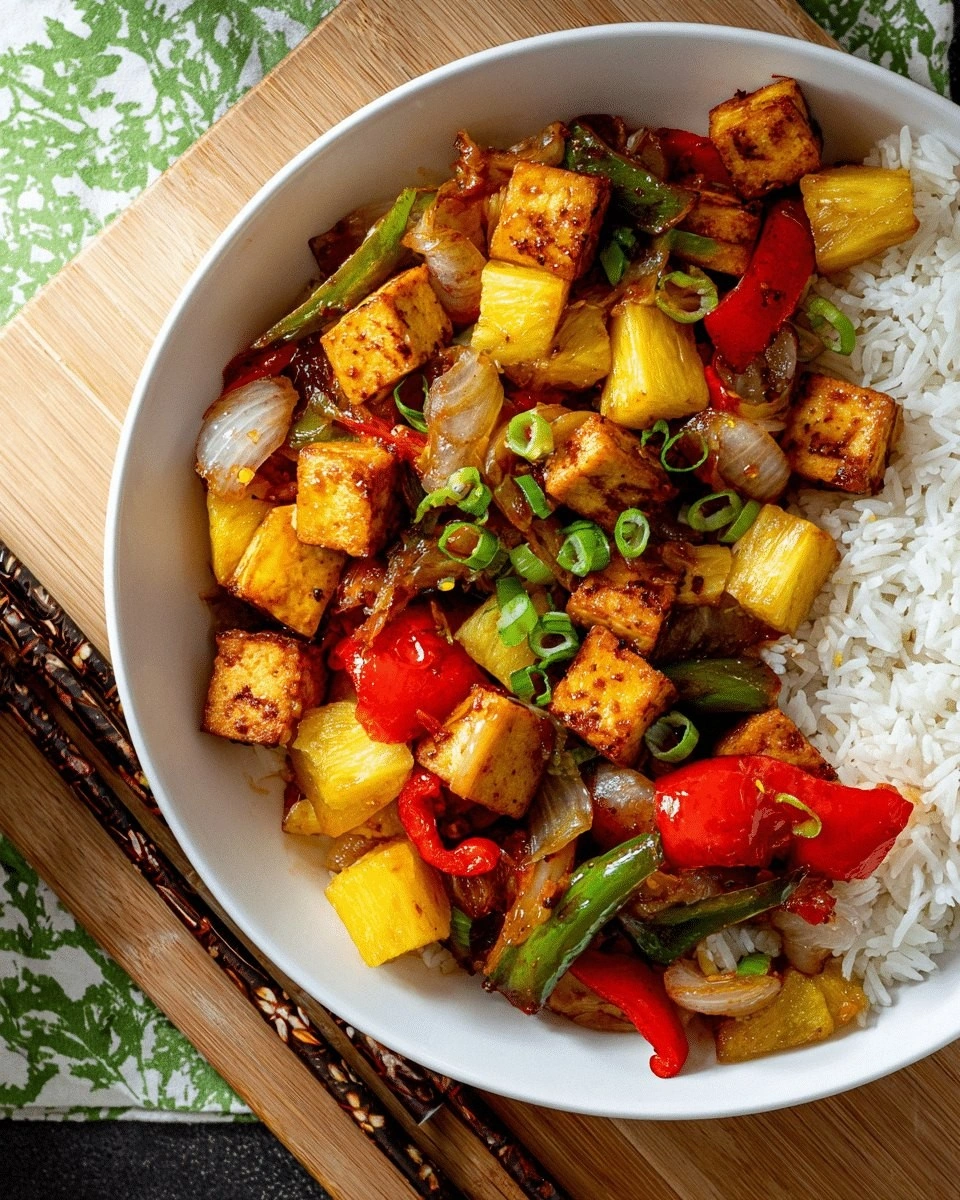
- Visual Appeal: A vibrant medley of colors — bright yellow pineapple, red and green bell peppers, and a glossy sauce that glistens like a tropical sunrise.
- Ease: A recipe that requires minimal prep time and can be whipped up in under an hour, making it perfect for busy weeknights.
- Healthful: Packed with plant‑based protein, fresh fruit, and vegetables, this dish keeps calories low while delivering essential nutrients.
- Versatility: Whether you’re serving it over rice, noodles, or a bed of greens, it adapts to any meal plan or dietary preference.
- Make‑Ahead Friendly: The flavors deepen when stored, making this a great option for meal prep or a quick dinner the next day.
- Crowd‑Pleaser: The sweet‑savory combo is a hit with both kids and adults, turning any dinner table into a celebration.
Alright, let’s break down exactly what goes into this masterpiece…
Inside the Ingredient List
The Flavor Base
At the heart of this dish is a sauce that marries sweet, salty, and tangy notes into a single, silky coating. The soy sauce provides the umami backbone, while the hoisin sauce adds a subtle sweetness that complements the pineapple’s natural sugars. A splash of rice vinegar cuts through the richness, preventing the sauce from feeling heavy. When combined, these liquids create a glaze that clings to tofu and fruit alike, turning each bite into a burst of flavor.
If you skip the rice vinegar, the sauce will taste a little flat and overly sweet. The vinegar’s acidity is essential for balancing the dish, giving the sweet pineapple a fresh counterpoint. Should you not have rice vinegar on hand, a dash of white wine vinegar or even a squeeze of fresh lime can work as a suitable substitute.
Tip: Use low‑sodium soy sauce to keep the dish from becoming overwhelmingly salty. A quick taste test will guide you; the sauce should be sweet, not briny.
The Texture Crew
Firm tofu is the star of the show. It absorbs the sauce beautifully and, when fried to a golden brown, delivers a satisfying bite. The key is to press the tofu for at least 15 minutes before cooking, which removes excess moisture and allows the tofu to crisp up without becoming mushy.
Pineapple chunks bring a juicy, tropical burst that contrasts perfectly with the tofu’s firm texture. The fruit’s natural sugars caramelize slightly during cooking, adding a delightful sweetness that lingers on the palate.
Red and yellow bell peppers add a crisp crunch and a pop of color that makes the dish visually stunning. Their mild sweetness balances the savory sauce, and they hold up well when sautéed, maintaining their vibrant hues.
Tip: For an extra crunch, toss in a handful of sliced carrots or snow peas during the final stir.
The Unexpected Star
Fresh ginger and garlic are the unsung heroes that bring depth and aroma. Ginger’s peppery bite cuts through the sweetness of the pineapple, while garlic’s savory warmth grounds the dish. Together, they create a fragrant base that lingers in every mouthful.
Skipping them would make the dish feel flat and uninspired. If you’re allergic to garlic, a small pinch of garlic powder can substitute, though the aroma will be less vibrant.
Tip: Grate the ginger finely so it distributes evenly and releases its full flavor.
The Final Flourish
Sesame oil adds a nutty finish that rounds out the sauce’s profile. A drizzle of toasted sesame seeds at the end gives a subtle crunch and a burst of aromatic oils that elevate the dish.
Green onions provide a fresh, oniony brightness that cuts through the richness of the sauce. Their crispness adds a final layer of texture.
Tip: If you prefer a milder flavor, reduce the sesame oil to half a tablespoon and increase the soy sauce slightly.
Everything’s prepped? Good. Let’s get into the real action…
The Method — Step by Step
- Prep the tofu: Drain the tofu and wrap it in a clean towel. Press it for at least 15 minutes to remove excess moisture. Slice the tofu into 1‑inch cubes, ensuring even pieces for uniform cooking. This step is crucial for achieving a crispy exterior.
- Make the sauce: In a small bowl, whisk together soy sauce, hoisin sauce, rice vinegar, sesame oil, and a tablespoon of cornstarch. The cornstarch will help thicken the sauce into a glossy glaze. Set aside while you prepare the rest.
- Heat the pan: Add 2 tablespoons of vegetable oil to a large skillet or wok over medium‑high heat. When the oil shimmers, add the tofu cubes in a single layer. Avoid overcrowding; you’ll want each piece to brown properly.
- Fry the tofu: Let the tofu cook undisturbed for 3–4 minutes until the edges turn golden. Flip the cubes to brown the other side. The goal is a crisp, caramelized crust that holds up against the sauce.
- Remove tofu and set aside: Once the tofu is golden on all sides, transfer it to a plate lined with paper towels to drain any excess oil. This step prevents the tofu from becoming greasy when you add the sauce.
- Sauté aromatics: In the same pan, add a splash of oil if needed, then toss in minced garlic and grated ginger. Sauté for 30 seconds until fragrant, being careful not to burn them. The aroma should fill the kitchen like a tropical breeze.
- Add vegetables: Stir in the diced bell peppers and cook for 2 minutes until they start to soften but still retain their crunch. The peppers will add color and a fresh, sweet note.
- Introduce pineapple: Add the pineapple chunks, allowing them to sauté for 1–2 minutes. The fruit will begin to caramelize, releasing its juices and sweet aroma.
- Return tofu: Place the fried tofu back into the pan, ensuring everything is mixed evenly.
- Pour in the sauce: Slowly pour the prepared sauce over the stir‑fry, stirring constantly to coat all ingredients. Let it simmer for 3–4 minutes, allowing the sauce to thicken and cling to the tofu and fruit.
- Finish with garnishes: Sprinkle sliced green onions and toasted sesame seeds over the dish. Give it one final stir, then remove from heat.
- Serve: Plate the stir‑fry over steamed rice, jasmine rice, or your favorite noodles. The dish is ready to devour.
That’s it — you did it. But hold on, I’ve got a few more tricks that will take this to another level…
Insider Tricks for Flawless Results
The Temperature Rule Nobody Follows
Many people cook tofu at a low heat, but that often results in soggy pieces. The secret is to start at a high temperature to sear the tofu quickly, then lower the heat to finish cooking. This approach ensures a golden crust while keeping the interior tender.
Why Your Nose Knows Best
The aroma of garlic and ginger is a reliable indicator of freshness. If the smell is muted or off, consider using fresher ingredients or adding a splash of citrus to brighten the profile.
The 5‑Minute Rest That Changes Everything
After removing the tofu from the pan, let it rest on paper towels for 5 minutes. This resting period allows the oil to drain fully, preventing the tofu from becoming greasy when you add the sauce.
Keep It Simple, But Don’t Skip the Cornstarch
Some cooks skip cornstarch to avoid a thick sauce, but that will leave the dish watery. The cornstarch not only thickens but also gives the glaze a silky sheen that makes every bite feel luxurious.
Don’t Rush the Sauté
Let the aromatics cook just until fragrant. Over‑cooking them will produce a bitter taste that ruins the dish’s balance. A quick 30‑second sauté is all you need.
Creative Twists and Variations
This recipe is a playground. Here are some of my favorite ways to switch things up:
Spicy Pineapple Tofu
Add a tablespoon of sriracha or a pinch of red pepper flakes during the sauce stage. The heat will cut through the sweetness and create a bold, fiery flavor that’s perfect for adventurous eaters.
Gluten‑Free Version
Swap regular soy sauce for tamari, and use a gluten‑free hoisin sauce. The dish remains flavorful, and the sauce’s thickness stays intact.
Veggie‑Only Twist
Omit the tofu entirely and double the amount of bell peppers and pineapple. The dish becomes a vibrant, plant‑based bowl that’s ideal for those on a strict vegetarian diet.
Asian Noodle Bowl
Serve the stir‑fry over cooked soba or rice noodles instead of rice. The noodles absorb the sauce beautifully, creating a comforting, hearty meal.
Breakfast Edition
Replace the tofu with scrambled tofu or tofu cubes seasoned with turmeric. Add a handful of spinach and serve over toast or a bagel for a protein‑packed breakfast.
Low‑Carb Variation
Swap the pineapple for a smaller portion of chopped apples and use a sugar‑free hoisin sauce. Pair it with cauliflower rice to keep the carb count low while maintaining flavor.
Storing and Bringing It Back to Life
Fridge Storage
Store leftovers in an airtight container in the refrigerator for up to 3 days. The sauce may thicken slightly; reheat gently on low heat, adding a splash of water or soy sauce to loosen it.
Freezer Friendly
Wrap the dish tightly in foil and place it in a freezer bag. It stays good for up to 2 weeks. When thawing, let it sit at room temperature for 20 minutes before reheating.
Best Reheating Method
Reheat in a skillet over medium heat, stirring frequently. Add a tablespoon of water or broth to keep the sauce from drying out, then let it simmer until hot throughout.