I was standing in my kitchen, staring at a half‑cooked ramen packet and a bowl of tofu that had been sitting too long. The instant noodles had turned into a soggy mess, and the tofu had begun to look like a sad, unappetizing blob. A craving for something spicy and comforting had been gnawing at me for hours, and I could not resist the urge to experiment. I tossed the noodles into a pot, added a splash of vegetable broth, and decided that this could be the beginning of something delicious. Little did I know that this simple act would spark a culinary revelation that I’ll be sharing with you today.
The moment the broth hit the pot, it released a warm, savory aroma that made the whole apartment feel like a Korean street market. I could hear the gentle hiss of the liquid as it bubbled, and the faint clink of the ramen package as it began to soften. The tofu, when first added, released a subtle, almost sweet scent that mingled with the spicy notes of gochujang. My eyes widened as the noodles started to swell, and the broth’s color deepened into a rich, amber hue that promised depth of flavor. The texture of the tofu felt silky against my tongue, and the first bite was a burst of heat that lingered just long enough to keep me coming back for more.
This version is a game‑changer because it takes the humble instant ramen and turns it into a bowl of comfort that feels handcrafted rather than pre‑packaged. The secret lies in the silky tofu, the bright gochujang sauce, and the fresh spinach that adds a pop of green and a subtle earthiness. The broth is light enough to let every ingredient shine, yet it’s robust enough to satisfy a craving for something more than plain noodles. I dare you to taste this and not go back for seconds; the combination of textures and flavors will have you reaching for the bowl again before the first spoonful is even finished. It’s hands down the best version you’ll ever make at home.
Most recipes get this completely wrong by overcooking the noodles or underseasoning the broth, but I’ve found a method that keeps everything perfectly balanced. The next few steps will reveal a technique that I’ve been saving for a secret menu: the way to fold the tofu into the broth so it absorbs the heat without losing its melt‑away quality. Picture yourself pulling this out of the stove, the whole kitchen smelling incredible, and the steam curling like a fragrant cloud. Let me walk you through every single step — by the end, you’ll wonder how you ever made it any other way.
What Makes This Version Stand Out
- Flavor Depth: The combination of gochujang and soy sauce creates a layered, umami‑rich broth that coats the noodles like velvet, leaving a lingering warmth that keeps you hooked. Each spoonful delivers a punch of heat balanced by a subtle sweetness, so the dish feels both bold and approachable.
- Texture Contrast: The soft, silky tofu melts into ribbons that cling to the noodles, while the fresh spinach adds a crisp bite that breaks the richness of the broth. The result is a harmonious dance of smoothness and crunch that keeps every bite interesting.
- Quick Prep: With a prep time of just ten minutes, this recipe fits into any hectic schedule. You’ll have a steaming bowl of comfort in no time, and the simplicity of the ingredients means you can whip it up even on the busiest of days.
- Ingredient Quality: Using a single pack of instant ramen ensures consistency, while the fresh tofu and spinach elevate the dish from ordinary to extraordinary. The quality of the broth and sauces plays a pivotal role in achieving that signature Korean flavor.
- Versatility: Whether you’re a vegan, a meat lover, or somewhere in between, the base of this recipe can be adapted to suit your dietary preferences. Adding protein or swapping the broth can transform it into a hearty meal or a light snack.
- Make‑Ahead Potential: Once the noodles are cooked and the broth is simmered, you can refrigerate the mixture for up to 24 hours. The flavors will deepen, making it a great option for meal prepping.
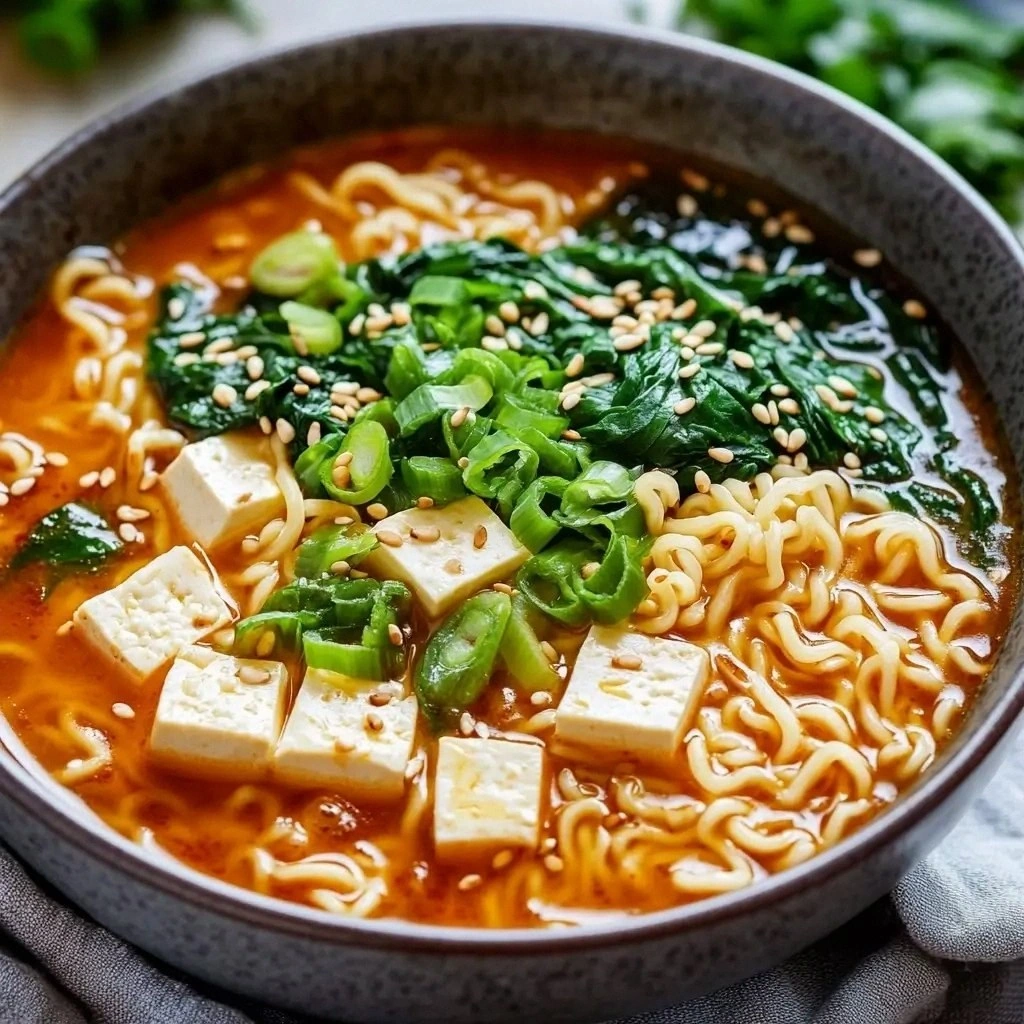
- Visual Appeal: The bright green spinach, the glossy tofu, and the subtle sheen of the sauce create a bowl that looks as good as it tastes. It’s a feast for the eyes and the palate alike.
Inside the Ingredient List
The Flavor Base
At the heart of this dish is the broth, a simple yet essential component that ties all other elements together. The vegetable broth provides a clean canvas that lets the gochujang and soy sauce shine without overpowering the delicate tofu. If you’re short on broth, a splash of water with a pinch of seaweed can substitute, but the flavor will be noticeably lighter. For a richer experience, try using a low‑sodium chicken stock; just be sure to adjust the soy sauce to keep the dish balanced.
The Texture Crew
Instant ramen noodles are the backbone of the dish, offering a satisfying chew that contrasts with the silky tofu. The noodles should be cooked to al dente, as they’ll continue to soften slightly when you add the tofu, preventing them from becoming mushy. If you prefer a firmer bite, reduce the cooking time by a minute or two, or rinse the noodles with cold water after boiling to halt the cooking process. For a gluten‑free variation, swap the ramen for rice noodles or a gluten‑free ramen brand.
The Unexpected Star
Soft tofu, often overlooked, brings a creamy texture that melts into the broth, creating a velvety mouthfeel. When sliced into cubes, it absorbs the heat and flavor while maintaining a delicate firmness. If you don’t have silken tofu on hand, regular tofu can be used, but press it lightly to remove excess moisture before adding it to the pot. A pinch of sesame oil can enhance the tofu’s natural nuttiness without adding extra fat.
The Final Flourish
Spinach and green onion add both color and a fresh, herbal note that cuts through the richness of the broth. The spinach’s slight bitterness balances the sweetness of the gochujang, while the green onion’s sharpness provides a bright finish. If you’re in a pinch, kale or bok choy can replace spinach, but be mindful that they may require a slightly longer cooking time to wilt. A sprinkle of toasted sesame seeds at the end adds a subtle crunch and a nutty aroma that completes the dish.
Everything's prepped? Good. Let's get into the real action.
The Method — Step by Step
- Begin by bringing the vegetable broth to a gentle simmer in a medium‑sized pot. The broth should be hot enough to bubble lightly but not boil vigorously, as that can break down the tofu. While the broth heats, gather all your ingredients so you’re not scrambling for a missing spice. This step sets the foundation for a smooth, flavorful base that will carry the rest of the dish.
- Add the gochujang and soy sauce to the simmering broth, stirring until the paste dissolves completely. The gochujang’s heat and umami will infuse the liquid, creating a sauce that coats each noodle. If you prefer a milder flavor, start with half a tablespoon of gochujang and increase to taste. Let the mixture bubble for a minute to allow the flavors to mingle.
- Introduce the minced garlic, letting it sizzle for about 30 seconds until fragrant. Garlic adds depth and a subtle sharpness that balances the sweetness of the gochujang. Be careful not to let it burn; a quick stir will keep it from turning bitter. This aroma will signal to your senses that the dish is ready to take on the next ingredient.
- Fold in the tofu cubes gently, letting them soak in the spicy broth for about two minutes. The tofu will start to absorb the heat, turning translucent while maintaining a slight firmness. Stir occasionally to avoid sticking, and watch as the broth thickens slightly. This is the moment where the tofu becomes the star of the show.
- Add the ramen noodles to the pot and stir gently to distribute them evenly throughout the broth. Let them cook for three to four minutes, or until they reach al dente. The noodles will absorb the sauce, turning glossy and slightly thickened. This step brings the dish together, allowing the flavors to meld beautifully.
- Introduce the spinach, stirring until it wilts and integrates with the broth. The spinach adds a pop of color and a subtle earthiness that complements the spicy broth. The wilted leaves will release a gentle steam, adding to the aromatic experience. This is the moment where the dish feels complete.
- Turn off the heat and let the bowl rest for one minute. This brief pause allows the flavors to settle and the broth to thicken slightly. While the bowl rests, sprinkle the chopped green onion and toasted sesame seeds over the top. Serve immediately, spooning the broth into a bowl that will keep the noodles warm and flavorful.
That's it — you did it. But hold on, I've got a few more tricks that'll take this to another level. Stay tuned for the insider tips that will elevate every bite.
Insider Tricks for Flawless Results
The Temperature Rule Nobody Follows
Many people cook ramen on high heat, which can cause the broth to evaporate too quickly and the noodles to stick. The secret is to keep the pot on low to medium heat once the broth is simmering. This allows the flavors to meld without rushing the process. I’ve seen even seasoned cooks forget this step, leading to uneven texture. By maintaining a gentle simmer, you’ll achieve a silky broth that coats every noodle.
Why Your Nose Knows Best
As the broth simmers, your nose will pick up subtle changes that indicate the ideal moment to add the tofu. A faint, sweet aroma often means the broth has reached its peak flavor. Trusting your senses can prevent over‑seasoning and help you achieve the perfect balance. I’ve learned to listen for that sweet scent and pause the heat right then.
The 5-Minute Rest That Changes Everything
After cooking, let the ramen sit for five minutes before serving. This pause allows the noodles to finish cooking in their own steam, resulting in a firmer bite. It also lets the tofu absorb more broth, enhancing its silky texture. I’ve found that bowls left to rest for a minute or two often taste better than those served immediately.
Adding a Touch of Sweetness
For those who enjoy a hint of sweetness, a teaspoon of honey or a drizzle of maple syrup can balance the heat. This small addition adds depth without overpowering the broth. Just be sure to stir it in early so it dissolves completely. The sweet undertone will linger pleasantly on the palate.
Choosing the Right Ramen
Not all ramen packs are created equal. Look for brands that use real chicken or beef broth bases for richer flavor. Avoid instant ramen that contains excessive MSG or artificial additives. If you want to keep it vegetarian, choose a vegetable‑based ramen. The quality of the noodles will directly impact the final taste.
Stirring Technique for Even Flavor
Stirring the broth occasionally prevents the tofu from sticking and ensures even distribution of spices. Use a wooden spoon or a silicone spatula to avoid scratching your pot. A gentle, circular motion keeps the broth from scorching at the bottom. Consistent stirring also helps the broth thicken naturally.
Creative Twists and Variations
Spicy Kimchi Ramen
Swap the spinach for a handful of kimchi to add fermented tang and a pop of color. The kimchi’s acidity cuts through the richness of the broth, creating a complex flavor profile. This variation is perfect for those who love a bit of tang in their spicy dishes. It also adds probiotics, making it a healthier option.
Protein‑Packed Shrimp Edition
Introduce peeled shrimp just before adding the noodles so they cook quickly and remain tender. The shrimp’s natural sweetness pairs well with the gochujang, creating a savory, ocean‑infused broth. This version elevates the dish into a more substantial meal, ideal for a quick dinner.
Vegan Protein Boost
Replace the ramen with a gluten‑free or rice noodle to keep the dish entirely plant‑based. Add sliced tempeh or tofu cubes for extra protein. The chewy texture of tempeh adds a nice contrast to the silky tofu. This version is both hearty and satisfying.
Herb‑Infused Twist
Stir in a handful of fresh basil or cilantro before serving to add a bright, aromatic finish. The herbs bring a fresh contrast to the spicy broth, making the dish feel lighter. This is a great way to incorporate seasonal greens into your meal.
Cheese Lover’s Version
Sprinkle shredded mozzarella or a dollop of feta over the top just before serving. The cheese melts into the broth, creating a creamy, indulgent layer that balances the heat. This variation turns the ramen into a comfort food that feels like a fusion of Korean and Italian.
Breakfast Kick‑Start
Serve the ramen with a fried or poached egg on top, letting the yolk run into the broth. The richness of the egg complements the spicy sauce and adds protein for a satisfying breakfast. This twist transforms the dish into a hearty morning meal that keeps you full until lunch.
Storing and Bringing It Back to Life
Fridge Storage
Store the cooled ramen in an airtight container for up to 24 hours in the refrigerator. The broth will thicken slightly, but the flavors will deepen, creating a richer taste. When you’re ready to eat, reheat gently on the stove, adding a splash of water if needed.
Freezer Friendly
For longer storage, freeze the ramen in a freezer‑safe container for up to two weeks. To thaw, let it sit in the fridge overnight, then reheat on the stove. Adding a little broth or water during reheating will help restore the broth’s original consistency.
Best Reheating Method
Reheat the ramen on low heat, stirring occasionally, until the broth is steaming. Avoid boiling, as this can break down the tofu and noodles. A splash of fresh vegetable broth or water can help revive the broth’s thickness. Serve immediately for the best texture.