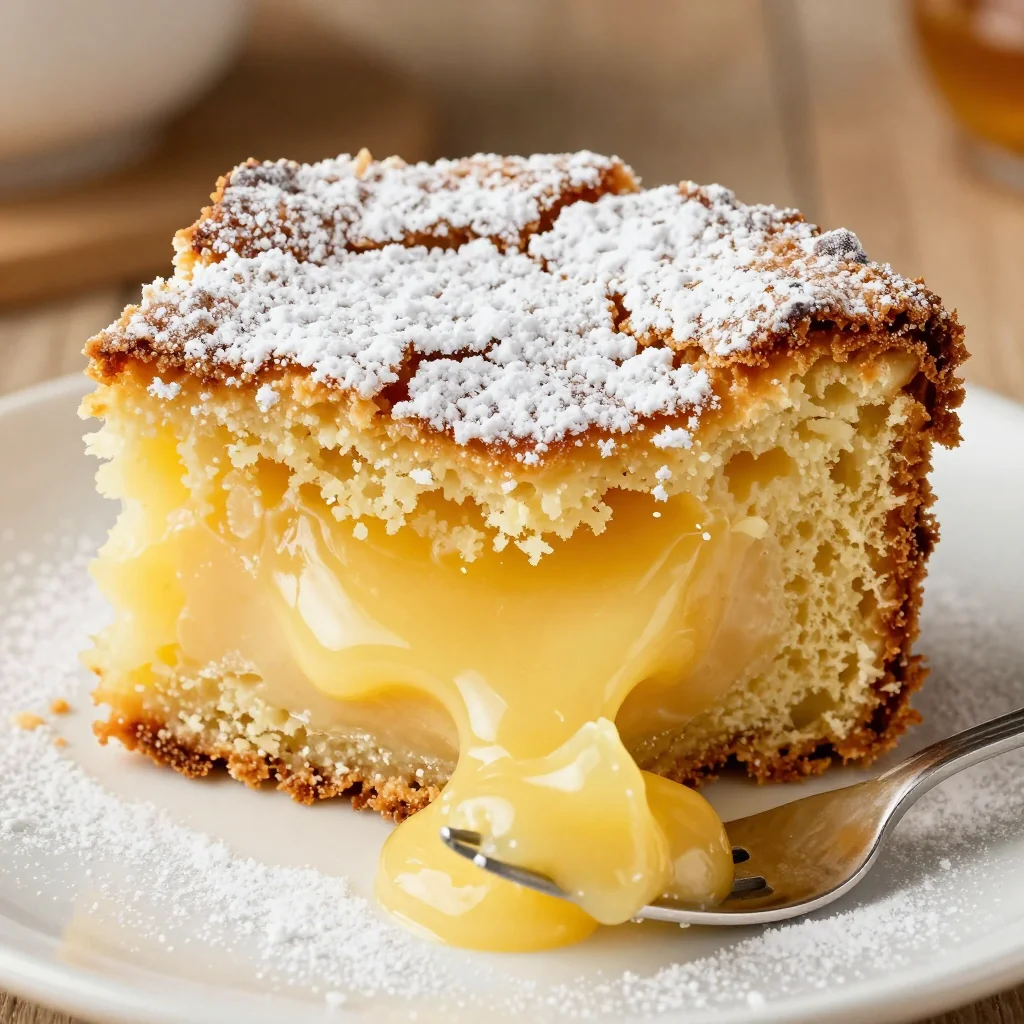
Love this? Pin it for later! 📌
Why This Recipe Works
- Two-Layer Technique: A sturdy cake base supports the custard topping without bleeding together, giving the signature “stacked” look when sliced.
- Room-Temperature Eggs & Dairy: Creating a flawlessly smooth custard that bakes evenly—zero lumps, zero cracks.
- Low & Slow Bake: 325 °F for 35–40 minutes sets the edges while leaving the center jiggly, delivering that iconic “goo” factor.
- Confectioners’ Sugar Finish: A snowdrift of sifted sugar forms a whisper-thin crust that crackles under your fork.
- 8×8 Pan Precision: The perfect size for thick, bakery-style slabs without over-browning the corners.
- Make-Ahead Magic: Flavors deepen overnight; re-warmed squares taste bakery-fresh with 10 seconds in the microwave.
Ingredients You'll Need
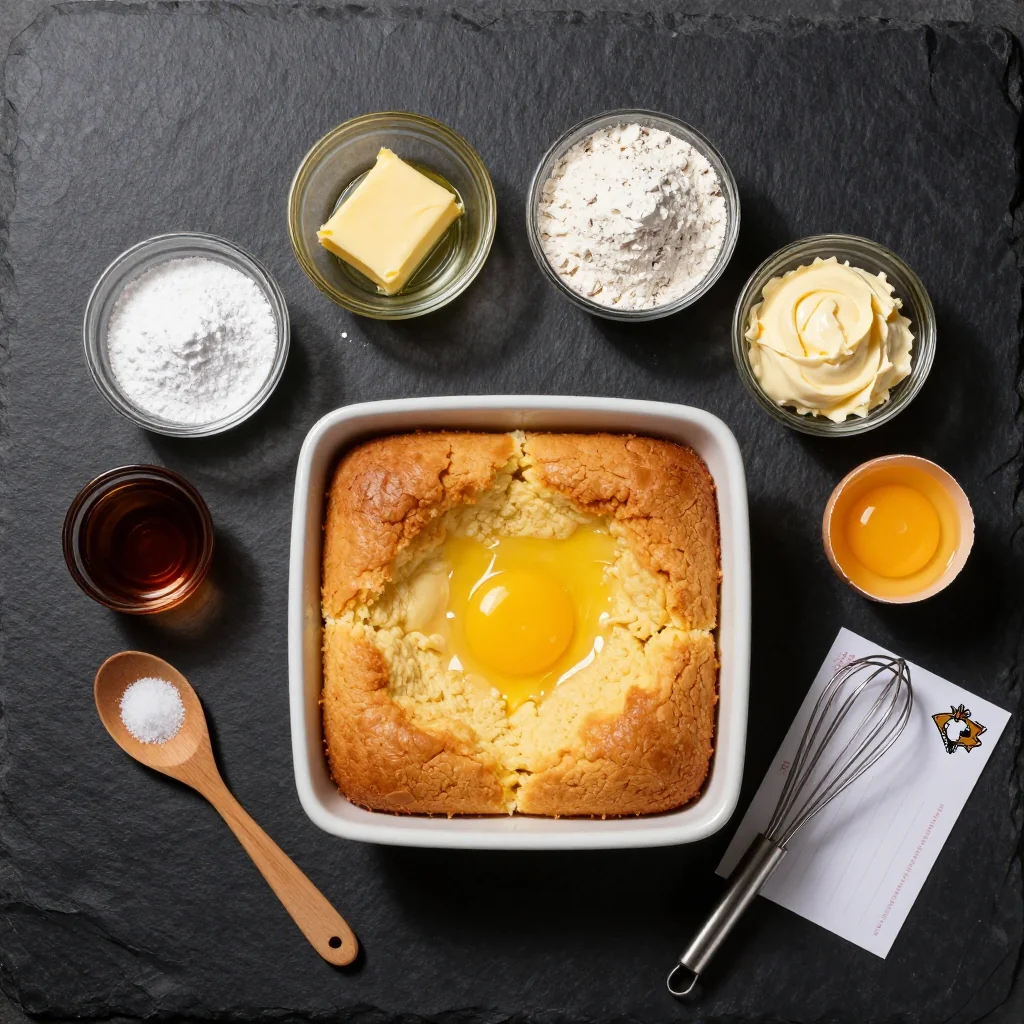
Great Gooey Butter Cake starts with humble pantry staples, but quality matters. Use fresh, unsalted butter—European-style 82 % fat if possible—for extra richness in both layers. Cake flour keeps the base tender; if you only have all-purpose, swap in 1 tablespoon of cornstarch per cup to mimic the soft protein profile. For the custard topping, full-fat cream cheese is non-negotiable: reduced-fat varieties weep moisture and dull flavor. Buy blocks and cube them yourself; pre-crumbled bags are coated with anti-caking starches that muddy texture. Finally, opt for pure vanilla extract over imitation for the warm, floral backbone that defines Missouri-style cakes.
How to Make Warm Gooey Butter Cake for a Missouri Classic
Prep your pan
Line an 8×8-inch metal baking pan with parchment, leaving overhang on two sides to act as a sling. Lightly coat the parchment and exposed sides with softened butter, then dust with flour, tapping out excess. This two-step insurance prevents the sugary custard from cementing itself to the edges.
Mix the cake base
In a stand mixer fitted with the paddle, beat 8 tablespoons (113 g) softened butter with ½ cup (100 g) granulated sugar on medium-high until pale and fluffy, about 3 minutes. Beat in 1 large egg and 1 teaspoon vanilla. Reduce speed to low and add 1 cup (120 g) cake flour, 1 teaspoon baking powder, and ⅛ teaspoon salt. Mix just until no dry streaks remain. The dough will be thick like sugar-cookie batter; that’s correct. Scrape it into the prepared pan and press into an even layer with lightly floured fingertips. Chill while you make the topping—cold dough resists mixing with the custard later.
Beat the custard
Wipe out the same bowl—no need to deep-wash. Beat 8 oz (225 g) softened cream cheese until satin-smooth, 1 minute. Add 2 cups (240 g) sifted confectioners’ sugar and 1 teaspoon vanilla. Start on low to prevent a snowstorm, then increase to medium and beat until glossy, scraping the bowl once. The mixture should resemble thick cupcake icing.
Add the eggs
Reduce mixer to medium-low and add 2 large eggs, one at a time, waiting until each disappears before adding the next. Over-beating whips in excess air, causing the custard to soufflé and crack. Finish with 1 tablespoon whole milk for pourability.
Assemble
Retrieve the chilled pan. Slowly pour the custard over the cake base, starting in the center and spiraling outward. The weight of the liquid will self-level, but gently jiggle the pan to reach the corners without gouging the base.
Bake low & slow
Bake on the center rack at 325 °F (165 °C) for 35–42 minutes, rotating halfway. The custard will puff, then settle into a gentle dome with bronzed spots. Look for set edges that shimmy as one unit when you nudge the pan; a 2-inch ring in the very center should still wobble like gelatin. Over-baking equals rubbery edges and a dry center—when in doubt, pull it early.
Cool & dust
Cool on a wire rack for 1 hour. The residual heat finishes setting the custard without curdling the eggs. Just before serving, sift 2–3 tablespoons confectioners’ sugar over the top for that classic snow-cap look. Slice with a hot, dry knife, wiping between cuts for bakery-sharp edges.
Expert Tips
Thermometer Trust
An instant-read thermometer inserted 1 inch from the edge should register 170 °F when done; the center will be 5–7 degrees lower and finish carry-over cooking.
Water-Bath Insurance
If your oven runs hot, set the pan inside a larger roasting tray and add ½ inch of boiling water for gentle, custard-friendly heat.
Parchment Sling
Leave 1 inch of overhang on both long sides; after cooling, use the flaps to lift the entire cake out cleanly for tableside presentation.
Overnight Age
Wrap cooled cake pan tightly and refrigerate overnight; the flavors meld and the texture sets into that quintessential dense-yet-gooey bite.
Sugar Snow
Dust sugar just before serving; humidity will dissolve it into a matte glaze after a few hours—still delicious, just less photogenic.
Reheat Like a Pro
Microwave individual squares on 50 % power for 8–10 seconds; any hotter and the custard will tighten and weep.
Variations to Try
-
Chocolate Marble
Whisk 2 tablespoons Dutch-process cocoa with 1 tablespoon hot water; drizzle over the custard and feather with a toothpick for a black-and-gold swirl.
-
Pumpkin Spice (Fall Favorite)
Replace the 1 tablespoon milk with 3 tablespoons pumpkin purée and ½ teaspoon pumpkin pie spice for a seasonal spin.
-
Lemon Zest Twist
Add 1 teaspoon finely grated lemon zest to the custard for bright contrast against the buttery sweetness.
-
Gluten-Free Base
Swap cake flour for ¾ cup (90 g) superfine almond flour plus ¼ cup (35 g) white rice flour; press firmly to compact.
-
Mini Bar Version
Divide batter among 12 lined muffin cups; bake 22–24 minutes for handheld party treats.
Storage Tips
Room Temperature: Cover pan tightly with foil and keep up to 2 days in a cool, dry kitchen; beyond that, the custard will begin to sour.
Refrigerator: Transfer cooled squares to an airtight container with parchment between layers; refrigerate up to 5 days. Flavors intensify overnight, making day-two cake arguably better than fresh.
Freezer: Flash-freeze individual squares on a tray until solid, then wrap in plastic and foil; freeze up to 2 months. Thaw overnight in the fridge, then warm as directed.
Make-Ahead: Bake, cool, and chill the entire pan a full day ahead; serve at room temperature or gently warmed for potlucks, tailgates, or brunch spreads.
Frequently Asked Questions
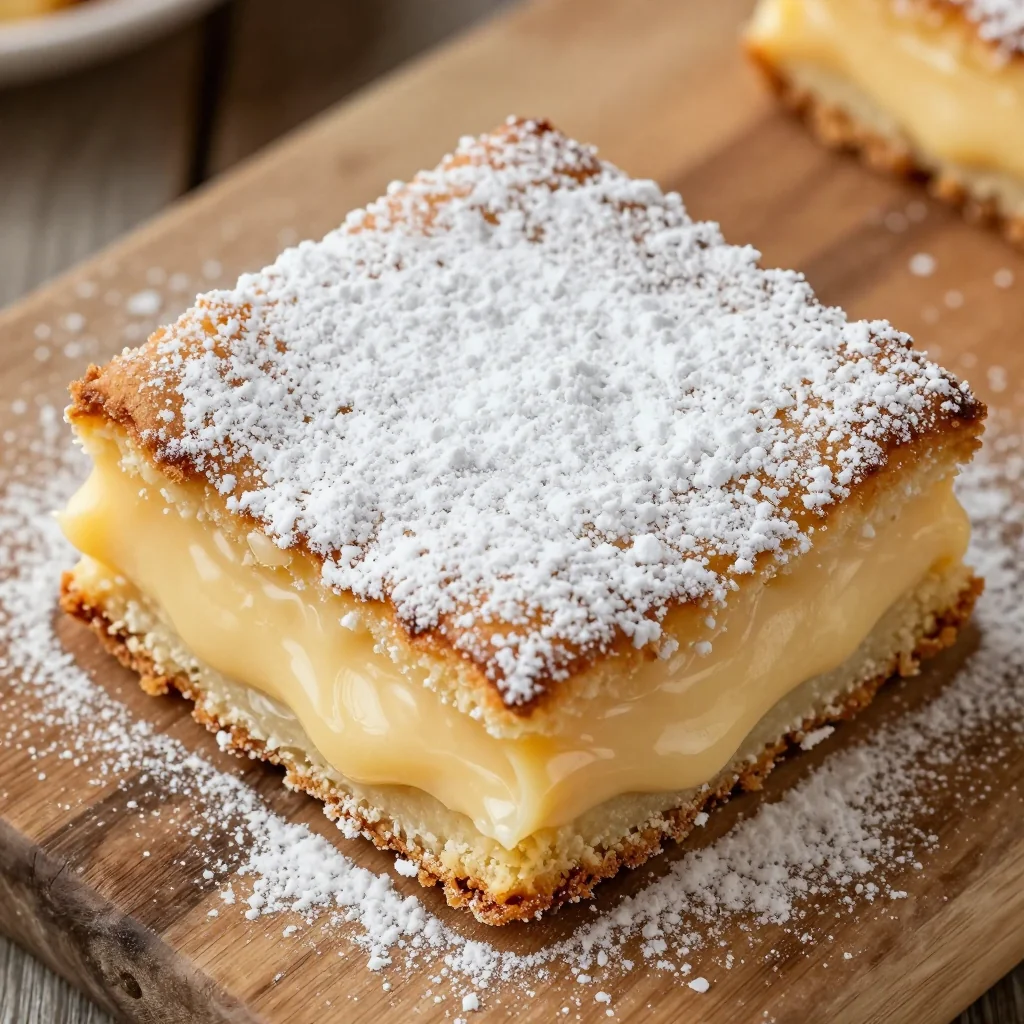
Warm Gooey Butter Cake for a Missouri Classic
Ingredients
Instructions
- Prep: Preheat oven to 325 °F. Line 8×8 pan with parchment, grease, and flour.
- Base: Beat butter and sugar until fluffy. Beat in egg and vanilla. Add flour, baking powder, salt; press evenly into pan. Chill.
- Custard: Beat cream cheese until smooth. Add sugar and vanilla, then eggs one at a time. Mix in milk.
- Assemble: Pour custard over base. Bake 35–42 min until edges set and center jiggles.
- Cool & Serve: Cool 1 hour, dust with sugar, slice, and enjoy warm or room temperature.
Recipe Notes
For bakery-style neat squares, chill the baked cake overnight before slicing. Re-warm in the microwave 8–10 seconds for that fresh-from-the-oven gooeyness.