Love this? Pin it for later! 📌
Warm Root Vegetable Soup with Thyme & Garlic for Winter Nights
There’s a certain kind of magic that happens when the first real cold snap hits and you find yourself standing at the stove, wooden spoon in hand, coaxing carrots, parsnips, and potatoes into the silkiest, most fragrant soup of the season. This warm root vegetable soup with thyme and garlic is the recipe I turn to when the daylight disappears before dinner and the wind rattles the maple leaves like dry bones. It’s the soup that greets my neighbors when they knock in from the snow, the one that steams up the kitchen windows while my kids do homework at the table, the one that—if I’m being honest—rarely lasts more than twenty-four hours in our house. Today I’m sharing every trick I’ve learned over a decade of making it, from choosing the sweetest parsnips to getting that velvety texture without a drop of heavy cream. Grab your coziest sweater; we’re about to make winter taste like a hug in a bowl.
Why This Recipe Works
- Double-layered aromatics: We infuse both the oil and the broth with thyme & garlic for depth you can taste in every spoonful.
- Roasted veg shortcut: A ten-minute pan-roast before simmering caramelizes the natural sugars and intensifies flavor without firing up the oven.
- Silky without cream: A single Yukon gold potato releases just enough starch to create luxurious body—dairy-free and week-night light.
- One-pot wonder: Minimal dishes, maximum comfort—everything from bloom to blend happens in the same Dutch oven.
- Freezer hero: Portion, chill, and freeze up to three months; reheats like a dream on the busiest January evenings.
- Endlessly riffable: Swap herbs, add lentils, finish with chorizo oil—once you learn the method, the flavors are limited only by imagination.
Ingredients You'll Need
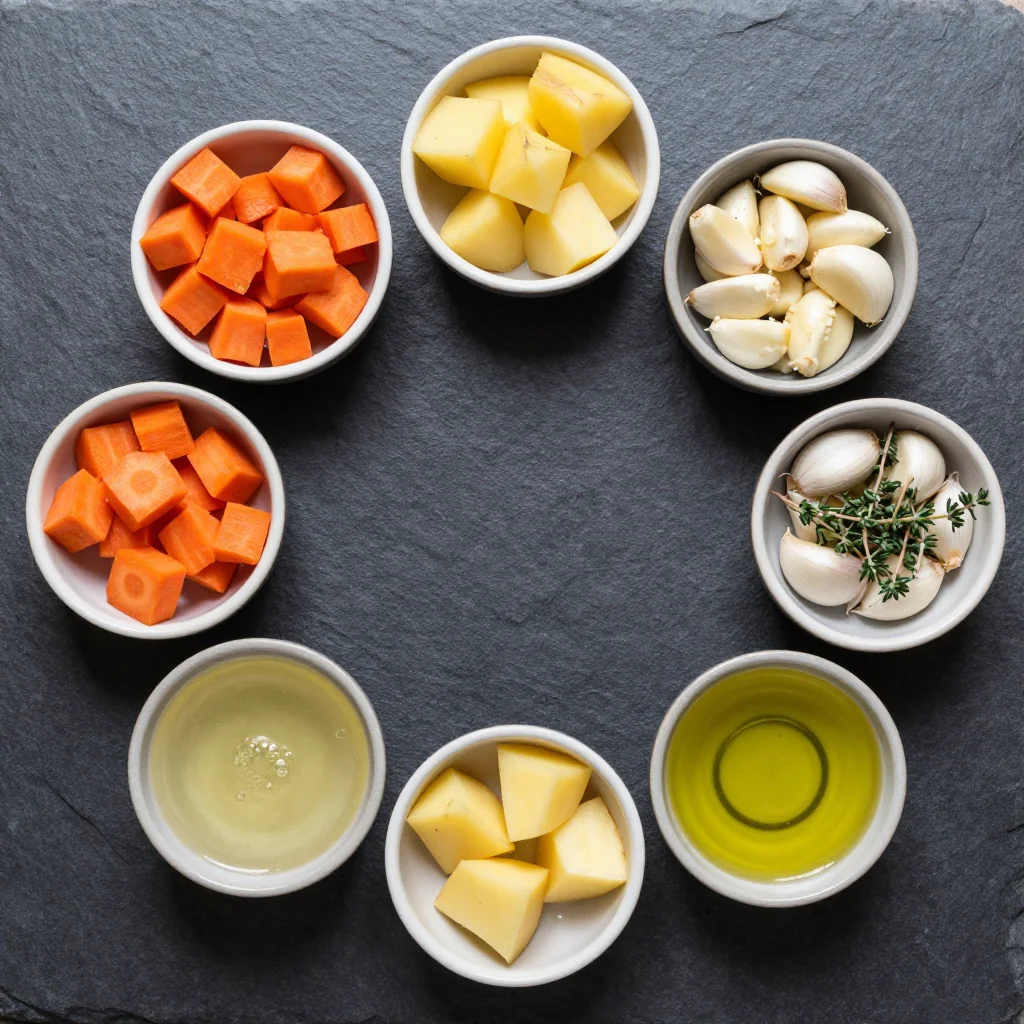
Think of winter’s underground treasure chest: knobby, dirt-clad vegetables that taste like sunshine once coaxed over heat. Each one plays a specific role here—sweetness, earthiness, body, and aroma—so let’s shop with intention.
Carrots – Go for the fat, blunt-ended ones sold loose; they’re older, hence starchier, and yield a deeper orange broth. If you can only find bagged baby carrots, no worries—just know they’ll lean sweeter and need an extra pinch of salt.
Parsnips – Look for small-to-medium specimens; larger parsnips have woody cores that require scooping out. The skin is where the spicy, almost gingery notes live, so a gentle scrub beats peeling if your parsnips are organic.
Yellow Onion – The workhorse aromatic. I dice it medium so some pieces melt into the soup while a few stay pleasantly visible. Shallots work in a pinch and add a faint garlicky sweetness.
Garlic – Fresh, firm cloves only. We’re using eight here—yes, eight—because we’re infusing the oil early and adding a whisper-thin shave at the finish for brightness. If you’re garlic-shy, remember that long simmering tames the bite.
Yukon Gold Potato – The natural thickener. Russets break down too quickly and turn mealy; red potatoes don’t offer enough starch. Yukon hits the sweet spot, lending body without pastiness.
Fresh Thyme – Woodsy, resinous, quintessentially winter. Strip the leaves off four sprigs and slide one whole sprig into the simmering pot; fishing it out later perfumes the broth like a subtle incense.
Vegetable Broth – Use a low-sodium, good-quality brand or your own frozen stash. Chicken broth works but muddies the vegetal clarity we want here. Need it vegan? Stick with water plus a teaspoon of white miso for umami.
Extra-Virgin Olive Oil – A generous glug for both sautéing and finishing. The peppery, grassy notes play beautifully against the root sweetness. No need to break out the pricey bottle; any everyday oil you love on salads works.
Sea Salt & Cracked Pepper – Season early, season often. Root vegetables drink up salt; tasting at every stage prevents a flat finish.
Optional but lovely: a squeeze of lemon to wake everything up just before serving and a drizzle of chili oil for those who like a warming prickle at the back of the throat.
How to Make Warm Root Vegetable Soup with Thyme & Garlic for Winter Nights
Warm the pot and bloom the thyme-garlic oil
Place a heavy 5-quart Dutch oven over medium-low heat. Add 3 Tbsp olive oil, 4 sprigs’ worth of fresh thyme leaves, and 3 smashed garlic cloves. Let the mixture sizzle gently for 90 seconds—do not brown—just until the oil smells like a pine forest after rain. This step builds a fragrant base that permeates the entire soup.
Sweat the onions
Scoop out the smashed garlic (it’s given its all) and increase heat to medium. Add diced onion with a pinch of salt. Stir frequently for 4 minutes until translucent and just beginning to color on the edges—those browned bits translate to caramel complexity later.
Add roots and par-cook
Toss in carrots, parsnips, and potato, all cut into ½-inch coins. Stir to coat in the thyme oil. Let them sit—undisturbed—for 2 minutes so the bottoms kiss the pot and caramelize slightly. Stir again and repeat once more. You’re looking for golden freckles, not full browning.
Deglaze & scrape
Pour in ½ cup of your broth. Use the liquid’s steam to loosen any fond (those tasty browned bits) with a wooden spoon. Cook until almost evaporated—about 90 seconds—leaving a glossy sheen on the vegetables.
Simmer gently
Add remaining broth, 1 whole thyme sprig, and ½ tsp salt. Bring to a quiet bubble, then drop heat to low, cover partially, and simmer 18–20 minutes. Root veggies should be tender enough to split with the back of a spoon but not falling apart; this prevents waterlogged flavors.
Fish out the sprig & cool slightly
Remove the whole thyme sprig (it’s done its job). Let soup rest off-heat for 5 minutes. Blending boiling-hot liquid is a volcanic disaster waiting to happen; slightly cooler means safer pureeing and a silkier texture.
Blend until velvety
Use an immersion blender directly in the pot, tilted so you create a whirlpool. Start on low, then high, for 60–90 seconds. No immersion blender? Work in batches in a countertop blender—fill only halfway, remove center cap, cover with a towel, and start on low. Pass through a fine-mesh sieve for restaurant-smooth if you’re feeling fancy.
Season boldly & brighten
Taste. Add salt by the pinch until the flavors pop—this usually takes another ½–¾ tsp. Crack in fresh pepper and, if you like, a squeeze of half a lemon. The acid is like turning up the lights on a dimmer: suddenly every note is vivid.
Serve & garnish
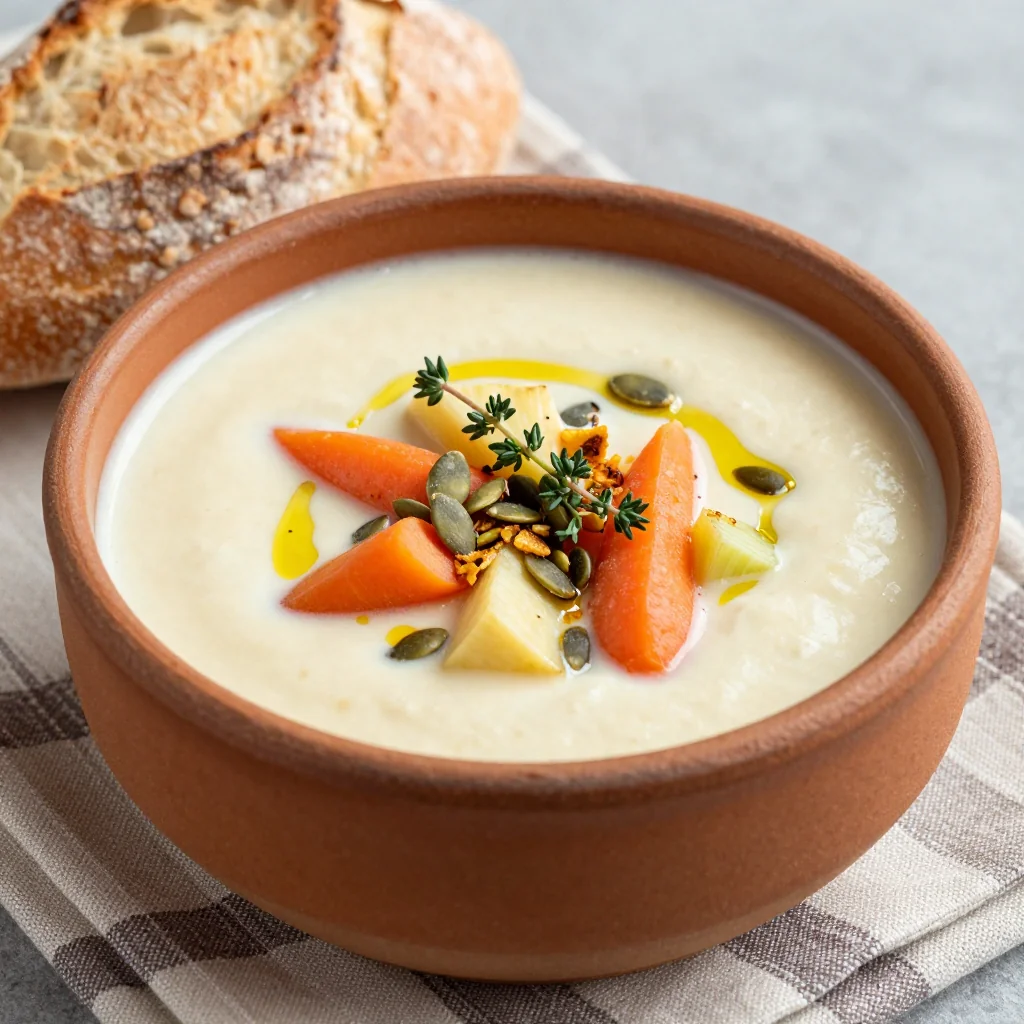
Ladle into warmed bowls. Drizzle with remaining olive oil, scatter a few fresh thyme leaves, and add a grind of pepper. Pair with crusty sourdough or grilled cheese triangles if you’re feeding ravenous teenagers—or simply enjoy its honest simplicity.
Expert Tips
Low & slow equals sweet
Keep the sauté heat moderate; caramelizing onions too fast yields bitterness that no amount of thyme can mask.
Thin it your way
If the soup thickens on standing, loosen with a splash of water or broth reheated gently; starch retrogrades as it cools.
Silky shortcut
For ultra-smooth texture, pass the blended soup through a fine sieve a second time—worth it for holiday dinner parties.
Ice-cube herb bombs
Freeze leftover thyme leaves in olive-oil ice cubes; drop one into future soups or stews for instant aromatic lift.
Color pop garnish
A swirl of beet purée or turmeric oil not only looks stunning but signals flavor cues before the first spoonful.
Flavor curve
Soup tastes best 12–24 hours after making once the starches hydrate fully—perfect make-ahead for entertaining.
Variations to Try
- Coconut-Ginger Twist: Swap olive oil for coconut oil, add 1-inch knob of fresh ginger with the onions, and finish with a splash of coconut milk for tropical warmth.
- Smoky Paprika & White Bean: Stir in 1 tsp smoked paprika with the broth and a can of rinsed cannellini beans before blending for protein and campfire nuance.
- Apple & Parsley: Add one peeled, diced apple with the vegetables and finish with a chiffonade of flat-leaf parsley for sweet-savory balance.
- Spicy Chorizo Oil: Brown 2 oz diced chorizo in the pot first; reserve the crispy bits for topping and use the rendered fat in place of some olive oil.
- Roasted Beet Version: Replace half the carrots with roasted beet wedges for a magenta masterpiece that’s as stunning as it is earthy.
- Lentil-Lovers: Add ½ cup red lentils with the broth; they dissolve during simmering and boost protein while keeping the soup smooth.
Storage Tips
Refrigerator: Cool soup completely, transfer to airtight containers, and refrigerate up to 4 days. Reheat gently over medium-low, thinning with broth or water as needed.
Freezer: Portion into freezer-safe jars or silicone Souper-Cubes, leaving 1-inch headspace for expansion. Freeze up to 3 months. Thaw overnight in the fridge or use the microwave’s defrost setting, then warm on the stove.
Make-Ahead: The vegetables can be pre-chopped and stored in a zip-top bag with a paper towel to absorb moisture for up to 3 days. You can also make the soup entirely, refrigerate, and simply reheat—flavors meld beautifully overnight.
Leftover Glow-Up: Turn extra soup into a sauce for pasta: simmer until reduced by one-third, toss with rigatoni, shower with Parmesan, and broil until bubbly.
Frequently Asked Questions

warm root vegetable soup with thyme and garlic for winter nights
Ingredients
Instructions
- Infuse oil: Heat 2 Tbsp olive oil, thyme leaves, and 3 smashed garlic cloves in a Dutch oven over medium-low for 90 seconds; discard garlic.
- Sauté aromatics: Increase heat to medium; add onion with a pinch of salt and cook 4 minutes until translucent.
- Add vegetables: Stir in carrots, parsnips, potato; let sit 2 minutes, stir, repeat once for light caramelization.
- Deglaze: Add ½ cup broth, scrape browned bits, and cook until almost evaporated.
- Simmer: Pour in remaining broth, whole thyme sprig, ½ tsp salt; simmer partially covered 18–20 minutes until veggies are tender.
- Blend: Remove thyme sprig; blend soup with an immersion blender until silky. Season with salt, pepper, and lemon if using.
- Serve: Ladle into warm bowls, drizzle with remaining olive oil and extra thyme leaves.
Recipe Notes
Taste after blending; root vegetables vary in sweetness—balance with more salt or a touch of lemon. Soup thickens as it stands; thin with broth when reheating.