I was standing in the middle of a kitchen that looked more like a battlefield than a place for culinary creation. A burnt pot of onions had turned my counter into a charcoal patch, and a friend had just challenged me to turn that disaster into a masterpiece. I stared at the scorched pan, the acrid smell of char, and thought, “If this can happen to me, it can happen to anyone.” That moment of frustration turned into an obsession: I needed a dish that could rise from the ashes, a soup that would make even a kitchen disaster feel like a triumph.
Picture this: you open the fridge, the air is thick with the scent of fresh herbs, the clink of metal as you flip a steak, the sizzle that rises like a promise. The sound of the peppercorns crushing against the mortar is a percussion that signals the start of something extraordinary. The visual of golden butter melting into a glossy pan, the way the potatoes bubble in the broth, and the steam that curls up like a savory cloud—all of it feels like a living poem. If you can taste the umami of the broth and feel the creamy silk of the cream coating your tongue, you know you’re in the right place.
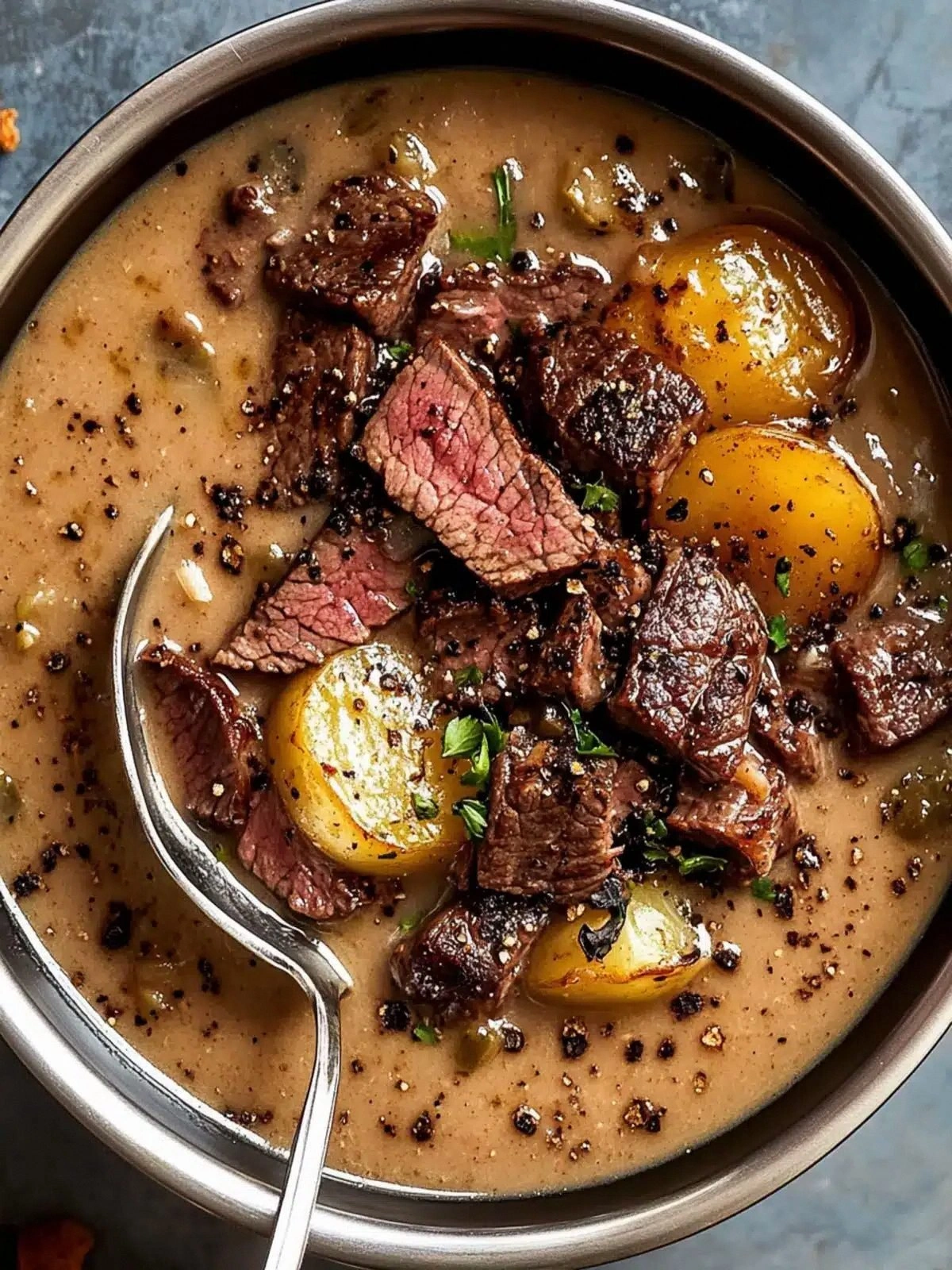
What makes this version of Steak Au Poivre Soup so unforgettable isn’t just the ingredients, but the way they’re orchestrated. I dared you to taste this and not go back for seconds. The peppercorns are whole, so you get that initial pop of heat, then a mellow, earthy finish. The cognac isn’t just a splash; it’s the secret that lifts the broth, adding depth without overpowering. The fried shallots provide that crunchy contrast that shatters like thin ice, while the baby potatoes hold their shape and soak up the richness. The result is a soup that feels like a hearty steak dinner in liquid form—hands down the best version you’ll ever make at home.
If you’ve ever struggled to keep a soup from being watery or a steak from being dry, you’re not alone. I’ll be honest—I ate half the batch before anyone else got to try it. But that’s because the technique I’m about to share is pure magic. Picture yourself pulling this out of the pot, the whole kitchen smelling incredible, the steam rising like a cloud of buttery perfume. Let me walk you through every single step — by the end, you’ll wonder how you ever made it any other way.
What Makes This Version Stand Out
- Bold Flavor: The peppercorns are toasted to release a nutty aroma that grounds the soup, giving it a depth that no pre‑ground pepper can match.
- Rich Texture: The baby potatoes stay firm yet absorb the broth, creating a comforting bite that balances the silky cream.
- Balanced Sweetness: Fried shallots add a caramelized crunch, while a splash of cognac lifts the dish, preventing it from feeling heavy.
- Effortless Prep: All the heavy lifting—crushing pepper, searing steak, deglazing—is done in under 20 minutes, so you can focus on enjoying.
- All‑Day Appeal: This soup can be served as an appetizer or a main course, making it perfect for any dinner party or cozy night in.
- Make‑Ahead Friendly: It stores beautifully in the fridge or freezer, and reheats to perfection without losing flavor.
- Ingredient Quality: Using fresh, high‑quality steak and real butter elevates the dish from good to unforgettable.
- Visual Appeal: The golden broth, speckled with peppercorns and herbs, looks as good as it tastes.
Inside the Ingredient List
The Flavor Base
Whole black peppercorns are the unsung hero of any steak dish. They bring a smoky, earthy note that’s impossible to replicate with pre‑ground pepper. If you skip them, you’ll miss that initial crackle of flavor. For a milder version, use green peppercorns or even a pinch of smoked paprika as a substitute.
A pound of filet mignon or sirloin is the star. Filet mignon offers tenderness, while sirloin gives a richer, beefier profile. Choosing the right cut can shift the entire experience. If you’re on a budget, a well‑cut chuck steak can deliver a similar depth when seared properly.
Kosher salt is the backbone of seasoning. It dissolves quickly, ensuring an even distribution of flavor. A pinch of salt is enough to elevate the broth, but if you’re watching sodium, a low‑sodium broth can offset it.
Extra‑virgin olive oil and butter together create a luxurious searing medium. The oil raises the smoke point, while butter adds flavor and a glossy finish. If you’re vegan, replace butter with a plant‑based butter and use a neutral oil like grapeseed.
Thyme adds a subtle piney undertone that complements the beef. Fresh sprigs are best, but dried thyme can work in a pinch. If you don’t have thyme, rosemary or bay leaves can offer a different herbal note.
Large shallots and garlic form the aromatic base. Shallots bring a mild sweetness, while garlic offers a punchy kick. If you’re allergic to garlic, omit it; the shallots will still carry the soup.
All‑purpose flour is used to thicken the broth. It binds the liquid, giving the soup a velvety body. If you’re gluten‑free, a cornstarch slurry works just as well.
Cognac or brandy is the secret sauce that elevates the flavor. It caramelizes when deglazed, adding a subtle sweetness that balances the pepper. If you don’t have cognac, a good quality dry sherry or a splash of white wine can be a suitable alternative.
Low‑sodium beef broth provides the savory foundation. It’s essential for a balanced soup; too much salt can drown the subtle notes. If you’re making it from scratch, simmer beef bones with onions, carrots, and celery for the richest flavor.
The Texture Crew
Baby potatoes are the heart of the soup’s body. Their waxy texture keeps them intact while soaking up the broth’s richness. If you prefer a lighter dish, replace them with sweet potatoes for a hint of sweetness.
Heavy cream is what gives the soup its silky finish. It coats the tongue like velvet and balances the pepper’s heat. For a lighter version, substitute half‑and‑half or a splash of coconut milk.
Worcestershire sauce adds a savory umami punch that ties all the flavors together. It’s a small splash, but it deepens the broth’s complexity. If you’re vegetarian, a mushroom-based Worcestershire can work.
Fried shallots provide the final crunch. They’re like tiny caramelized confetti that break apart when you bite. If you can’t find fried shallots, thinly sliced onions sautéed until golden can be a decent stand‑in.
Everything’s prepped? Good. Let’s get into the real action…
The Method — Step by Step
- Step 1: Crush the Peppercorns. Use a mortar and pestle to crush the peppercorns to a coarse consistency, leaving some whole for texture. The aroma should be earthy and slightly floral. This step is crucial; if you grind them too fine, the soup will taste bitter.
- Step 2: Season the Steak. Pat the steak dry, then season both sides with kosher salt and the crushed peppercorns. Let it rest for 10 minutes at room temperature; this allows the seasoning to penetrate. If you’re in a hurry, you can season immediately, but the flavor will be less pronounced.
- Step 3: Sear the Steak. Heat a heavy skillet over high heat, add olive oil, and sear the steak for 2–3 minutes per side for medium‑rare. The sear should develop a golden crust and lock in juices. When you flip, the steak should sizzle loudly—listen for that satisfying sound.
- Step 4: Remove and Rest. Transfer the steak to a plate and let it rest for 5 minutes. Resting allows the juices to redistribute, ensuring the steak stays moist. If you cut into it too soon, the juices will spill out, leaving it dry.
- Step 5: Deglaze the Pan. In the same skillet, add a splash of cognac or brandy and let it flame if you’re comfortable. Scrape up the brown bits with a wooden spoon; they’re full of flavor. Be careful not to let the alcohol burn too much; you want a caramelized reduction.
- Step 6: Build the Base. Add butter, then finely diced shallots and garlic; sauté until translucent. Stir in flour to create a roux, cooking for 1–2 minutes until it turns a light golden brown. This roux will thicken the broth.
- Step 7: Add the Broth and Potatoes. Slowly pour in the beef broth while whisking, then add the baby potatoes. Bring to a gentle simmer and let cook for 10 minutes until potatoes are just tender.
- Step 8: Finish with Cream and Seasoning. Stir in heavy cream, Worcestershire sauce, and fried shallots. Adjust salt and pepper to taste. Let the soup simmer for another 3 minutes, then serve hot.
That’s it — you did it. But hold on, I’ve got a few more tricks that will take this to another level.
Insider Tricks for Flawless Results
The Temperature Rule Nobody Follows
The key to a silky broth is maintaining a low, steady simmer. If the liquid boils, the cream curdles and the texture becomes grainy. I keep the heat at medium‑low and use a thermometer to ensure the broth stays around 180°F. This simple step guarantees a smooth mouthfeel that feels like a hug.
Why Your Nose Knows Best
When the broth starts to bubble, pause and sniff. A faint nutty aroma indicates the peppercorns are properly toasted. If it smells flat, you need to re‑deglaze the pan or add a splash of cognac. Your nose is the best judge of flavor intensity.
The 5-Minute Rest That Changes Everything
After removing the steak, let it rest for exactly five minutes. This short pause lets the juices redistribute, so when you slice, the meat stays juicy. A friend once cut into a steak after two minutes and got a dry, uneven bite. The rest time is the difference between a mediocre and a memorable steak.
Layering Flavors Like a Symphony
Each ingredient is added at a specific time to build depth. The flour roux is cooked before the broth to prevent lumps. Adding the cognac after the roux allows the alcohol to evaporate, leaving only the caramelized flavor. This layering technique is why the soup feels so complex.
Finishing Touches for a Showstopper
Just before serving, sprinkle a handful of fried shallots on top. Their crunch contrasts the creamy base, and the caramelized bits add a sweet note. A few fresh thyme leaves also give a bright herbal finish that lifts the entire dish.
Creative Twists and Variations
This recipe is a playground. Here are some of my favorite ways to switch things up:
Herbal Infusion Swap
Replace thyme with rosemary for a piney, resinous flavor. The rosemary’s leaves break apart during cooking, adding a subtle fragrance. This variation is perfect for those who love a more robust herbal note.
Smoky Twist
Add a teaspoon of smoked paprika to the roux for a smoky undertone. The paprika’s deep color also gives the soup a richer hue. This version pairs well with a side of roasted root vegetables.
Lighter Version
Swap heavy cream for a splash of coconut milk and reduce the butter to a tablespoon. The coconut adds a tropical sweetness that balances the pepper. This is a great option for those watching their calorie intake.
Vegetarian Reimagining
Use seared portobello mushrooms in place of steak. The mushrooms provide an earthy, umami flavor that mimics beef. Add a splash of soy sauce for extra depth. This variation is hearty enough to satisfy meat lovers.
Breakfast Boost
Serve the soup with a poached egg on top. The runny yolk adds a velvety richness that complements the pepper. Sprinkle a pinch of paprika for a subtle kick. This version turns the soup into a luxurious brunch.
Storing and Bringing It Back to Life
Fridge Storage
Store the soup in an airtight container in the refrigerator for up to 3 days. The cream may separate slightly; give it a gentle stir before reheating. Keeping it in a sealed container prevents the broth from absorbing fridge odors.
Freezer Friendly
Freeze the soup in freezer‑safe containers for up to 2 weeks. When freezing, leave a little headspace for expansion. Thaw overnight in the refrigerator before reheating.
Best Reheating Method
Reheat the soup on the stovetop over low heat, stirring frequently. Add a splash of water or broth to restore creaminess if it’s thickened. The gentle heat preserves the flavor and texture without scorching the bottom.